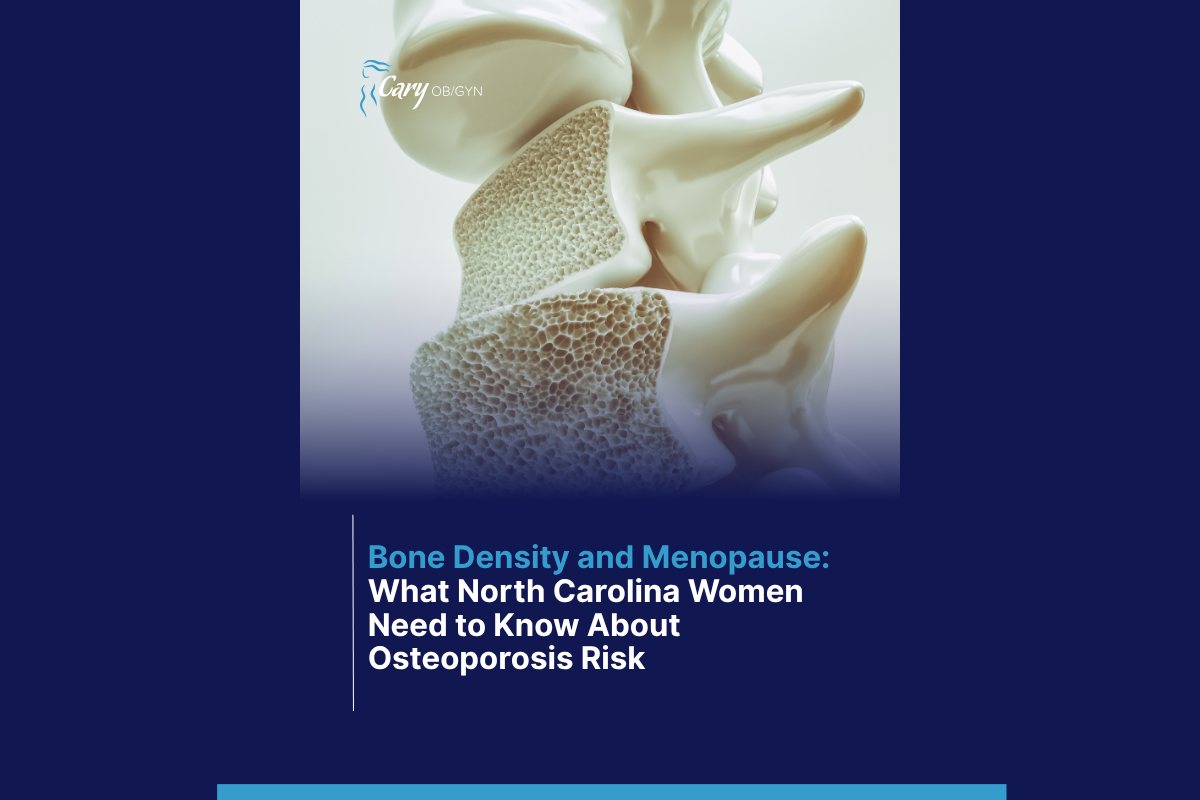
Hot flashes and mood changes tend to get most of the attention when it comes to menopause. What gets talked about far less is something happening quietly in the background: your bones gradually losing density, with no pain and no obvious warning sign until a fracture reveals just how much has changed. At Cary OB/GYN, we want North Carolina women to understand this risk well before that happens.
The Estrogen and Bone Connection
Estrogen plays a significant role in maintaining bone density throughout your reproductive years. As estrogen levels decline during perimenopause and menopause, the rate at which your body breaks down old bone can outpace the rate at which it builds new bone, leading to gradual bone loss. This process is silent. There is no ache, no obvious sign, nothing to tell you it is happening until a fracture, sometimes from a fall that would not have caused an injury a decade earlier, reveals the change.
Bone itself is living tissue, constantly breaking down and rebuilding throughout your life. That process stays roughly balanced through your reproductive years, largely thanks to estrogen. Once that regulation weakens during menopause, the balance can tip more noticeably than most women expect.
Why This Deserves Attention During Menopause
Bone loss tends to accelerate in the years immediately surrounding menopause, which makes this exact stage of life the right time to start paying attention, even before any symptoms show up. Risk factors that raise the odds of significant bone loss include a family history of osteoporosis, a smaller body frame, smoking, limited weight bearing exercise, and certain medications or health conditions. None of these guarantee a problem, but they help your provider understand how closely to monitor your bone health going forward.
Because bone loss has no early symptoms, the first real sign is often a fracture, sometimes from a fall or bump that would not have caused an injury a decade earlier. Height loss over time or a noticeably stooped posture can also point to small, unnoticed fractures in the spine that add up gradually. If either of these has happened to you, even years ago, it is worth mentioning at your next visit.
|
“Always greeted friendly and processed professionally. Dr. Wyckoff is very kind, professional and knowledgeable. She's very attentive to any situations I may have. She's a good listener.” |
How Hormone Therapy Fits Into the Picture
One of the lesser known benefits of hormone replacement therapy is its protective effect on bone density. By restoring some of the estrogen your body is no longer producing, HRT can help slow the pace of bone loss during and after the menopause transition, alongside its more familiar benefits for hot flashes, sleep, and vaginal dryness. Whether hormone therapy is the right fit for protecting your bones depends on your full health picture, which is exactly the kind of conversation worth having directly with your provider.
For women who cannot or prefer not to use hormone therapy, adequate calcium and vitamin D intake, along with regular weight bearing exercise like walking or resistance training, remain meaningful ways to support bone strength on their own. A bone density scan may also be recommended depending on your age and risk factors, giving your provider a clear, measurable baseline to work from rather than relying on guesswork.
Everyday Habits That Support Bone Strength
Alongside any medical treatment, weight bearing exercise like walking, dancing, or resistance training signals your body to maintain bone density rather than let it decline unchecked. Calcium rich foods and adequate vitamin D give your body the raw materials it needs to build new bone. Reducing fall risk at home matters too, especially as bone density naturally declines with age. Simple changes like securing loose rugs and improving lighting on stairs can meaningfully lower your chances of the kind of fall that leads to a serious fracture.
A Conversation Worth Having Early
It is easy to prioritize the symptoms that are actively disrupting your day, hot flashes, sleep loss, mood changes, over a risk you cannot feel happening at all. That is completely understandable, but it is exactly why your provider brings bone health into the conversation proactively rather than waiting for you to ask. A few extra minutes discussing your risk factors now can meaningfully change how your care is shaped over the years ahead.
Specialized Menopause Expertise
Two of our providers, Dr. Rodrigo and Dr. Wyckoff, are Menopause Society Certified Practitioners, meaning they have pursued advanced training specifically in menopause and midlife women's health. That expertise means the same providers helping you manage hot flashes and sleep disruption are also thinking proactively about your long term bone health, not treating the two as separate, disconnected concerns. This designation reflects a level of continuing education well beyond standard OB/GYN training, focused specifically on the complexities of the menopause transition.
|
“Dr. Bonpain is always very informative and takes time to talk with you about any concerns.” |
Let's Protect What You Cannot See
Bone health is easiest to protect when you start before a fracture forces the conversation. If you are approaching menopause, already navigating it, or simply want to understand your own risk, our team at Cary OB/GYN would love to talk it through with you. Book an appointment or contact our Cary or Morrisville office today, and let's put a plan in place together.