
by Marketing Manager | Oct 15, 2026 | Women's Health
Hot flashes that interrupt your day, night sweats that steal your sleep, a sense that your own body has become unpredictable. If perimenopause or menopause has brought any of this into your life, you do not have to simply endure it. At Cary OB/GYN, hormone replacement therapy is one of the ways we help women feel like themselves again.
Why These Symptoms Happen
As women age, the natural hormonal changes associated with perimenopause and menopause can affect nearly every aspect of daily life. Declining estrogen levels may lead to hot flashes, night sweats, vaginal dryness, painful intercourse, mood swings, sleep disturbances, difficulty concentrating, and weight fluctuations. These changes are common, but they do not have to diminish your quality of life, and effective treatment exists for nearly every symptom on that list.
Perimenopause, the years leading up to menopause, can bring many of these same symptoms even while your periods are still occurring, just less predictably than before. If you are in your 40s and starting to notice changes that feel unfamiliar, that is exactly the right time to bring it up, rather than waiting until symptoms become more disruptive.
How Your Care Actually Starts
Your journey begins with a comprehensive evaluation to better understand your symptoms, medical history, and overall health. In many cases, your provider may recommend laboratory testing to assess your hormone levels and determine the most appropriate treatment plan. Because every woman experiences menopause differently, care here is individualized rather than following a single standard protocol for everyone who walks through the door.
This evaluation also gives your provider the chance to understand your personal and family health history, including any risk factors that might affect which treatment approach makes the most sense for you specifically, rather than a one size fits all recommendation.
“Dr Rodrigo is incredibly knowledgeable about peri/menopause (I wrote it like that on purpose to indicate both conditions)! He is a great listener. I feel very fortunate that he is managing my gynecological care.”
Cary OB/GYN Patient Testimonial |
Common Questions Women Ask Us
How long until I feel a difference? Many women notice initial improvement within the first few weeks, though it can take longer to feel the full effect as hormone levels stabilize. Is HRT safe? Safety depends heavily on your individual health history, which is exactly why the evaluation process matters so much before any treatment begins. Will I need this forever? Not necessarily. Some women use hormone therapy through the most disruptive years of the transition and taper off later, while others continue longer term under ongoing supervision. There is no single correct timeline, which is why this stays an ongoing conversation rather than a one time decision.
The Forms Hormone Therapy Can Take
Hormone replacement therapy is available in several forms, allowing your provider to tailor treatment to your lifestyle and preferences. Depending on your symptoms and clinical evaluation, your provider may recommend oral medications, injections, topical gels or creams, vaginal estrogen therapies, or other delivery methods. Together, you and your provider will discuss the benefits and potential risks of each option so you can make an informed decision about your own care.
Many women begin to notice improvement in their symptoms within the first few weeks of treatment, with continued benefits as hormone levels stabilize. Because your hormonal needs may change over time, regular follow-up visits are part of the plan, giving your provider the chance to monitor your progress and adjust your treatment as needed to keep it both safe and effective. Nothing about starting hormone therapy locks you into a single dose or delivery method permanently.
Beyond Symptom Relief
When it is managed well, hormone therapy does more than ease hot flashes and night sweats. It can meaningfully improve sleep quality, stabilize mood, ease vaginal dryness, and help protect against the bone loss that accompanies declining estrogen. None of that changes the fact that HRT is not automatically right for every woman, which is exactly why this decision belongs in a real, ongoing conversation with your provider rather than a quick prescription handed over without context.
Specialized Expertise, Right Here in Cary
While all of our physicians provide HRT services, we are especially proud that two of our providers, Dr. Rodrigo and Dr. Wyckoff, are both Menopause Society Certified Practitioners, or MSCPs. This distinguished certification reflects advanced education and expertise in menopause and midlife women's health, going beyond standard training to demonstrate a real commitment to knowledgeable, evidence-based, and personalized menopause care.
Whether you are navigating perimenopause, considering HRT for the first time, or looking for more specialized guidance on persistent symptoms, that level of expertise is available to you right here at Cary OB/GYN.
“Dr. Piper listened patiently and with concern to my questions and issues regarding menopause and bladder and rectal issues. She was very positive and understanding and has a wonderful bedside manner.”
Cary OB/GYN Patient Testimonial |
You Deserve to Feel Like Yourself Again
If symptoms of perimenopause or menopause are interfering with your daily life, our experienced team is here to help. Book an appointment or contact our Cary or Morrisville office to start the conversation. You do not have to just live with how you have been feeling.

by Marketing Manager | Oct 8, 2026 | Mammogram, Women's Health
Scheduling a mammogram often means an extra appointment at an unfamiliar imaging center, a new set of paperwork, and another item added to an already full calendar. At Cary OB/GYN, serving Cary and Morrisville, we have made this simpler by offering 3D digital mammography right in our own office, alongside whole breast ultrasound, all in the same trusted place where you already receive your care, with a team who already knows your history.
Why Mammograms Matter So Much
Mammograms remain the best early detection tool for breast cancer that exists today. A mammogram can potentially detect breast cancer long before a lump or any other symptom appears, and early detection is genuinely key to successful treatment. That is the entire purpose behind this screening: catching something small and highly treatable, rather than discovering it later when treatment becomes more complicated.
Roughly one in eight women will develop invasive breast cancer in her lifetime, a statistic that can feel unsettling but is exactly why regular screening matters so much. A mammogram cannot change your personal risk of developing breast cancer, but it can change what stage it is caught at, and that stage often determines everything about the treatment path ahead.
Why 3D Technology Makes a Real Difference
Cary OB/GYN uses 3D mammography because it offers real advantages over older 2D technology. The procedure itself is simple, compressing your breast tissue only once while capturing many detailed images throughout that single compression. Because so many detailed X-rays are taken, your doctor gets a clearer, more complete view of your breast tissue, which can make it easier to detect cancer and may reduce the need for repeat mammograms due to unclear results.
This matters most for women with dense breast tissue, which can make standard imaging harder to interpret since dense tissue and potential abnormalities can both appear white on a mammogram. The added detail from 3D imaging helps your radiologist tell the difference with more confidence.
|
“Dr Piper and the Mammography technician were very professional, personable and made me feel at ease during my appointment.”
Cary OB/GYN Patient Testimonial
|
When You Should Be Scheduling
Cary OB/GYN typically recommends annual mammograms starting at age 40. After age 50, many women can move to mammograms every two years instead. Your provider may also recommend a mammogram earlier or more frequently if you are at higher risk for breast cancer or are experiencing symptoms that warrant a closer look, so this is always worth discussing at your visit rather than relying on a generic timeline alone.
If your mother, sister, or daughter has had breast or ovarian cancer, that family history is worth mentioning specifically, since it can shift both when you start screening and how often you are seen. If you genuinely are not sure when your last mammogram was, that uncertainty alone is worth a phone call, and our team can help you sort out your screening history without any judgment about the gap.
What Actually Happens During Your Appointment
You will disrobe from the waist up and wear a gown for your mammogram. A highly trained technician performs the exam and will direct your movements throughout. You will stand next to the machine and remain still while your breast is gently compressed, and a camera captures a series of X-ray images as it moves across your breast tissue. The entire appointment moves quickly, and most women are finished within a matter of minutes.
If you are wondering about safety, mammograms use a very minimal amount of radiation, roughly equal to what you would naturally be exposed to over about seven weeks in your everyday surroundings. That small amount of exposure is well worth the valuable, potentially life-saving information a mammogram provides. And with the 3D exam requiring only a single compression to capture all of its detailed images, the process itself does not take any longer than a traditional mammogram would.
How to Prepare
Try to avoid scheduling your mammogram during your period, or in the week before and after, since breast tenderness and swelling tend to be more pronounced during that window. Shower or bathe before your appointment, but skip deodorant, antiperspirant, lotion, or powder, since these products can interfere with the imaging. If mammograms tend to be uncomfortable for you, taking an over the counter pain reliever beforehand can help. Wearing a two piece outfit also makes the whole process simpler, since you will only need to undress from the waist up.
|
“New doctor [Gilberto Rodrigo, MD, FACOG] for me and was pleased with the [breast] exam and taking time to describe what would happen next.”
Cary OB/GYN Patient Testimonial
|
One Trusted Place for Your Care
Because your mammogram happens in the same office as your regular gynecologic care, your OB/GYN, the provider who already knows your history and your risk factors, stays directly connected to your results. There is no separate facility working in isolation from the rest of your care, which means fewer gaps and fewer places for something to fall through the cracks.
If your results ever need a closer look, that connection matters even more. Instead of waiting on a report from an unfamiliar facility, you are talking directly with a provider who already understands your full health picture and can walk you through exactly what any finding means and what happens next.
Schedule Your Mammogram Today
Whether it has been a year or several since your last screening, there is no better time than now. Our team at Cary OB/GYN is ready to help. Contact us or book an appointment at our Cary or Morrisville office today.
by Marketing Manager | Jun 22, 2023 | Pregnancy
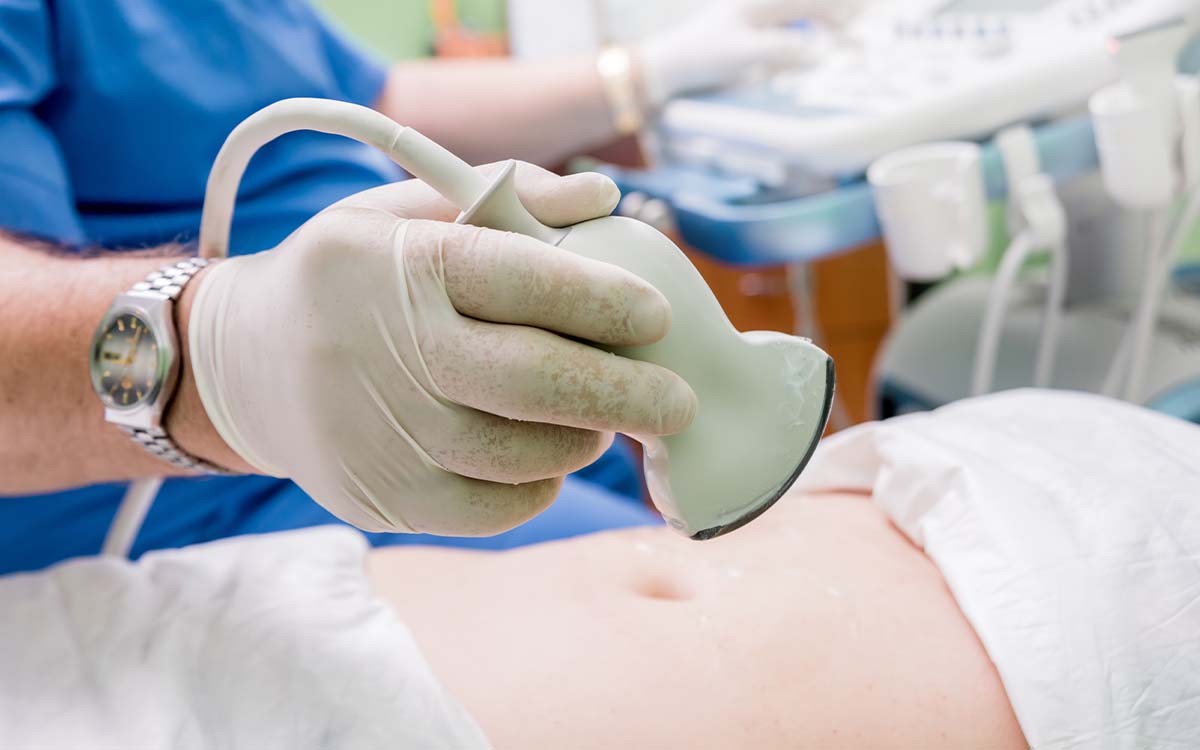
[vc_row][vc_column][vc_column_text]Your first ultrasound appointment during pregnancy is an exciting milestone. It’s a chance to catch a glimpse of the tiny life growing within you and get valuable information about your baby’s development. Before your appointment, your healthcare provider may provide specific instructions on how to prepare. Typically, you’ll be asked to arrive with a full bladder as it helps create a clearer image of the uterus and the baby during the ultrasound. You’ll be guided to the ultrasound room, which is typically a comfortable and dimly lit space. The room will have an ultrasound machine, a monitor, and a bed or reclining chair where you’ll be asked to lie down.
An ultrasound technician, also known as a sonographer, will perform the ultrasound. They are specially trained in using ultrasound technology to capture images of your baby and assess their development. The technician will guide you through the process and explain what they are doing. The technician will apply a clear, water-based gel to your abdomen. The gel helps conduct sound waves and enhances the quality of the images. It may feel slightly cold and wet but is harmless.
Using a handheld device called a transducer, the technician will move it gently over your abdomen, capturing images of your baby on the monitor. You’ll be able to see the outline of your baby, their body parts, and perhaps even witness tiny movements. It’s a thrilling experience that allows you to connect with the miracle of life growing inside you. You may even have the opportunity to hear your baby’s heartbeat. The technician will use a different setting on the ultrasound machine to capture the sound of the beating heart. It’s a beautiful and reassuring moment for many expectant parents.
The ultrasound not only provides visual confirmation of your pregnancy but also enables the technician to assess your baby’s growth and development. They’ll measure your baby’s head circumference, limb length, and other parameters to estimate gestational age. These measurements help ensure your baby is developing within the expected range. In some cases, the first ultrasound may serve diagnostic purposes, such as identifying the location of the pregnancy (uterine or ectopic), confirming multiple pregnancies (twins, triplets, etc.), or assessing any potential concerns.
For many parents-to-be, the first ultrasound is an emotional experience. Seeing your baby’s image on the screen can evoke feelings of joy, awe, and a deep connection with the new life growing inside you. It’s a moment that often solidifies the reality of pregnancy and enhances the anticipation of meeting your little one.
Once the ultrasound is complete, the technician will clean the gel from your abdomen, and you’ll be able to empty your bladder. Depending on the healthcare facility’s protocol, you may have the opportunity to discuss the ultrasound findings with your healthcare provider immediately or schedule a follow-up appointment to review the results. This appointment is a remarkable and significant step in your pregnancy journey. It provides an opportunity to visually connect with your baby, assess their growth and development, and receive reassurance about their well-being. Embrace this special moment and cherish the images and memories that will forever hold a special place in your heart.[/vc_column_text][/vc_column][/vc_row][vc_row css=”.vc_custom_1618658856512{margin-top: 75px !important;}”][vc_column][vc_text_separator title=”Services We Offer:”][vc_column_text]
Laparoscopy | Abnormal Bleeding | Menopause | Minimally Invasive Surgery | Contraception | Pap Smear | Pelvic Pain | Family Planning | STD Testing | Hormone Therapy | Hysterectomy | Infertility | 3D Mammography | Pregnancy & Prenatal Care | Preventive Screening
[/vc_column_text][vc_text_separator title=”Website Navigation:”][vc_column_text]
Home | About | OB Videos | Insurances Accepted | Blog | Providers | Michael Anthony, MD, FACOG | Noemi Maydew, MD, FACOG | Anne Bond Bonpain, MD, FACOG | Elita Wyckoff, MD, FACOG | Gilberto Rodrigo, MD, FACOG | Jennifer Fraley, MD, FACOG | Heather Flowers | Courtney Braswell | Services | Patient Care | Advanced Care Team | Testimonials | Contact Us | Patient Portal
[/vc_column_text][/vc_column][/vc_row]

by Marketing Manager | Jun 15, 2023 | Pregnancy
[vc_row][vc_column][vc_column_text]Pregnancy is an extraordinary time in a couple’s life, filled with anticipation, joy, and a whole lot of love. Alongside the physical changes, the arrival of a baby also brings new dynamics and challenges to a relationship. Understanding and nurturing the bond between partners during this magical journey is key to fostering a strong and supportive connection. Let’s explore how pregnancy can strengthen relationships and bring couples closer together.
Communication is Key: Clear and open communication is vital during pregnancy. This is a time when both partners may have different expectations, concerns, and emotions. Take the time to listen to each other’s thoughts and feelings without judgment or assumptions. Share your excitement, worries, and dreams for the future. Being honest and transparent about your needs and fears can create a safe space for support and understanding.
Embrace the Role of Co-Parents: Pregnancy is a shared experience, and both partners play an essential role in preparing for the arrival of the little one. Embrace the journey of becoming co-parents by actively participating in prenatal visits, childbirth classes, and decision-making processes. Working together as a team strengthens the bond and builds confidence as you navigate this new chapter of your lives.
Celebrate Milestones and Bonding Moments: Pregnancy is filled with milestones and precious bonding moments. From the first ultrasound to feeling the baby’s kicks, take the time to celebrate these magical moments together. Attend doctor’s appointments together, create a baby registry as a couple, or engage in activities that promote connection, such as reading books to the baby or playing soothing music. These shared experiences create lasting memories and deepen the emotional connection.
Support Each Other’s Emotional Well-being: Pregnancy can bring a whirlwind of emotions for both partners. It’s important to support each other’s emotional well-being throughout the journey. Be patient, compassionate, and understanding. Offer a listening ear, a comforting touch, or a shoulder to lean on when needed. Remember that hormonal changes during pregnancy can impact emotions, so practicing empathy and providing reassurance can go a long way.
Prioritize Quality Time Together: Amidst the excitement and preparations, it’s easy to get caught up in the busyness of life. However, it’s crucial to carve out quality time together as a couple. Go on dates, enjoy quiet evenings at home, or take walks in nature. These moments of connection allow you to nurture your relationship and strengthen your bond as you anticipate the arrival of your bundle of joy.
Maintain a Sense of Humor: Pregnancy can be filled with unexpected moments, mood swings, and funny situations. Embrace the humor and laughter together. Find joy in the little things and share in the excitement of the journey. Laughter has a way of easing tension, bringing lightness to challenging situations, and strengthening the connection between partners.
As you embark on this beautiful journey of pregnancy together, remember that challenges may arise, but they can be opportunities for growth and deeper connection. Embrace the joys, the ups and downs, and the incredible love that surrounds this special time. By fostering open communication, supporting each other, cherishing moments, and maintaining a sense of humor, you can create a strong and loving foundation for your relationship as you journey into parenthood together.[/vc_column_text][/vc_column][/vc_row][vc_row css=”.vc_custom_1618658856512{margin-top: 75px !important;}”][vc_column][vc_text_separator title=”Services We Offer:”][vc_column_text]
Laparoscopy | Abnormal Bleeding | Menopause | Minimally Invasive Surgery | Contraception | Pap Smear | Pelvic Pain | Family Planning | STD Testing | Hormone Therapy | Hysterectomy | Infertility | 3D Mammography | Pregnancy & Prenatal Care | Preventive Screening
[/vc_column_text][vc_text_separator title=”Website Navigation:”][vc_column_text]
Home | About | OB Videos | Insurances Accepted | Blog | Providers | Michael Anthony, MD, FACOG | Noemi Maydew, MD, FACOG | Anne Bond Bonpain, MD, FACOG | Elita Wyckoff, MD, FACOG | Gilberto Rodrigo, MD, FACOG | Jennifer Fraley, MD, FACOG | Heather Flowers | Courtney Braswell | Services | Patient Care | Advanced Care Team | Testimonials | Contact Us | Patient Portal
[/vc_column_text][/vc_column][/vc_row]

by Marketing Manager | Jun 8, 2023 | Pregnancy
[vc_row][vc_column][vc_column_text]The delivery room is a space charged with anticipation, raw emotions, and the transformative power of childbirth. As you embark on this incredible journey of becoming parents, having a clear understanding of what to expect can provide you with a sense of confidence and preparedness. In this article, we will delve into the key aspects of the delivery room, offering a practical glimpse into what you can anticipate during this extraordinary experience.
The delivery room is carefully designed to create an environment that caters to the needs of both the expectant mother and her partner. Within its walls, a team of dedicated medical professionals, including doctors, midwives, and nurses, will be present to guide and assist you throughout the process. Their primary objective is to ensure the well-being and safety of both mother and baby.
As you enter the delivery room, you will encounter an array of medical equipment. Fetal monitors will be in place to closely track your baby’s heartbeat and contractions, while intravenous lines provide a means of administering fluids and medications. Blood pressure monitors allow healthcare providers to monitor your vital signs and ensure a smooth delivery.
Childbirth encompasses intense sensations, and there are various pain management options available to alleviate discomfort. Your healthcare team will discuss a range of techniques, including natural methods such as breathing exercises, relaxation techniques, and utilizing a birthing ball. Additionally, medical interventions like epidurals or pain medications can be administered, tailored to your specific needs and preferences.
Within the delivery room, emotions can run high for both parents. It is crucial to establish a strong support system, whether it comprises your partner, family members, or a trusted doula. Their presence and encouragement can greatly enhance your overall experience. Additionally, the healthcare team will be by your side, providing emotional support and guidance throughout the entire process.
The labor process typically unfolds in three distinct stages: early labor, active labor, and delivery. Early labor is characterized by gradually intensifying contractions and the initial dilation of the cervix. Active labor marks a more intense phase, with contractions growing stronger as the cervix continues to dilate until fully open. During this stage, the focus often shifts to pushing, aiding the baby’s descent through the birth canal. Finally, the delivery stage culminates in the miraculous moment when your baby is born.
While natural birth is the desired outcome, there may be instances where medical interventions become necessary due to unforeseen complications. These interventions might include assisted delivery using forceps or vacuum extraction, episiotomy (a surgical incision to widen the birth canal), or, in rare cases, a cesarean section. Your healthcare team will thoroughly explain the reasons behind any recommended interventions, ensuring that you remain informed and actively involved in the decision-making process.
References:
- (2017) Labor and Delivery: What to Expect at the Hospital.
- (2019) Care of the baby in the delivery room.
[/vc_column_text][/vc_column][/vc_row][vc_row css=”.vc_custom_1618658856512{margin-top: 75px !important;}”][vc_column][vc_text_separator title=”Services We Offer:”][vc_column_text]
Laparoscopy | Abnormal Bleeding | Menopause | Minimally Invasive Surgery | Contraception | Pap Smear | Pelvic Pain | Family Planning | STD Testing | Hormone Therapy | Hysterectomy | Infertility | 3D Mammography | Pregnancy & Prenatal Care | Preventive Screening
[/vc_column_text][vc_text_separator title=”Website Navigation:”][vc_column_text]
Home | About | OB Videos | Insurances Accepted | Blog | Providers | Michael Anthony, MD, FACOG | Noemi Maydew, MD, FACOG | Anne Bond Bonpain, MD, FACOG | Elita Wyckoff, MD, FACOG | Gilberto Rodrigo, MD, FACOG | Jennifer Fraley, MD, FACOG | Heather Flowers | Courtney Braswell | Services | Patient Care | Advanced Care Team | Testimonials | Contact Us | Patient Portal
[/vc_column_text][/vc_column][/vc_row]