by OB/GYN | Aug 6, 2021 | OB/GYN News
[vc_row][vc_column][vc_column_text]Topic: Benefits of Exercise for Women Include Lower Breast Cancer Risk, Improved Reproductive Health
The benefits of regular exercise for overall health cannot be overstated. Combined with a healthy diet and weight management, being physically fit can substantially lower your risk for heart disease, diabetes and some cancers.
For women, regular exercise is tied to better reproductive health and a decreased risk of breast cancer. And physical activity does not have to include intense aerobics or weight-lifting, clarifies Monica Suarez Kobilis, M.D., is a family medicine physician with Baptist Health Primary Care.
“Sometimes we need to be creative with what we call exercise — it does not have to mean lifting weights and doing pushups at the gym,” explains Dr. Suarez Kobilis. “Going for quick-paced walks, having a dance party in your living room, putting your baby in the stroller, and going to the park and doing squats and leg lifts while pushing her around — all of those count.”
Moderate-intensity aerobic activity, such as brisk walking, is generally safe for most people and can be as beneficial as intensity-driven exercises.
The generally accepted exercise guidelines from the American Heart Association is: Get at least 150 minutes per week of moderate-intensity aerobic activity, or 75 minutes per week of vigorous aerobic activity, or a combination of both, preferably spread throughout the week. Additionally, try moderate- to high-intensity muscle-strengthening activity (such as resistance or weights) on at least two days per week.
“My advice for women, especially those with underlying health issues such as heart disease, about lifestyle modifications including exercise — any amount of exercise is better than none,” said Dr. Suarez Kobilis. “I advise them to start slowly and work their way up to more vigorous activity, as long as it is approved by their cardiologist.”
But for women, regular exercise is not just about lower their risk of heart disease and diabetes — as with men. Women in their child-bearing years may have extra incentives if they plan to have children.
“Regular exercise is important for women’s reproductive health as pregnant women who exercise routinely are less likely to gain excessive weight, have gestational diabetes, and postpartum depression,” said Dr. Suarez Kobilis.
Being physically active lowers your risk for developing several commonly occurring cancers, says the U.S. Centers for Disease Control and Prevention. Research finds that adults who participate in more physical activities have reduced risks of developing cancers of the bladder, breast, colon, endometrium, esophagus, kidney, lung and stomach, the CDC says.
Topic Discussed: Benefits of Exercise for Women Include Lower Breast Cancer Risk, Improved Reproductive Health
Read More[/vc_column_text][/vc_column][/vc_row][vc_row css=”.vc_custom_1618658856512{margin-top: 75px !important;}”][vc_column][vc_column_text]
About | OB Videos | Insurances Accepted | Blog | Providers | Michael Anthony, MD, FACOG | Noemi Maydew, MD, FACOG | Anne Bond Bonpain, MD, FACOG | Elita Wyckoff, MD, FACOG | Gilberto Rodrigo, MD, FACOG | Jennifer Fraley, MD, FACOG | Heather Flowers | Courtney Braswell | Services | Patient Care | Advanced Care Team | Testimonials | Contact Us | Patient Portal
[/vc_column_text][/vc_column][/vc_row]

by OB/GYN | Aug 4, 2021 | OB/GYN News
[vc_row][vc_column][vc_column_text]Topic: Do Mammograms Hurt? What You Need to Know
Why mammograms matter
A mammogram is the best imaging tool that healthcare providers can use to detect early signs of breast cancer. Early detection can make all the difference in successful cancer treatment.
Getting a mammogram for the first time may cause anxiety. It’s hard to know what to expect if you’ve never done it. But scheduling a mammogram is an important and proactive step in taking care of your health.
Being prepared for the mammogram may help ease your mind as you get ready for your exam. Keep reading to learn more about the procedure and what to expect in terms of pain.
Will it hurt?
Everyone experiences mammograms differently. Some women may feel pain during the procedure, and others may not feel anything at all.
Most women feel some discomfort during the actual X-ray process. The pressure against your breasts from the testing equipment can cause pain or discomfort, and that’s normal.
This part of the process should only last for a few minutes. Still, other women feel extreme pain during the exam. Your pain level may vary with every mammogram you receive depending on:
- the size of your breasts
- the timing of the exam in relation to your menstrual cycle
- the variations in positioning for the mammogram
- When to schedule your mammogram
When scheduling your mammogram, take your menstrual cycle into account. The week after your period ends tends to be the ideal time to get a mammogram. Avoid scheduling your exam for the week before your period. That’s when your breasts will be most tender.
The American College of Physicians (ACP) recommends that women of average risk for developing breast cancer risk between the ages of 40-49 should speak to their healthcare provider about whether to start getting mammograms before age 50.
The American Cancer Society (ACS)Trusted Source recommends that women of average risk for developing breast cancer schedule their first mammogram by age 45, with the option to start at age 40.
After age 45, you should get a mammogram at least once per year with the option to switch to every other year at age 55.
While the ACP and ACS recommendations vary slightly, the decision when and how often to get mammograms should be a decision between you and your healthcare provider.
If you’re of average risk for developing breast cancer, you should begin talking to your healthcare provider about mammograms at age 40.
If you do have a family history of breast cancer, especially early breast cancer, tell your healthcare provider. They may recommend more frequent mammograms.
Topic Discussed: Do Mammograms Hurt? What You Need to Know
Read More[/vc_column_text][/vc_column][/vc_row][vc_row css=”.vc_custom_1618658856512{margin-top: 75px !important;}”][vc_column][vc_column_text]
About | OB Videos | Insurances Accepted | Blog | Providers | Michael Anthony, MD, FACOG | Noemi Maydew, MD, FACOG | Anne Bond Bonpain, MD, FACOG | Elita Wyckoff, MD, FACOG | Gilberto Rodrigo, MD, FACOG | Jennifer Fraley, MD, FACOG | Heather Flowers | Courtney Braswell | Services | Patient Care | Advanced Care Team | Testimonials | Contact Us | Patient Portal
[/vc_column_text][/vc_column][/vc_row]

by OB/GYN | Aug 2, 2021 | OB/GYN News
[vc_row][vc_column][vc_column_text]Topic: Femtech: technology enhancing women’s health
Femtech — technologies specifically designed to positively impact women’s health — has the potential to radically improve health outcomes for women globally. Incorporating artificial intelligence, machine learning, software, diagnostics, products and services, femtech is an emerging industry that is already shifting medical practice.
Despite working for 50% of the world’s population, femtech is an underserved industry, attracting only 10% of investment funding.
AI can have a profound impact on women’s health outcomes, in areas including ovarian, breast and cervical cancers, assistive reproduction, endometriosis and polycystic ovarian syndrome.
Adelaide-based company Presagen has demonstrated just what AI has to offer when it comes to women’s health. The company’s software-based scalable AI technology is designed to be delivered globally at low cost, to maximise reach to women across the world.
In the field of IVF, Presagen’s Life Whisperer technology uses AI to analyse images of embryos, selecting the healthiest ones to improve pregnancy outcomes for couples struggling with fertility. Built via machine learning using thousands of images, the product assesses two-dimensional or microscope images of embryos and provides a confidence score on the likelihood that a pregnancy will result. Life Whisperer was awarded Frost & Sullivan’s 2019 Global New Product Innovation Award.
Presagen’s AI Open Projects is an online platform that connects clinics from around the world to safely crowdsource globally diverse datasets needed to build AI medical products that are robust, scalable and unbiased. The financial value that is created from economies of scale can then be shared amongst contributing clinics via royalties. This enables clinics, particularly small and medium-sized clinics, to benefit and unlock the value of their data with AI without wearing the technical or commercial cost and risk.
“To build AI products that solve global problems, you need a global dataset which is diverse and represents different types of people and clinical settings. This is challenging because data privacy laws can prevent private medical data leaving the country of origin,” Presagen CEO Dr Michelle Perugini said. “As a result, many focus on building AI from local datasets that are not diverse, creating AI that will be biased and simply will not scale.”
Topic Discussed: Femtech: technology enhancing women’s health men
Read More[/vc_column_text][/vc_column][/vc_row][vc_row css=”.vc_custom_1618658856512{margin-top: 75px !important;}”][vc_column][vc_column_text]
About | OB Videos | Insurances Accepted | Blog | Providers | Michael Anthony, MD, FACOG | Noemi Maydew, MD, FACOG | Anne Bond Bonpain, MD, FACOG | Elita Wyckoff, MD, FACOG | Gilberto Rodrigo, MD, FACOG | Jennifer Fraley, MD, FACOG | Heather Flowers | Courtney Braswell | Services | Patient Care | Advanced Care Team | Testimonials | Contact Us | Patient Portal
[/vc_column_text][/vc_column][/vc_row]

by OB/GYN | Jul 29, 2021 | OB/GYN News
[vc_row][vc_column][vc_column_text]Topic: The WHO alcohol-pregnancy warning for childbearing women overlooks men
Men who drink can damage fetuses as well, but they aren’t mentioned by the World Health Organization. The entire burden — and blame — of childbirth is still put on women.
The World Health Organization is advising that “women of childbearing age” should be a focus of alcohol prevention efforts — regardless of whether they know they’re pregnant. The suggestion was included in an early draft of the organization’s global action plan on alcohol, which argues that anti-alcohol campaigns should target women specifically due to the risks alcohol poses to the health of a fetus. Yes, even a fictitious, does-not-yet-exist fetus.
The recommendation was met with immediate backlash after it was released on June 15. “It is extremely disturbing to see the World Health Organization risk hard-won women’s rights by attempting to control their bodies and choices in this way,” Clare Murphy, chief executive of the British Pregnancy Advisory Service, said in a statement. Others shared pictures on Twitter of their wine glasses and alcoholic beverages. As one woman noted, “I intend to have an alcoholic drink tonight for the fourth evening in a row. Not something I normally do, but as a woman of childbearing age I feel it is my duty.”
Though the WHO responded to the outcry by stressing that it “does not recommend abstinence of all women who are of an age at which they could become pregnant,” it continued by saying that “it does seek to raise awareness of the serious consequences that can result from drinking alcohol while pregnant, even when the pregnancy is not yet known.”
Yet men who drink can damage fetuses — known or unknown — as well, but they aren’t mentioned in the WHO guidance. Unintentional though it might be, the implied message is that parenthood is a woman’s inevitable purpose rather than a life choice; that our needs come second to the needs of a baby yet to be born and a family we may or may not want to create; and that women are still not afforded the same bodily autonomy as the men who can impregnate us.
An April study of over 520,000 couples found a 35 percent increase in the risk of birth defects when a father drank alcohol regularly up to six months prior to conception. As the researchers wrote in JAMA, “Our finding suggests that future fathers should be encouraged to modify their alcohol intake before conceiving to reduce fetal risk,” noting how it “substantially elevated the risk of birth defects.”
Topic Discussed: The WHO alcohol-pregnancy warning for childbearing women overlooks men
Read More[/vc_column_text][/vc_column][/vc_row][vc_row css=”.vc_custom_1618658856512{margin-top: 75px !important;}”][vc_column][vc_column_text]
About | OB Videos | Insurances Accepted | Blog | Providers | Michael Anthony, MD, FACOG | Noemi Maydew, MD, FACOG | Anne Bond Bonpain, MD, FACOG | Elita Wyckoff, MD, FACOG | Gilberto Rodrigo, MD, FACOG | Jennifer Fraley, MD, FACOG | Heather Flowers | Courtney Braswell | Services | Patient Care | Advanced Care Team | Testimonials | Contact Us | Patient Portal
[/vc_column_text][/vc_column][/vc_row]
by OB/GYN | Jul 28, 2021 | OB/GYN News
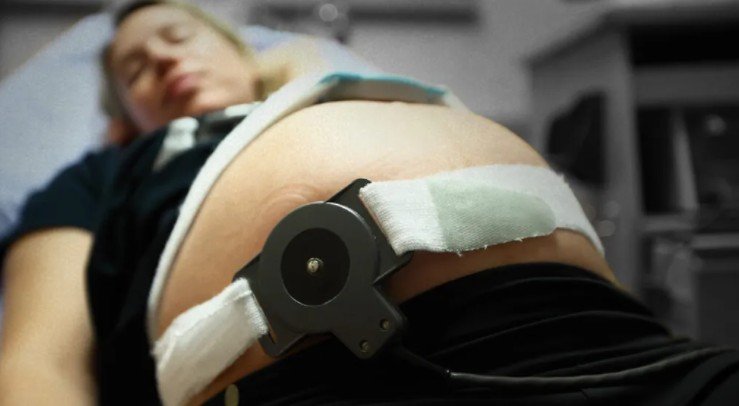
[vc_row][vc_column][vc_column_text]Topic: When is fetal heart rate monitoring necessary?
Doctors use fetal heart monitors to get an indication of a fetus’s health. They may use one in the following situations:
- During routine prenatal appointments: Healthcare professionals can use an ultrasound device to briefly monitor the fetus’s heart rate during routine checkups.
- To monitor for specific concerns: If someone is experiencing troubling symptoms during pregnancy, such as bleeding, a doctor may recommend heart monitoring to assess the well-being of the fetus. They can also use fetal heart monitoring to determine if preterm labor medications are affecting the fetus. These medications stop labor from beginning too early.
- During high risk pregnancies: If a person is at high risk of health or birth complications during pregnancy, a doctor may use a fetal heart monitor to detect signs of distress as early as possible.
- During labor: Once labor begins, a doctor can use a heart monitor to make sure the fetus is doing well during birth.
Several factors can increase the likelihood of a person having a high risk pregnancy. These include:
- having a health condition such as high blood pressure, diabetes, or HIV
- having overweight or obesity, which can increase the risk of several health conditions during pregnancy
- having multiple births, such as twins or triplets, which can make preterm birth or premature labor more likely
- being very young or older than 35 years of age, as these groups are more likely to experience preeclampsia and gestational high blood pressure
It is important to note that not everyone with these risk factors will go on to have a high risk pregnancy, and not all medical practices will recommend fetal monitoring based on a person’s age or body weight alone.
Topic Discussed: When is fetal heart rate monitoring necessary?
Read More[/vc_column_text][/vc_column][/vc_row][vc_row css=”.vc_custom_1618658856512{margin-top: 75px !important;}”][vc_column][vc_column_text]
About | OB Videos | Insurances Accepted | Blog | Providers | Michael Anthony, MD, FACOG | Noemi Maydew, MD, FACOG | Anne Bond Bonpain, MD, FACOG | Elita Wyckoff, MD, FACOG | Gilberto Rodrigo, MD, FACOG | Jennifer Fraley, MD, FACOG | Heather Flowers | Courtney Braswell | Services | Patient Care | Advanced Care Team | Testimonials | Contact Us | Patient Portal
[/vc_column_text][/vc_column][/vc_row]

by OB/GYN | Jul 24, 2021 | OB/GYN News
[vc_row][vc_column][vc_column_text]Topic: Perimenopause: The Women’s Health Issue No One’s Talking About Enough
It’s something most Gen X and cusp millennial women experience, but it’s still extremely misunderstood. Here’s what to know.
Arianna Sholes-Douglas remembers the moment her body was in the grips of perimenopause ― though she didn’t recognize it for what it was at the time, despite being an OB-GYN and integrative health physician focusing on women’s health. Sholes-Douglas was performing a C-section, a surgery she estimates she had done over a thousand times, and her brain just blanked.
“I had a total brain freeze. I couldn’t remember what to do,” she recalled. “It was very scary, and I didn’t know who to talk to or what to do.”
At first, she worried it was early-onset Alzheimer’s. But the big changes she’d been experiencing in cognitive function were hormonal. She was going through perimenopause, the transitional period before menopause when a woman’s body starts making less estrogen until eventually her ovaries stop releasing eggs.
And she’s not alone about being in the dark. Many Gen X women and cusp millennials — who are at the age range when perimenopause has begun or could soon start — have far too little support and information.
Perimenopause can be a huge transition for many women — but they’re still not prepared enough for it or given adequate support.
Arianna Sholes-Douglas remembers the moment her body was in the grips of perimenopause ― though she didn’t recognize it for what it was at the time, despite being an OB-GYN and integrative health physician focusing on women’s health. Sholes-Douglas was performing a C-section, a surgery she estimates she had done over a thousand times, and her brain just blanked.
“I had a total brain freeze. I couldn’t remember what to do,” she recalled. “It was very scary, and I didn’t know who to talk to or what to do.”
At first, she worried it was early-onset Alzheimer’s. But the big changes she’d been experiencing in cognitive function were hormonal. She was going through perimenopause, the transitional period before menopause when a woman’s body starts making less estrogen until eventually her ovaries stop releasing eggs.
And she’s not alone about being in the dark. Many Gen X women and cusp millennials — who are at the age range when perimenopause has begun or could soon start — have far too little support and information.
“We haven’t been educated. Patients haven’t been educated. Doctors haven’t been educated. There really hasn’t been a resource that’s been reliable for women, so they are caught off-guard,” said Sholes-Douglas, who went on to write the book “The Menopause Myth: What Your Mother, Doctor, and Friends Haven’t Told You About Life After 35.”
“Because in their minds, they’re thinking menopause is an old lady issue,” she added. “They think it’s only relevant when they stop having a period.”
But that’s not true. So here are three important things “Xennial” women should know about perimenopause:
It can start in your 30s or 40s.
There aren’t lines around when perimenopause begins, in part because it varies by individual and also because the types of symptoms are so broad. The term perimenopause really just means “around menopause.”
It’s also a stretch of time that can drag on for a while. Many women start to experience symptoms five or even 10 years before they stop having a period (though the average is about four years). And given that full menopause can happen when women are in their 40s or 50s, perimenopause can begin when they’re in their early 40s or even mid-30s.
Topic Discussed: Perimenopause: The Women’s Health Issue No One’s Talking About Enough
Read More[/vc_column_text][/vc_column][/vc_row][vc_row css=”.vc_custom_1618658856512{margin-top: 75px !important;}”][vc_column][vc_column_text]
About | OB Videos | Insurances Accepted | Blog | Providers | Michael Anthony, MD, FACOG | Noemi Maydew, MD, FACOG | Anne Bond Bonpain, MD, FACOG | Elita Wyckoff, MD, FACOG | Gilberto Rodrigo, MD, FACOG | Jennifer Fraley, MD, FACOG | Heather Flowers | Courtney Braswell | Services | Patient Care | Advanced Care Team | Testimonials | Contact Us | Patient Portal
[/vc_column_text][/vc_column][/vc_row]