by OB/GYN | Aug 16, 2021 | OB/GYN News
[vc_row][vc_column][vc_column_text]Topic: Parenting Now: Tips to surviving a summer pregnancy
When you’re pregnant, it doesn’t take much time in the sun to feel overheated, but there are some things you can do to stay cool (or at least comfortable) during the summer months as the temperatures start to spike.
Did someone turn up the thermostat?
No, it’s not an illusion. Your internal body temperature is warmer now that you are growing another human. The reason is your blood volume increases as much as 50% when pregnant, and blood vessels dilate to transport the additional blood where it is needed. In addition, your body has to work harder when it’s pregnant. Just moving from the couch to the kitchen can be a challenge when you have the additional weight to support.
Even in the early stages of pregnancy, it’s important to be mindful of your body temperature, which can become higher than usual when you are pregnant. During pregnancy, if your body temperature becomes higher than 102.2°F for more than 10 minutes, you may suffer from heat exhaustion, heat stroke, or dehydration, which can be dangerous for both you and baby. Stay cool, mama!
Ways to stay cool
To keep you and baby cool and healthy this summer, there are some things to avoid and some tricks to use to cool down.
During pregnancy, avoid:
- Saunas or hot tubs.
- Excessive time outside or in the sun on particularly hot days or during heat advisories.
- Large amounts of salt, which can increase water retention.
When it’s too hot to function:
- Stay inside or seek out buildings with air conditioning, such as a movie theater; Eugene Public Library and Springfield Public Library; walk the Valley River Center for a bit of air-conditioned exercise. Check news outlets for listings of cooling centers during extreme heat waves.
- Find a cold water lake, stream, or pool to submerge in. Even just soaking your feet in a kiddie pool can bring you some relief.
- Wet and freeze a bandana to wear on your head or around your neck.
- Opt for “cold” foods, such as salads with diced chicken; frozen fruits; cold pasta; etc.
- Stay hydrated. During pregnancy, you need 8 to 12 cups (64 to 96 ounces) of water every day. Water is important for so many reasons: it aids in digestion, helps form the amniotic fluid around the fetus, as well as circulates nutrients throughout your body.
Know the signs of dehydration
Just as important as staying hydrated, know the signs of when you might be dehydrated.
Look for: sweating, sluggishness, nausea, dizziness, headaches, confusion, decreased or dark-colored urine.
If you feel moderate dehydration, replenish your fluids with cold water. If you are experiencing severe dehydration, a trip to urgent care will be necessary to receive intravenous fluids and a proper evaluation by a medical professional.
Topic Discussed: Parenting Now: Tips to surviving a summer pregnancy
Read More[/vc_column_text][/vc_column][/vc_row][vc_row css=”.vc_custom_1618658856512{margin-top: 75px !important;}”][vc_column][vc_column_text]
About | OB Videos | Insurances Accepted | Blog | Providers | Michael Anthony, MD, FACOG | Noemi Maydew, MD, FACOG | Anne Bond Bonpain, MD, FACOG | Elita Wyckoff, MD, FACOG | Gilberto Rodrigo, MD, FACOG | Jennifer Fraley, MD, FACOG | Heather Flowers | Courtney Braswell | Services | Patient Care | Advanced Care Team | Testimonials | Contact Us | Patient Portal
[/vc_column_text][/vc_column][/vc_row]
by OB/GYN | Aug 14, 2021 | OB/GYN News
[vc_row][vc_column][vc_column_text]Topic: We Need to Know How Menopause Changes Women’s Brains
This might turn out to be a crucial window to try to prevent Alzheimer’s and other chronic diseases that often accompany older age.
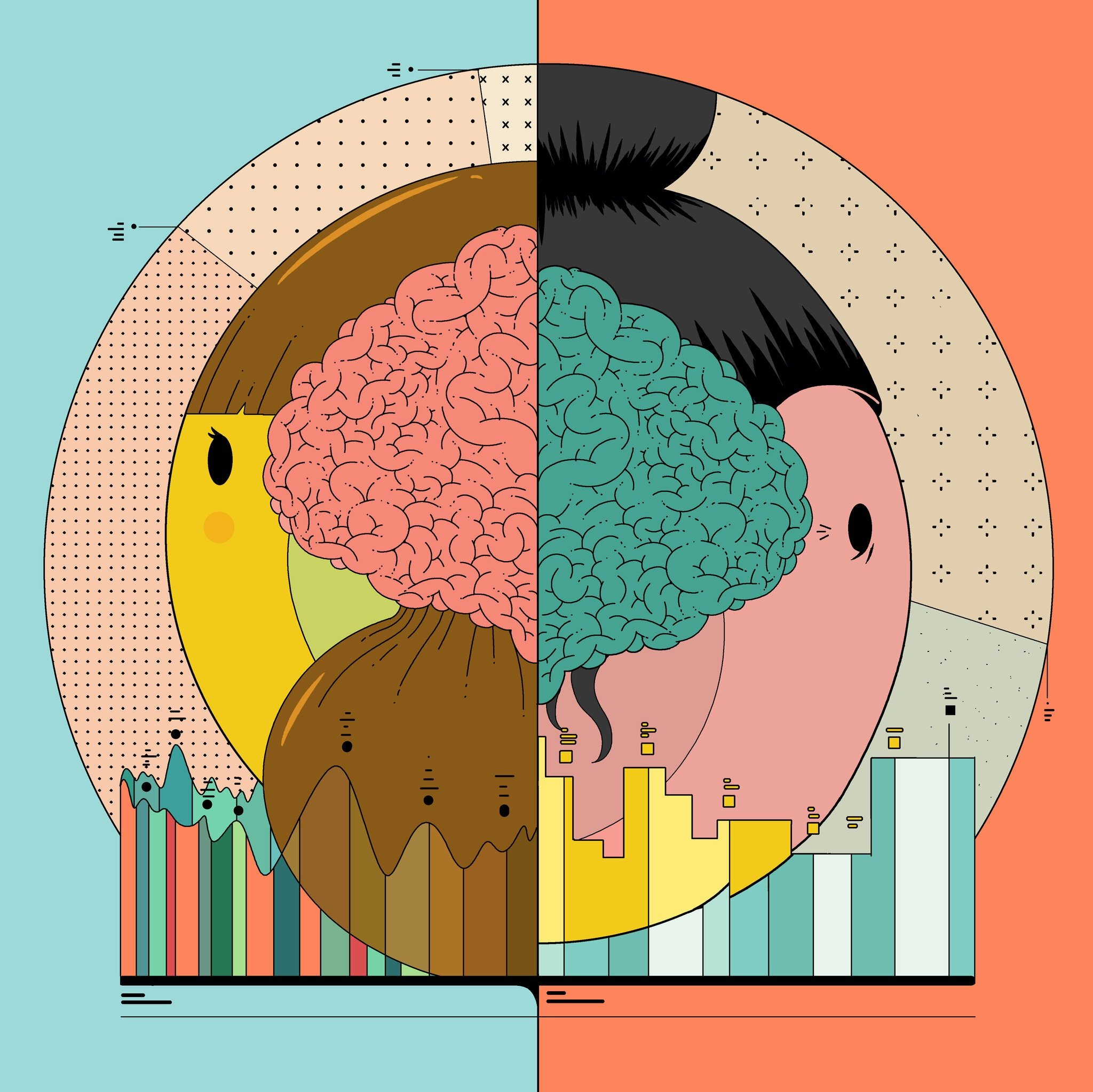
During menopause, which marks the end of a woman’s menstrual cycles, her ovaries stop producing the hormones estrogen and progesterone, bringing an end to her natural childbearing years. But those hormones also regulate how the brain functions, and the brain governs their release — meaning that menopause is a neurological process as well. “Many of the symptoms of menopause cannot possibly be directly produced by the ovaries, if you think about the hot flashes, the night sweats, the anxiety, the depression, the insomnia, the brain fog,” says Lisa Mosconi, an associate professor of neurology at Weill Cornell Medicine and director of its Women’s Brain Initiative. “Those are brain symptoms, and we should look at the brain as something that is impacted by menopause at least as much as your ovaries are.”
In June, Mosconi and her colleagues published in the journal Scientific Reports one of the few studies to observe in detail what happens to the brain throughout the menopause transition, not just before and after. Using various neuroimaging techniques, they scanned the brains of more than 160 women between the ages of 40 and 65 who were in different stages of the transition to examine the organ’s structure, blood flow, metabolism and function; they did many of the same scans two years later. They also imaged the brains of men in the same age range. “What we found in women and not in men is that the brain changes quite a lot,” Mosconi says. “The transition of menopause really leads to a whole remodeling.”
On average, women in the United States enter the menopause transition — defined as the first 12 consecutive months without a period — at around 50; once diagnosed, they are in postmenopause. But they may begin to have hormonal fluctuations in their 40s. (For some women, this happens in their 30s, and surgical removal of the ovaries causes immediate menopause, as do some cancer treatments.) Those fluctuations cause irregular periods and potentially a wide variety of symptoms, including hot flashes, insomnia, mood swings, trouble concentrating and changes in sexual arousal. During this phase, known as perimenopause, which averages four years in length (but can last from several months to a decade), Mosconi and colleagues observed that their female subjects experienced a loss of both gray matter (the brain cells that process information) and white matter (the fibers that connect those cells). Postmenopause, however, that loss stopped, and in some cases brain volume increased, though not to its premenopausal size. The researchers also detected corresponding shifts in how the brain metabolized energy, but these did not affect performance on tests of memory, higher-order processing and language. This suggests that the female brain “goes through this process, and it recoups,” says Jill M. Goldstein, a professor of psychiatry and medicine at Harvard Medical School and founder and executive director of the Innovation Center on Sex Differences in Medicine at Massachusetts General Hospital. “It adapts to a new normal.”
Topic Discussed: We Need to Know How Menopause Changes Women’s Brains
Read More[/vc_column_text][/vc_column][/vc_row][vc_row css=”.vc_custom_1618658856512{margin-top: 75px !important;}”][vc_column][vc_column_text]
About | OB Videos | Insurances Accepted | Blog | Providers | Michael Anthony, MD, FACOG | Noemi Maydew, MD, FACOG | Anne Bond Bonpain, MD, FACOG | Elita Wyckoff, MD, FACOG | Gilberto Rodrigo, MD, FACOG | Jennifer Fraley, MD, FACOG | Heather Flowers | Courtney Braswell | Services | Patient Care | Advanced Care Team | Testimonials | Contact Us | Patient Portal
[/vc_column_text][/vc_column][/vc_row]

by OB/GYN | Aug 12, 2021 | OB/GYN News
[vc_row][vc_column][vc_column_text]Topic: Breastfeeding Can Be A Challenge For Any Mom
Every new mom and dad has to adjust to the changes as they become parents, but moms who decide to breastfeed face additional challenges. Kristina Beaugh, mother of two daughters, remembers the new mom struggle all too well.
“When I had my first daughter, Ellie, I had to go back to work full time after she was ten weeks old. I remember she was sick the day I had to go back to work, and it was so awful. I was struggling with postpartum depression and breastfeeding was already difficult,” says Beaugh.
The challenges keep coming if a mom has to return to work while breastfeeding that often means carving out time to pump at the office and sometimes switching to formula sooner than perhaps planned which can lead to feelings of guilt or even failure for some moms.
“A lot of women don’t have the choice, they have to go back to work to feed their families and that was a choice, that was definitely a requirement for us,” adds Beaugh.
The American Academy of Pediatrics recommends mothers breastfeed exclusively for at least six months, to meet that expectation, it can mean pumping every couple of hours. However, finding the right breast pump isn’t always easy. They can be expensive and what works for one mom may not work for another. While some pumps are covered by health insurance, Beaugh says her insurance did not cover what she felt she needed to discreetly pump at work.
“It was very old model and it wasn’t something that was efficient for sure,” says Beaugh.
Then there are the logistical issues of pumping at work. While employees are legally supposed to allow time and space, that is not a bathroom for employees, to pump in private. It can be an awkward conversation for moms to have with their boss. Beaugh says she often found herself having to choose between pumping or attending a meeting, adding on extra pressure.
Support groups like the Villyge are geared to helping working moms make sure their rights are being met including making sure they know their rights in the workplace.
“We have career coaches as well as parenting experts on a call all the time because so much what goes into a working parent’s success is just to parent or how to breastfeed in a silo, but the integration; how to navigate some of the difficult conversations with our managers,” says Debi Yadegari who is the CEO and founder of Villyge. Villyge is a support group helping moms nationwide, they provide a hotline for moms to call when they are having issues with challenges in the workplace or breastfeeding in general—such as low milk supply production—it’s a common fear for breastfeeding moms.
However, lactation counselors like Cynthia Evans, who works at Woman’s Hospital, says a dip in milk supply is common.
“It can vary from mom to mom, when they do return to work it is hard. They are away from their baby for long periods of time. Sometimes, they do see a dip in their milk supplies,” says Evans.
Topic Discussed: Breastfeeding Can Be A Challenge For Any Mom
Read More[/vc_column_text][/vc_column][/vc_row][vc_row css=”.vc_custom_1618658856512{margin-top: 75px !important;}”][vc_column][vc_column_text]
About | OB Videos | Insurances Accepted | Blog | Providers | Michael Anthony, MD, FACOG | Noemi Maydew, MD, FACOG | Anne Bond Bonpain, MD, FACOG | Elita Wyckoff, MD, FACOG | Gilberto Rodrigo, MD, FACOG | Jennifer Fraley, MD, FACOG | Heather Flowers | Courtney Braswell | Services | Patient Care | Advanced Care Team | Testimonials | Contact Us | Patient Portal
[/vc_column_text][/vc_column][/vc_row]
by OB/GYN | Aug 11, 2021 | OB/GYN News
[vc_row][vc_column][vc_column_text]Topic: Is It Safe To Get a Mammogram During the Pandemic?
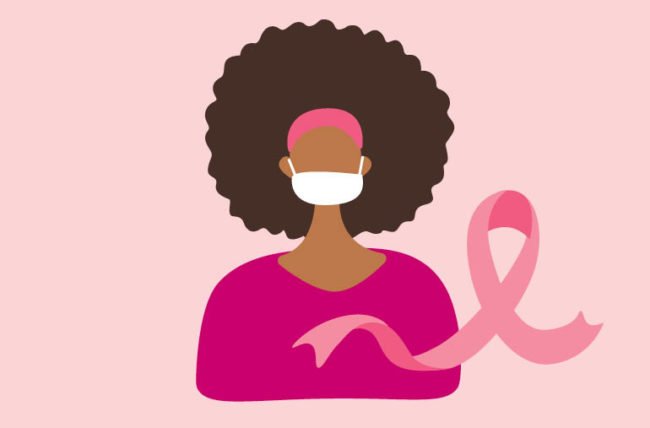
COVID-19 has disrupted our lives and left many of us feeling uneasy about doing the things we once did without hesitation. Among them — seeing healthcare providers for routine checkups and exams. But despite the uncertainty that is swirling all around us, one thing remains quite clear. We can’t let the pandemic stop us from making our health a priority. That’s especially true if you’re due for a mammogram.
The American Cancer Society estimates that this year:
- About 276,480 new cases of invasive breast cancer will be diagnosed in women.
- About 48,530 new cases of carcinoma in situ (CIS), a non-invasive and early form of breast cancer, will be diagnosed.
- About 42,170 women will die from breast cancer.
Early detection has been key to helping to reduce the number of deaths related to breast cancer. That’s why mammograms are so important. If you’re thinking about skipping yours because of COVID-19, diagnostic radiology specialist Laura Dean, MD, explains why it’s not a good idea to do so.
Not having a family history of breast cancer doesn’t mean you can’t get it.
Dr. Dean has heard a variety of reasons for why patients don’t believe that they need mammograms.
“One common misconception that I hear is ‘No one in my family has ever had breast cancer, so I’m really not that worried about getting it.’ But the fact is the majority (about 85%) of cancers we see occur in patients who have no family history. Therefore, if we only screen patients who are considered high risk, we would be potentially missing a majority of breast cancers in the population,” explains Dr. Dean.
Another misconception — not experiencing symptoms or feeling lumps means nothing is wrong.
“I hear patients say ‘I don’t feel anything or have any problems with my breasts.’ The purpose of a mammogram is to identify cancers before they reach a size where they can be felt. When cancers are found early, we have better chances of treating them and the treatment/surgery may potentially be less invasive,” says Dr. Dean. According to Dr. Dean, studies have also shown that most lives are saved because of screening when mammography is performed every year beginning at the age of 40.
Why some women have been avoiding mammograms during the pandemic.
As for the whys, they’ve either been rooted in uncertainty or apprehension. Dr. Dean says some patients didn’t get mammograms because of stay at home orders or fear of exposure to COVID-19. And with a lot of non-essential medical services and procedures being canceled, others might have been under the impression that they couldn’t get mammograms.
How are healthcare providers going above and beyond to keep patients safe during mammograms?
Dr. Dean emphasizes that it’s very safe to get a mammogram right now. “Many changes have been made in our work spaces to facilitate physical distancing. This includes spacing out patient appointment times to limit crowding in waiting rooms, separation of seating in waiting rooms, increased cleaning and sanitizing practices, health and temperature screenings for every patient and employee and of course, universal masking.”
Topic Discussed: Is It Safe To Get a Mammogram During the Pandemic?
Read More[/vc_column_text][/vc_column][/vc_row][vc_row css=”.vc_custom_1618658856512{margin-top: 75px !important;}”][vc_column][vc_column_text]
About | OB Videos | Insurances Accepted | Blog | Providers | Michael Anthony, MD, FACOG | Noemi Maydew, MD, FACOG | Anne Bond Bonpain, MD, FACOG | Elita Wyckoff, MD, FACOG | Gilberto Rodrigo, MD, FACOG | Jennifer Fraley, MD, FACOG | Heather Flowers | Courtney Braswell | Services | Patient Care | Advanced Care Team | Testimonials | Contact Us | Patient Portal
[/vc_column_text][/vc_column][/vc_row]
by OB/GYN | Aug 10, 2021 | OB/GYN News
[vc_row][vc_column][vc_column_text]Topic: Why Reports Of Menstrual Changes After COVID Vaccine Are Tough To Study
Sore arms. Headaches. Low-grade fevers.
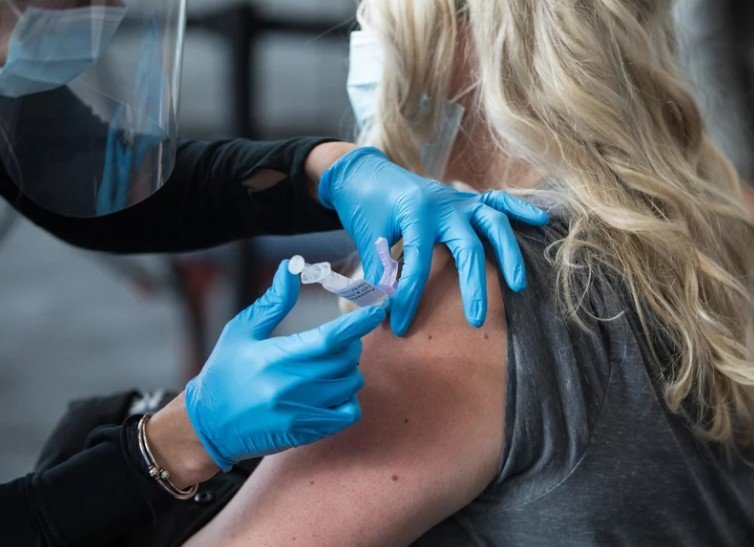
These are some of the expected side effects of a COVID-19 vaccine — a sign that the body’s mounting an immune response and learning how to fend off the coronavirus.
But thousands of people in the U.S. think they may have had other side effects that drugmakers and doctors never warned them about: unexpected changes in their menstrual cycles. Though many researchers and gynecologists say a causal link hasn’t yet been established between the vaccines and the reported changes, it hasn’t stopped the worry among some people. And so far, scientists haven’t collected much data on whether or how the vaccines might affect a menstrual period.
Kate Clancy, a human reproductive ecologist and associate professor of anthropology at the University of Illinois Urbana-Champaign, and biological anthropologist Katharine Lee of Washington University School of Medicine in St. Louis hope to change that. Clancy has centered her research for decades around uterine function, ovarian hormones and menstrual cycles, and Lee is also a data engineer; her current postdoctoral work includes “collaborations on physical activity and reproductive hormones across the lifespan in healthy adult premenopausal women.”
The two researchers have collected more than 140,000 reports from people who say they’ve noticed a change in their periods after vaccination; Lee and Clancy are formally documenting those cases in an open-ended study.
Clancy’s interest was first piqued by her own experience.
“My period after dose one was one of the heaviest I remember having ever in my life,” she says.
She took to social media with her story, and five months later, people are still responding to her original tweet.
“I did not anticipate it blowing up to the extent that it has,” Clancy says. “A lot of emails, a lot of Instagram DMs and a lot of tweets of people who are just baring their souls to us.”
Topic Discussed: Why Reports Of Menstrual Changes After COVID Vaccine Are Tough To Study
Read More[/vc_column_text][/vc_column][/vc_row][vc_row css=”.vc_custom_1618658856512{margin-top: 75px !important;}”][vc_column][vc_column_text]
About | OB Videos | Insurances Accepted | Blog | Providers | Michael Anthony, MD, FACOG | Noemi Maydew, MD, FACOG | Anne Bond Bonpain, MD, FACOG | Elita Wyckoff, MD, FACOG | Gilberto Rodrigo, MD, FACOG | Jennifer Fraley, MD, FACOG | Heather Flowers | Courtney Braswell | Services | Patient Care | Advanced Care Team | Testimonials | Contact Us | Patient Portal
[/vc_column_text][/vc_column][/vc_row]

by OB/GYN | Aug 9, 2021 | OB/GYN News
[vc_row][vc_column][vc_column_text]Topic: What is prenatal anxiety?
Pregnancy brings many changes, and in some cases, anxiety may occur or worsen. Complications during a person’s pregnancy can exacerbate anxiety symptoms. However, there is a range of treatments that may help.
Unmanaged ongoing anxiety during pregnancy, also called prenatal anxiety, can affect the parent and baby. However, the right treatment can help manage anxiety in pregnancy.
Many people worry that anxiety may harm their baby. However, the tools, resources, and support that a person needs to manage symptoms are widely available, and there are several options to suit an individual’s needs.
This article looks at anxiety medications that are safe for pregnant individuals. It also discusses other ways to manage symptoms, such as therapy and natural remedies.
Which anxiety medications are safe?
If a doctor recommends medication for prenatal anxiety, there are several options they may prescribe. While all medications have risks, doctors will aim to prescribe the safest medications at the lowest effective dose.
There are medications that doctors use to treat anxiety that they also recommend for treating depression. Antidepressants that healthcare professionals may prescribe during pregnancy include:
- Some selective serotonin reuptake inhibitors (SSRIs): A large study found no link between sertraline (Zoloft), one of the most commonly prescribed SSRIs, and congenital disabilities. Although they did find that paroxetine (Paxil) and fluoxetine (Prozac) had some associations with some congenital disabilities, it is important to note that the risk of these conditions is still incredibly low.
- Serotonin and norepinephrine reuptake inhibitors (SNRIs): SNRIs also offer a relatively low-risk option for pregnant individuals with anxiety. Examples of these types of medications include duloxetine (Cymbalta) and venlafaxine (Effexor XR).
- Other medications: Doctors may prescribe other medications if SSRIs or SNRIs are not effective. Individuals can discuss the risks of each with a doctor before taking these.
Doctors sometimes prescribe benzodiazepines to treat severe anxiety. One 2019 meta-analysis found that these medications may have links with an increased risk of certain congenital disabilities. However, more research is necessary to investigate these findings. It is also important to note that exposure to benzodiazepines during pregnancy is rare, and individuals taking them should speak to a healthcare professional if they have concerns.
Topic Discussed: What is prenatal anxiety?
Read More[/vc_column_text][/vc_column][/vc_row][vc_row css=”.vc_custom_1618658856512{margin-top: 75px !important;}”][vc_column][vc_column_text]
About | OB Videos | Insurances Accepted | Blog | Providers | Michael Anthony, MD, FACOG | Noemi Maydew, MD, FACOG | Anne Bond Bonpain, MD, FACOG | Elita Wyckoff, MD, FACOG | Gilberto Rodrigo, MD, FACOG | Jennifer Fraley, MD, FACOG | Heather Flowers | Courtney Braswell | Services | Patient Care | Advanced Care Team | Testimonials | Contact Us | Patient Portal
[/vc_column_text][/vc_column][/vc_row]