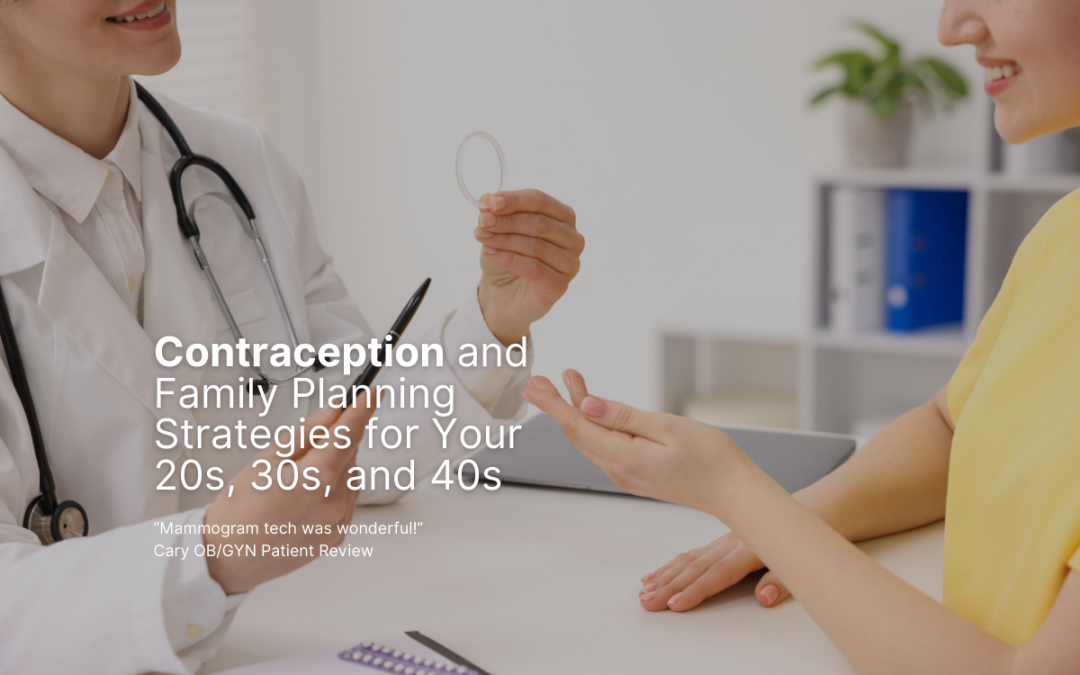
Contraception and Family Planning Strategies for Your 20s, 30s, and 40s

Contraception and Family Planning Strategies for Your 20s, 30s, and 40s

Family planning is a journey — not a one-time decision. Your goals, priorities, and lifestyle evolve over time, and so should the conversation you have about contraception. Whether you’re in your early twenties and not ready to have children, in your thirties thinking about spacing or growing your family, or navigating your forties with changing fertility and health priorities, understanding your options empowers you to make choices that fit your life.

At Cary OB/GYN, we partner with patients across all reproductive stages to provide personalized, evidence-based contraceptive counseling and family planning support. This post walks through key considerations for patients in their 20s, 30s, and 40s — helping you choose the strategy that’s right for you.

“Mammogram tech was wonderful!”
Cary OB/GYN Patient Review

Why Personalized Family Planning Matters

There’s no single “best” method for everyone. The right choice depends on:

  • Your health history
  • Reproductive goals (whether you want to prevent pregnancy now, later, or pursue fertility)
  • Lifestyle and daily routines
  • Hormonal preferences
  • Tolerance for side effects


An open, informed discussion with your OB/GYN ensures your family planning strategy reflects not just medical guidelines but your personal goals and comfort.

In Your 20s: Flexibility and Exploration

Your 20s are a time of life filled with change — career beginnings, education, travel, relationships, and self-discovery. For many in this age group, contraception is focused on preventing unintended pregnancy and building comfort with reproductive health care.

Key considerations in your 20s:

  • Reversible options:

    • Oral contraceptives (the pill): Daily hormonal birth control that can regulate cycles and reduce period symptoms.
    • Condoms: Offer protection against sexually transmitted infections (STIs) and pregnancy when used correctly.
    • Long-acting reversible contraceptives (LARCs): Intrauterine devices (IUDs) and implants offer highly effective, low-maintenance pregnancy prevention.
  • Cycle health:
    Some methods — especially combination hormonal contraceptives — can make periods lighter, more regular, and less painful, which can be especially helpful early in reproductive life.
  • STI prevention:
    Condoms remain the only method that helps protect against STIs. Even when using another contraceptive method, condoms can be a smart choice for STI prevention.
  • Reproductive health awareness:
    Your 20s are a great time to build a baseline understanding of your cycle, ovulation patterns, and overall reproductive health — knowledge that pays off in later years for both contraception and fertility planning.


At this stage, contraception is often about control and flexibility. It’s about aligning your current lifestyle with your reproductive goals.

In Your 30s: Planning for Pregnancy or Spacing

In your 30s, many women begin to think more deliberately about timing pregnancy — whether that means spacing pregnancies, planning a first child, or adjusting contraception as priorities shift.

Key family planning considerations in your 30s:

  • Balancing contraception with future fertility goals:
    If you’re planning to have children in the next few years, options that are easily discontinued — like oral contraceptives or hormone-free methods — may be attractive. LARCs remain a great choice when pregnancy is not yet desired, but can be removed when you’re ready.
  • Fertility awareness:
    Fertility begins to gradually decline in your early 30s. If pregnancy is a goal, conversations about timing, preconception health, and fertility monitoring can help you plan proactively.
  • Health conditions:
    Conditions such as hypertension, migraines, or clotting disorders can influence contraceptive safety and choice. A thorough review of your medical history with your OB/GYN ensures the safest options are selected.
  • Reliable, low-maintenance options:
    For women who want to prevent pregnancy while maintaining a busy schedule, LARCs (like IUDs and implants) remain among the most effective choices, with failure rates under 1%.

Your 30s are a time to refine your strategy — balancing reliable contraception with your evolving reproductive and life goals.

In Your 40s: Transition, Health Focus, and Continued Planning

Your 40s are marked by significant reproductive transitions. Fertility continues to decline, menstrual cycles become more irregular, and perimenopausal symptoms may begin. But contraception remains important — even if pregnancy seems less likely.

What to consider in your 40s:

  • Continued pregnancy prevention:
    You can still become pregnant in your early and mid-40s. If avoiding pregnancy remains a priority, effective contraception is essential.
  • Health and risk factors:
    Certain contraceptives may be less suitable if you have medical conditions like high blood pressure or a history of blood clots. Non-hormonal options (such as a copper IUD) or progestin-only methods are often safe alternatives.
  • Perimenopause and symptoms:
    Hormonal contraceptives can sometimes help manage irregular bleeding, heavy periods, or other perimenopausal symptoms — while also preventing pregnancy.
  • Fertility desires:
    For women considering pregnancy later in life, conversations about fertility testing, risks, and expectations are important. Even though fertility declines with age, many women successfully conceive in their 40s with appropriate planning and support.

Your 40s are often about balancing multiple goals: managing symptoms, maintaining contraceptive effectiveness, and planning for the future — all while taking overall health into account.

Tips for Making the Best Family Planning Decisions

  1. Start with a conversation:
    A personalized consultation with your OB/GYN is the best way to choose a method that fits your health profile and goals.
  2. Reevaluate regularly:
    As life changes — new relationships, health shifts, or changing plans — revisit your contraception choices to ensure they still meet your needs.
  3. Ask about side effects and expectations:
    Understanding what to expect from your chosen method reduces surprises and improves satisfaction.
  4. Consider both physical and lifestyle factors:
    Think about how often you want to think about contraception, your tolerance for daily pills versus long-acting options, and whether STI prevention is also a priority.

“Dr. Wyckoff is always so kind and helpful. She took her time, I did not feel rushed at all. She explained each part of her exam, she asked me questions, actually read and reviewed the paperwork I completed prior to my appointment, and gave me helpful advice.”
Cary OB/GYN Patient Review

A Partner in Your Planning

Contraception and family planning aren’t just medical decisions — they’re life decisions. At Cary OB/GYN, we’re here to help you navigate these choices at every stage of life, with care that’s personalized, evidence-based, and aligned with your goals.

Wherever you are on your family planning journey — your 20s, 30s, or 40s — you deserve thoughtful guidance and clear information. Schedule a consultation today to explore your options and make the plan that works best for you.

Kidney Health and Pregnancy: What Expectant Moms Should Know

Kidney Health and Pregnancy: What Expectant Moms Should Know

Pregnancy is an exciting and transformative time, filled with anticipation, planning, and care. As your body supports the growth and development of new life, it undergoes a remarkable series of changes — many of which involve your kidneys. These walnut-shaped organs play a central role in filtering waste, balancing fluids and electrolytes, and regulating blood pressure. During pregnancy, the kidneys take on added responsibility, making kidney health an important focus for expectant moms.

Understanding how your kidneys adapt — and when to seek care — can help support your health and your baby’s well-being throughout pregnancy and beyond.

“Staff were pleasant and Dr. Wyckoff was informative, patient, made me feel comfortable even though I was extremely anxious.”
Cary OB/GYN Patient Review

Why Kidneys Matter in Pregnancy

Your kidneys play several vital roles that become especially important during pregnancy, including:

  • Filtering waste products and excess fluid from your bloodstream
  • Balancing electrolytes and minerals such as sodium and potassium
  • Helping regulate blood pressure through hormonal signals
  • Managing changes in blood volume as your body supports both you and your developing baby

These functions become more demanding during pregnancy because your blood volume increases significantly and your body’s metabolic needs rise. In a healthy pregnancy, the kidneys adapt by boosting blood flow and increasing the rate at which they filter blood — changes that are typically well-tolerated in women with normal kidney function.

For most women, these changes are manageable without long-term impact. However, if an expectant mother has pre-existing kidney disease or develops a kidney-related complication, additional monitoring and care are essential.

Kidney Issues That Can Affect Pregnancy

1. Pre-Existing Kidney Disease

Women who already have kidney disease — whether due to chronic conditions like diabetic nephropathy, hypertension-related damage, or autoimmune disorders — may face additional challenges during pregnancy. Pregnancy with kidney disease carries higher risk for:

  • High blood pressure or preeclampsia
  • Preterm birth and growth restriction
  • Increased chance of neonatal intensive care
  • Changes in kidney function over time

A detailed pre-pregnancy evaluation with your care team, including your OB/GYN and potentially a nephrologist, can help optimize kidney health and minimize risks.

2. Kidney Transplant or Dialysis

If you have had a kidney transplant or are on dialysis, pregnancy is still possible but requires specialized care. For transplant recipients, waiting at least a year after surgery to conceive and ensuring stable kidney function and controlled blood pressure are important. In women on dialysis, intensified monitoring and tailored dialysis schedules may be necessary.

Common Kidney-Related Conditions in Pregnancy

Even women without pre-existing kidney disease can face conditions during pregnancy that affect the kidneys:

Urinary Tract Infections (UTIs)

Pregnancy naturally changes your urinary tract — the bladder may not empty completely, and hormone shifts can make urine less acidic. This increases the risk of UTIs, which can start in the bladder but may progress to a kidney infection if left untreated. Untreated kidney infections can cause high fever, flank pain, and complications for both mother and baby.

Preeclampsia

Preeclampsia is a pregnancy-specific condition marked by high blood pressure and protein in the urine. When blood pressure rises and kidneys begin to leak protein — a sign they’re under stress — it may indicate preeclampsia, which requires prompt medical attention. Preeclampsia can affect liver function, clotting systems, and fetal health if not addressed. Regular screening of blood pressure and urine protein is essential in prenatal care.

Symptoms That Warrant Medical Attention

Some discomforts are common in pregnancy, but certain signs may suggest a kidney-related concern. Contact your OB/GYN promptly if you experience:

  • Pain or burning when urinating
  • Blood in your urine
  • Sudden or severe swelling of hands, face, or feet
  • High blood pressure readings consistently above normal
  • Persistent lower back or flank pain
  • Fever with chills or unusual fatigue

These symptoms may signal an infection, elevated blood pressure, or other conditions that require timely evaluation and treatment.

Supporting Kidney Health During Pregnancy

Expectant moms can take proactive steps to support kidney health throughout pregnancy:

Stay well-hydrated: Adequate fluid intake helps your kidneys filter waste effectively and may reduce the risk of UTIs. Aim for clear or pale yellow urine, but discuss exact fluid goals with your care team.

Attend all prenatal appointments: Routine visits allow your provider to monitor your blood pressure, kidney function, and urinary protein — early detection helps prevent complications.

Manage underlying conditions: Conditions like high blood pressure, diabetes, and autoimmune disorders can affect kidney function. Working closely with your OB/GYN and specialists helps keep these conditions under control.

Know your medications: Some drugs commonly used to manage kidney disease or high blood pressure are not safe in pregnancy. Discuss your medications with your care team before conception and as early as possible if you’re already pregnant.

A Team Approach to Care

Pregnancy is unique in that it essentially involves caring for two patients: you and your baby. When kidney concerns are part of the picture, your care team may include:

  • Your OB/GYN
  • A nephrologist (kidney specialist)
  • A maternal-fetal medicine specialist (high-risk pregnancy expert)
  • A midwife or obstetric nurse

A coordinated, multidisciplinary approach helps ensure that both maternal and fetal health are monitored comprehensively.

“I love Dr. Bonpain as she listens when I describe what's happening to me and provides possible courses of action. After hearing my symptoms, she advised to get ultrasound and last week, I had a procedure to remove some growths. After the procedure, she came and told me what she saw, how it all went and gave me other advices. Then she let me know the results that came back from the lab. I trust her and I am really glad she is my doctor.”
Cary OB/GYN Patient Review

For most expectant moms with healthy kidneys, pregnancy does not cause lasting kidney damage, and the kidneys adapt well to the demands of pregnancy. Regular prenatal care, awareness of warning signs, and open communication with your healthcare team are key to a healthy pregnancy journey.

However, if you have pre-existing kidney disease, high blood pressure, or have experienced kidney symptoms during your pregnancy, early evaluation and monitoring can make a difference in outcomes. Your OB/GYN is an essential partner in navigating these issues, helping you make informed decisions that support both your health and your baby’s.

This National Kidney Month, take a moment to learn about kidney health and talk to your provider about any concerns — your kidneys work hard for you every day, and pregnancy should be a time of support and strength.

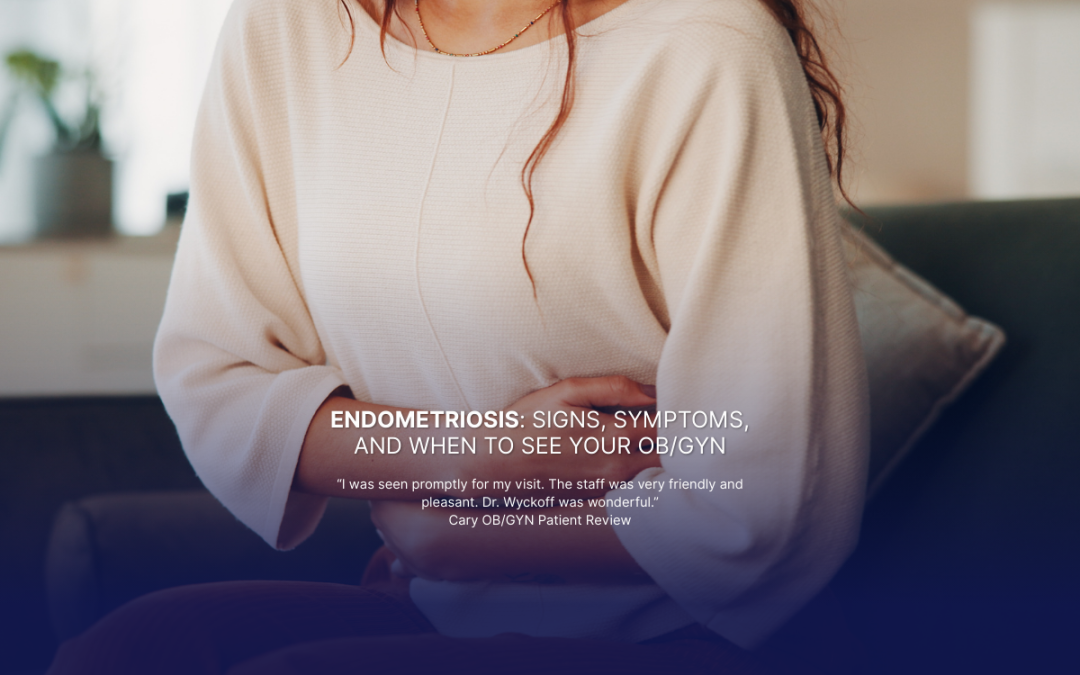
Endometriosis: Signs, Symptoms, and When to See Your OB/GYN

Endometriosis: Signs, Symptoms, and When to See Your OB/GYN

March is Endometriosis Awareness Month: an important time to raise understanding about a condition that affects millions of women and people with uteruses worldwide — yet is often misunderstood, misdiagnosed, or minimized for far too long. At Cary OB/GYN, we know that education and early recognition are powerful tools in helping patients get answers, access personalized care, and improve their quality of life.

Endometriosis can show up in many ways — sometimes subtle, sometimes severe — and its impact is not only physical but emotional and social as well. In this post, we’ll explain what endometriosis is, common signs and symptoms, why it’s often missed, and when it’s time to see your OB/GYN for evaluation.

“I was seen promptly for my visit. The staff was very friendly and pleasant. Dr. Wyckoff was wonderful.”
Cary OB/GYN Patient Review

What Is Endometriosis?

Endometriosis occurs when tissue similar to the lining of the uterus (the endometrium) grows in places outside the uterus — most commonly on the ovaries, fallopian tubes, pelvic lining, or other pelvic structures. Unlike the endometrial lining that sheds during menstruation, these displaced implants have no way to exit the body. They can break down, bleed internally, and cause irritation, inflammation, and scarring over time.

Although endometriosis is common — affecting an estimated 1 in 10 women of reproductive age — it is not “normal” or something patients simply have to endure. Yet many women wait years before receiving a diagnosis, often because symptoms are dismissed as typical period pain.

Common Signs and Symptoms to Watch For

  1. Painful Periods (Dysmenorrhea)
    Pain that is more intense than typical menstrual cramps — especially pain that interferes with daily activities — is a hallmark symptom of endometriosis. If OTC pain medications aren’t effective, that’s a signal worth assessing.
  2. Pelvic Pain Outside Your Period
    Endometriosis pain isn’t limited to menstrual days. Chronic pelvic discomfort — before, during, or after your cycle — may suggest something more than routine menstrual symptoms.
  3. Pain During or After Intercourse
    Pain with sexual activity is a symptom many patients hesitate to discuss, but it’s important and common with endometriosis. Open communication with your provider is key to understanding and treating the cause.
  4. Painful Bowel Movements or Urination
    Pain during bowel movements or urination — particularly around your period — can be associated with endometriosis, especially if tissue implants involve the bowel or bladder.
  5. Heavy or Irregular Bleeding
    While many people experience variation in flow and timing, significantly heavy or unpredictable bleeding may be a sign that warrants evaluation.
  6. Bloating, Nausea, or Digestive Symptoms
    Pelvic endometriosis can affect organs near the reproductive system, leading to gastrointestinal discomfort, bloating, or nausea.
  7. Fatigue
    Chronic pain and inflammation can be exhausting. Persistent fatigue — especially in conjunction with other symptoms — is not something to ignore.
  8. Challenges With Fertility
    Endometriosis is associated with difficulty conceiving in some patients. Not all individuals with endometriosis will experience infertility, but it’s a known correlation that merits conversation if you’re planning a pregnancy.

Why Endometriosis Is Often Misdiagnosed or Delayed

Endometriosis can be a challenge to diagnose for several reasons:

  • Symptom Overlap: Symptoms often mimic those of irritable bowel syndrome (IBS), ovarian cysts, or other conditions.
  • Normalization of Pain: Many women are told period pain is “normal,” leading them to hesitate before seeking evaluation.
  • Variability of Symptoms: No two patients experience endometriosis in exactly the same way — some have intense pain, others have subtle symptoms.
  • Lack of Awareness: Both patients and sometimes clinicians may not immediately recognize the complexity of the condition.


As a result, many women wait years from the onset of symptoms to diagnosis — a delay that can impact quality of life and, in some cases, fertility.

When Should You See an OB/GYN for Endometriosis Evaluation?

If you’re experiencing any of the following — especially if symptoms disrupt your life or persist month after month — it’s time to schedule an evaluation:

  • Painful periods that affect daily activities
  • Pelvic pain between periods
  • Pain with sex, bowel movements, or urination
  • Heavy or irregular menstrual bleeding
  • Gastrointestinal symptoms tied to your cycle
  • Difficulty achieving pregnancy


You don’t need to “wait it out” or hope symptoms improve on their own. Early evaluation allows your provider to review symptoms in context, perform a thorough history and exam, and recommend appropriate next steps.

How Is Endometriosis Evaluated and Managed?

There is no single test that definitively diagnoses endometriosis outside of surgical evaluation, but your OB/GYN may use:

  • A detailed symptom history
  • Physical pelvic examination
  • Ultrasound imaging
  • Referral for MRI when indicated
  • Diagnostic laparoscopy in select cases


Management is tailored to your symptoms, goals, and reproductive plans. Options may include:

  • Hormonal therapies to suppress menstrual cycles
  • Pain management strategies

  • Minimally invasive surgery to remove implants and scar tissue
  • Supportive care for digestive or pelvic floor symptoms
  • Fertility counseling when pregnancy is a goal

No one approach fits everyone. Your care plan should reflect your unique needs.

“The staff and doctor were very helpful and answered all my questions.”
Cary OB/GYN Patient Review

You Don’t Have to Live With Chronic Pain

Endometriosis is a medical condition, not a rite of passage. Persistent pain, significant discomfort, or symptoms that affect your quality of life deserve attention and respect.

If you suspect endometriosis — or if pain has become part of your routine — the best next step is a frank conversation with your OB/GYN. At Cary OB/GYN, we’re here to listen, evaluate, and walk with you toward clarity and relief.

This Endometriosis Awareness Month, honor your body by giving your symptoms a voice. Don’t wait — it’s time to be heard.

The Importance of Inclusive Gynecologic and Obstetric Care for African American Women

The Importance of Inclusive Gynecologic and Obstetric Care for African American Women

As we celebrate Black History Month, it is important to honor not only the historical contributions of African American women, but also to address the ongoing challenges they face within our health care system—particularly in gynecologic and obstetric care. At Cary OB/GYN, we believe that inclusive, culturally informed care is essential to improving health outcomes and dismantling the barriers that have long contributed to disparities in women’s health.

Achieving equitable care for African American women is not just a medical imperative, it is a matter of justice. Evidence shows that African American women experience markedly poorer outcomes in reproductive health, maternal care, and chronic disease management. Understanding why these disparities exist—and what can be done to address them—supports our commitment to comprehensive, compassionate care for all patients.

“Dr. Maydew always asks pertinent questions to verify how I'm doing, and listens to my concerns and either acts on them or explains why it is ok.”
Cary OB/GYN Patient Review

Persistent Health Disparities in Gynecology and Obstetrics

Statistical data reveal striking differences in outcomes:

  • African American women are three to four times more likely to die from pregnancy-related causes than White women. This disparity in maternal mortality remains one of the most severe across all demographic health measures in the United States. 
  • Black women also experience higher rates of preterm birth, hypertensive disorders of pregnancy, and gestational complications—often independent of socioeconomic status or insurance coverage. 
  • Chronic health conditions that intersect with reproductive health, such as hypertension and cardiovascular disease, are more prevalent in African American communities and can worsen outcomes during pregnancy and postpartum recovery. 

These disparities are not merely statistical; they reflect real, lived differences in access to care, quality of clinical encounters, and overall health experiences.

Why Inclusive Care Matters

Inclusive gynecologic and obstetric care means culturally competent, respectful, evidence-based care that centers the individual experiences of patients. For African American women, inclusive care tackles several critical issues:

1. Identifying and Addressing Implicit Bias

Medical research increasingly acknowledges that implicit bias and structural racism influence patient care. These biases can affect diagnosis, treatment decisions, pain management, and interpersonal communication. For example, historical misconceptions about biological differences have, at times, shaped clinical judgment in ways that disadvantage Black patients. Clinicians trained to recognize and mitigate bias are better positioned to serve African American women effectively and equitably. 

  1. Creating Trust Through Communication

Trust is foundational to effective medical care. Yet many African American women report experiences of dismissal, miscommunication, or unequal treatment in clinical settings. Inclusive care practices emphasize listening to patients, validating their concerns, and partnering with them in shared decision-making. When patients feel heard and respected, they are more likely to engage proactively in their health care.

3. Prioritizing Cultural Humility

Cultural humility extends beyond awareness of differences; it requires ongoing self-reflection and learning by health care providers. Understanding the historical context of medical distrust—rooted in centuries of exploitation and discrimination in medical research and practice—helps clinicians provide care that acknowledges past harms and works toward rebuilding confidence in the system. ACOG supports lifelong education for clinicians on the role of bias, structural racism, and culturally informed care as part of improving patient outcomes. 

4. Responding to Social Determinants of Health

Health outcomes are shaped not only by clinical care but also by a range of social determinants—such as economic stability, housing, education, and access to nutritious food. Inclusive care models recognize these factors and connect patients with comprehensive resources and support systems that address needs beyond the exam room.

Action Steps for Patients and Providers

Meaningful improvement in reproductive health equity requires action on multiple fronts:

For Health Care Providers:

  • Commit to ongoing education on racial and gender disparities in women’s health.
  • Use data responsibly to understand and address disparities in care quality and outcomes.
  • Engage with community partners and patient advocates to design services that meet real patient needs.
  • Recruit and support diverse clinicians to strengthen cultural concordance and broaden representation in women’s health care. This can improve patient comfort and trust. 

For Patients:

  • Advocate for your care by asking questions, requesting clear explanations, and sharing your health history openly with your provider.
  • Seek support networks and community resources that can complement clinical care with education and emotional backing.
  • Understand your rights as a patient, including the right to respectful, unbiased care.

The Role of Cary OB/GYN

At Cary OB/GYN, inclusive care is part of our mission. We strive to create a clinical environment where every patient—especially those from historically marginalized communities—feels respected, understood, and supported. Our providers engage in evidence-based practices and ongoing cultural competence training to ensure that care delivery aligns with the needs and preferences of diverse patients.

We honor Black History Month by reaffirming our commitment to equity in gynecologic and obstetric care. This commitment includes:

  • Ensuring that clinical protocols recognize and respond to documented disparities in maternal health outcomes.
  • Supporting inclusive patient communication and shared decision-making.
  • Promoting education, advocacy, and outreach within the community.

“Dr. Bonpain is the best. She is an excellent doctor, empathetic, kind and a great listener. As a patient, I feel seen.”
Cary OB/GYN Patient Review

A Call to Action

Black History Month is a time to celebrate achievement and confront ongoing challenges. In women’s health care, that includes recognizing that inclusive gynecologic and obstetric care is not optional—it is essential to improving outcomes for African American women and closing the gap in health disparities.

Health care systems, clinicians, and patients must work together to build trust, address bias, and ensure that every woman receives the dignified, comprehensive care she deserves. At Cary OB/GYN, we are honored to be part of that effort and to stand with African American women in pursuit of health equity—today and always.

In-school study suggests children multitasking on different media harmful to mental health

In-school study suggests children multitasking on different media harmful to mental health

[vc_row][vc_column][vc_column_text]Topic: In-school study suggests children multitasking on different media harmful to mental health

A team of researchers from the University of Luxembourg and Universite´ de Genève has found evidence that suggests it is not how much time children spend on electronic media but how they do it that can lead to problems. The team has written a paper describing a study they conducted at a public primary school in a Geneva, Switzerland suburb and what they learned from it and have posted it on the open access site PLOS ONE.

Over the past several years, electronic media use has increased by children and grownups alike—both now have access to televisions, computers, tablets, smartphones and video games. Prior efforts to determine what sort of impact such media use is having on both adults and children has seen mixed results. In this new effort, the researchers attempted to take a more direct approach to learning more about the topic—they made arrangements with officials at a single primary school to engage with the children and those that know them well. To that end they gave surveys to parents, teachers and students asking various questions about electronic media use and how it impacted the children who used it.

The study focused mainly on the children, aged 8 to 12—118 of them, both boys and girls filled out questionnaires given to them by the researchers. The questions were designed to learn more about media use and also things like attention issues, sleep quality and amount, grades, motivation levels, beliefs and mental health in general. The questionaries given to the teachers and parents were focused on learning about their perceived notions of media use by the children.

After analyzing their data, the researchers found little evidence of media use contributing to mental health problems in the children in general—it was only when they tried to mix them that problems cropped up. Watching TV, for example, while texting with friends on their phone, they found, could lead to more stress and sometimes behavioral or emotional problems. They also found that the amount of time the children spent using media grew as they aged—at age 8, such use came to approximately four and a half hours a day. By age 12, that number grew to over eight. The researchers also found, as expected, that boys spent more time playing video games than girls.

Topic Discussed: In-school study suggests children multitasking on different media harmful to mental health

Read Original Article[/vc_column_text][/vc_column][/vc_row][vc_row css=”.vc_custom_1618658856512{margin-top: 75px !important;}”][vc_column][vc_text_separator title=”Services We Offer:”][vc_column_text]

Laparoscopy | Abnormal Bleeding | Menopause | Minimally Invasive Surgery | Contraception | Pap Smear | Pelvic Pain | Family Planning | STD Testing | Hormone Therapy | Hysterectomy | Infertility | 3D Mammography | Pregnancy & Prenatal Care | Preventive Screening

[/vc_column_text][vc_text_separator title=”Website Navigation:”][vc_column_text]

Home | About | OB Videos | Insurances Accepted | Blog | Providers | Michael Anthony, MD, FACOG | Noemi Maydew, MD, FACOG | Anne Bond Bonpain, MD, FACOG | Elita Wyckoff, MD, FACOG | Gilberto Rodrigo, MD, FACOG | Jennifer Fraley, MD, FACOG | Heather Flowers | Courtney Braswell | Services | Patient Care | Advanced Care Team | Testimonials | Contact Us | Patient Portal

[/vc_column_text][/vc_column][/vc_row]

Bedtime linked with heart health

Bedtime linked with heart health

[vc_row][vc_column][vc_column_text]Topic: Winter pregnancy guide: Tips to follow if you are pregnant during winters

Going to sleep between 10:00 and 11:00 pm is associated with a lower risk of developing heart disease compared to earlier or later bedtimes, according to a study published today in European Heart Journal – Digital Health, a journal of the European Society of Cardiology (ESC).

“The body has a 24-hour internal clock, called circadian rhythm, that helps regulate physical and mental functioning,” said study author Dr. David Plans of the University of Exeter, UK. “While we cannot conclude causation from our study, the results suggest that early or late bedtimes may be more likely to disrupt the body clock, with adverse consequences for cardiovascular health.”

While numerous analyses have investigated the link between sleep duration and cardiovascular disease, the relationship between sleep timing and heart disease is underexplored. This study examined the association between objectively measured, rather than self-reported, sleep onset in a large sample of adults.

The study included 88,026 individuals in the UK Biobank recruited between 2006 and 2010. The average age was 61 years (range 43 to 79 years) and 58% were women. Data on sleep onset and waking up time were collected over seven days using a wrist-worn accelerometer. Participants completed demographic, lifestyle, health and physical assessments and questionnaires. They were then followed up for a new diagnosis of cardiovascular disease, which was defined as a heart attack, heart failure, chronic ischaemic heart disease, stroke, and transient ischaemic attack.

During an average follow-up of 5.7 years, 3,172 participants (3.6%) developed cardiovascular disease. Incidence was highest in those with sleep times at midnight or later and lowest in those with sleep onset from 10:00 to 10:59 pm.

The researchers analysed the association between sleep onset and cardiovascular events after adjusting for age, sex, sleep duration, sleep irregularity (defined as varied times of going to sleep and waking up), self-reported chronotype (early bird or night owl), smoking status, body mass index, diabetes, blood pressure, blood cholesterol and socioeconomic status.

Compared to sleep onset from 10:00 to 10:59 pm, there was a 25% higher risk of cardiovascular disease with a sleep onset at midnight or later, a 12% greater risk for 11:00 to 11:59 pm, and a 24% raised risk for falling asleep before 10:00 pm. In a further analysis by sex, the association with increased cardiovascular risk was stronger in women, with only sleep onset before 10:00 pm remaining significant for men.

Dr. Plans said: “Our study indicates that the optimum time to go to sleep is at a specific point in the body’s 24-hour cycle and deviations may be detrimental to health. The riskiest time was after midnight, potentially because it may reduce the likelihood of seeing morning light, which resets the body clock.”

Dr. Plans noted that the reasons for the observed stronger association between sleep onset and cardiovascular disease in women is unclear. He said: “It may be that there is a sex difference in how the endocrine system responds to a disruption in circadian rhythm. Alternatively, the older age of study participants could be a confounding factor since women’s cardiovascular risk increases post-menopause – meaning there may be no difference in the strength of the association between women and men.”

He concluded: “While the findings do not show causality, sleep timing has emerged as a potential cardiac risk factor – independent of other risk factors and sleep characteristics. If our findings are confirmed in other studies, sleep timing and basic sleep hygiene could be a low-cost public health target for lowering risk of heart disease.”

Topic Discussed: Winter pregnancy guide: Tips to follow if you are pregnant during winters

Read Original Article[/vc_column_text][/vc_column][/vc_row][vc_row css=”.vc_custom_1618658856512{margin-top: 75px !important;}”][vc_column][vc_text_separator title=”Services We Offer:”][vc_column_text]

Laparoscopy | Abnormal Bleeding | Menopause | Minimally Invasive Surgery | Contraception | Pap Smear | Pelvic Pain | Family Planning | STD Testing | Hormone Therapy | Hysterectomy | Infertility | 3D Mammography | Pregnancy & Prenatal Care | Preventive Screening

[/vc_column_text][vc_text_separator title=”Website Navigation:”][vc_column_text]

Home | About | OB Videos | Insurances Accepted | Blog | Providers | Michael Anthony, MD, FACOG | Noemi Maydew, MD, FACOG | Anne Bond Bonpain, MD, FACOG | Elita Wyckoff, MD, FACOG | Gilberto Rodrigo, MD, FACOG | Jennifer Fraley, MD, FACOG | Heather Flowers | Courtney Braswell | Services | Patient Care | Advanced Care Team | Testimonials | Contact Us | Patient Portal

[/vc_column_text][/vc_column][/vc_row]