
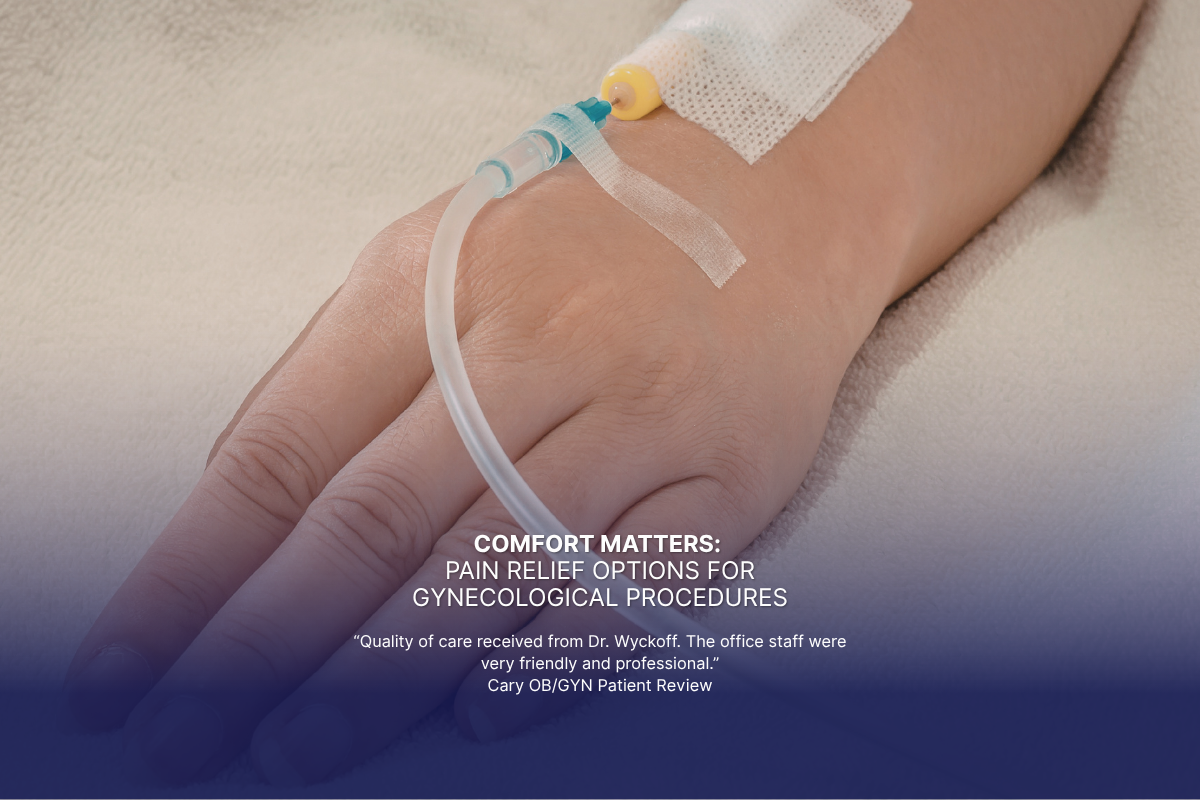
For many women, the thought of a gynecological procedure can bring anxiety—often centered around one key concern: pain. At Cary OB/GYN, patient comfort is a top priority. Whether you’re undergoing a routine in-office procedure or a more advanced treatment, understanding your pain relief options can help you feel more confident, prepared, and at ease.
The good news is that modern gynecologic care offers a wide range of safe, effective pain management strategies tailored to your individual needs.
“Quality of care received from Dr. Wyckoff. The office staff were very friendly and professional.”
Cary OB/GYN Patient Review
Why Pain Management Is So Important
Gynecologic procedures often involve sensitive areas of the body, which can make even minor treatments feel uncomfortable. Procedures such as IUD insertions, cervical biopsies, hysteroscopies, and endometrial ablations can cause cramping, pressure, or sharp sensations if pain is not properly managed. (Cary OBGYN)
Effective pain control does more than just improve comfort—it also reduces anxiety, prevents physical stress responses like increased heart rate and blood pressure, and can lead to smoother procedures and faster recovery. (Cary OBGYN)
Every patient experiences pain differently, which is why personalized care and open communication with your provider are essential.
Common Gynecological Procedures and What to Expect
Not all procedures require the same level of pain relief. Some involve only mild discomfort, while others may require more advanced anesthesia. Common procedures include:
- Pap smears and minor biopsies: Typically cause brief pinching or mild cramping
- Colposcopy or LEEP procedures: May involve moderate discomfort and often use local anesthesia
- IUD insertion or removal: Can cause cramping, especially during placement
- Hysteroscopy or endometrial ablation: May require sedation or anesthesia depending on complexity (Cary OBGYN)
Understanding the expected level of discomfort helps guide the best pain management approach.
Types of Pain Relief Options
At Cary OB/GYN, pain relief is not one-size-fits-all. Providers consider the type of procedure, your medical history, and your comfort level when recommending options.
- Local Anesthesia
Local anesthesia is one of the most commonly used methods for in-office procedures. It involves injecting or applying medication to numb a specific area, such as the cervix.
- You remain awake and aware
- You may feel pressure, but not sharp pain
- Recovery is quick with minimal side effects
This approach is frequently used for biopsies, IUD insertions, and colposcopy treatments. (Cary OBGYN)
- Oral or IV Sedation
For patients who feel anxious or are undergoing longer procedures, sedation can provide an added level of comfort.
- Mild sedation: You’re relaxed but awake
- Moderate sedation: You may feel drowsy and remember little of the procedure
Sedation helps reduce both pain perception and anxiety, which can otherwise intensify discomfort. (ACOG)
- Regional Anesthesia
Regional anesthesia, such as a spinal or epidural block, numbs a larger portion of the body—typically from the waist down.
- You remain awake
- Ideal for more involved procedures or surgeries
- Provides deeper pain control than local anesthesia
This option is more commonly used in surgical or hospital-based settings. (Cary OBGYN)
- General Anesthesia
For more complex or invasive procedures, general anesthesia may be recommended.
- You are completely asleep
- No awareness or sensation during the procedure
- Requires monitoring in a surgical setting
Procedures like hysterectomy or advanced laparoscopic surgeries often use general anesthesia to ensure complete comfort. (Cary OBGYN)
- Post-Procedure Pain Management
Pain relief doesn’t stop when the procedure ends. Aftercare is an important part of the process.
- Over-the-counter medications like ibuprofen or acetaminophen can help with cramping
- Prescription medications may be used for more significant discomfort
- Heat therapy and rest can support recovery
It’s important to note that medications like NSAIDs are often more effective for managing pain after a procedure rather than preventing it during the procedure itself. (ACOG)
Beyond Medication: Additional Comfort Measures
Pain management isn’t just about medication—small adjustments can make a big difference in your overall experience.
Many providers incorporate supportive techniques such as:
- Calming environments with dim lighting or music
- Deep breathing or relaxation techniques
- Having a trusted support person present
- Clear communication throughout the procedure
Anxiety and tension can actually amplify pain, so creating a sense of calm is a key part of effective care. (ACOG)
“Jessica is very thorough in her responses and explaining pregnancy symptoms to expect. She has good listening skills and a positive, confident attitude which made the visit easy and comfortable.”
Cary OB/GYN Patient Review
The Importance of Personalized Care
No two patients are the same, and neither are their pain thresholds or preferences. What feels manageable for one person may feel overwhelming for another. That’s why discussions about pain relief should always happen before your procedure.
Factors that influence your pain management plan include:
- Your medical history
- Previous experiences with gynecologic care
- Anxiety levels or concerns about pain
- The type and duration of the procedure
In many cases, combining multiple approaches—such as local anesthesia with sedation—can provide the most effective relief. (PubMed)
Advocating for Your Comfort
Historically, women’s pain has sometimes been minimized or overlooked in medical settings. Today, that narrative is changing—and for good reason.
You deserve to feel heard, respected, and comfortable during any medical procedure. If you are concerned about pain:
- Speak openly with your provider ahead of time
- Ask about all available options
- Share any past negative experiences
- Don’t hesitate to ask for adjustments during the procedure
Your care team is there to support you, and your comfort should always be part of the plan.
A Better Experience Starts with the Right Support
At Cary OB/GYN, the goal is to provide compassionate, patient-centered care at every step. With today’s advanced pain management options, gynecologic procedures no longer have to be something you fear or avoid.
By understanding your options and working closely with your provider, you can approach your care with confidence—knowing that your comfort, safety, and well-being come first.
If you have an upcoming procedure or questions about pain relief, don’t hesitate to reach out. A more comfortable experience is possible—and it starts with a conversation.