
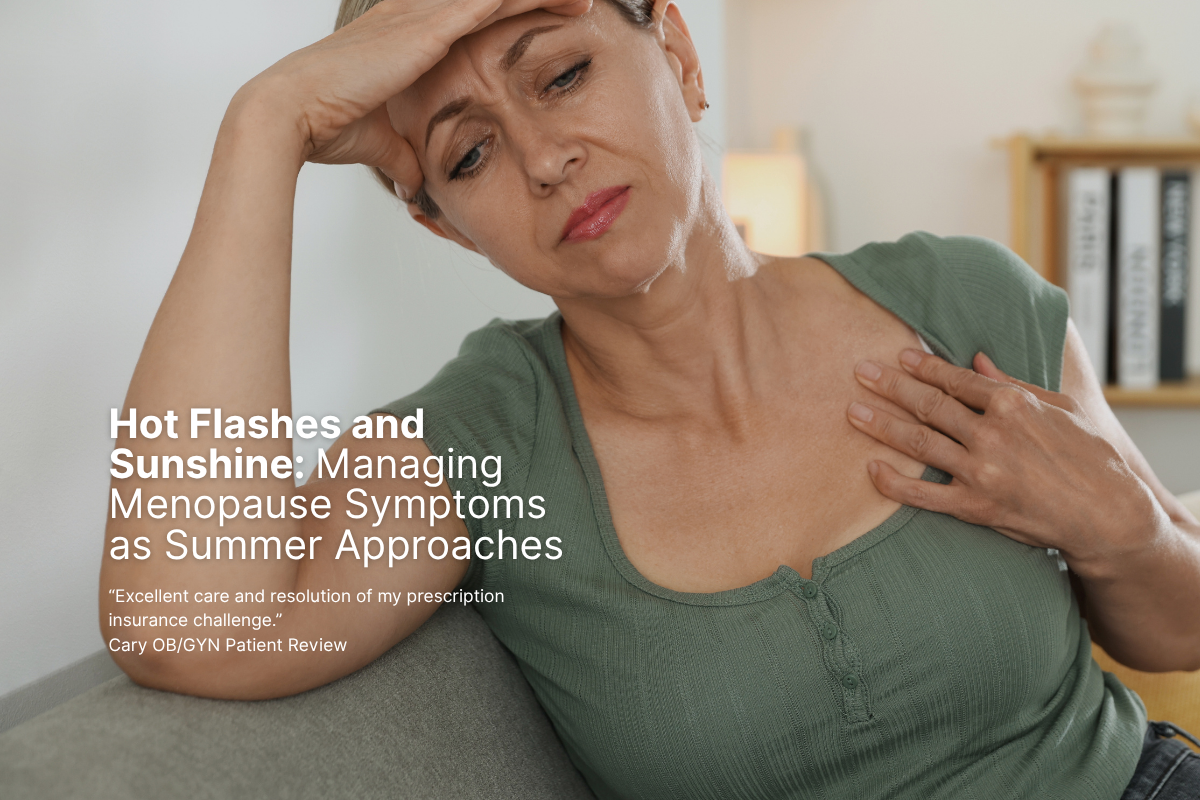
As temperatures begin to rise, many women notice an unwelcome intensification of menopause symptoms. While menopause can bring challenges year-round, the heat and humidity of summer often make symptoms like hot flashes, night sweats, and fatigue feel more intense and harder to manage. At Cary OB/GYN, we understand that seasonal changes can impact your comfort and quality of life—and with the right strategies, you can stay cool, confident, and in control.
“Excellent care and resolution of my prescription insurance challenge.”
Cary OB/GYN Patient Review
Why Summer Can Worsen Menopause Symptoms
One of the most common symptoms of menopause is hot flashes—sudden waves of heat often accompanied by sweating, flushing, and a rapid heartbeat. These episodes are linked to hormonal changes, particularly fluctuations in estrogen that affect the body’s temperature regulation system. (Johns Hopkins Medicine)
During the summer, external heat adds an extra layer of stress on your body’s internal thermostat. Hot weather and humidity can trigger or intensify hot flashes, making them more frequent and more uncomfortable. (Texas Children’s)
For many women, this combination can also worsen related symptoms such as:
- Night sweats and disrupted sleep
- Fatigue and irritability
- Brain fog or difficulty concentrating
- Increased anxiety or mood swings
Understanding why these symptoms feel worse in warmer months is the first step toward managing them effectively.
Common Menopause Symptoms to Watch For
While every woman’s experience is different, several symptoms tend to be more noticeable as summer approaches:
- Hot flashes: Experienced by up to 75–80% of women during menopause (Texas Children’s)
- Night sweats: Hot flashes that occur during sleep, often leading to poor rest
- Sleep disturbances: Frequently tied to temperature fluctuations
- Mood changes: Including irritability, anxiety, or low mood
- Vaginal dryness: Which can worsen discomfort during warmer months
If these symptoms begin interfering with your daily life, it’s important to discuss them with your OB/GYN provider.
Practical Tips to Stay Cool and Comfortable
Managing menopause symptoms in the summer requires a combination of lifestyle adjustments and proactive care. Small changes can make a meaningful difference in how you feel day to day.
- Dress for Temperature Control
Lightweight, breathable fabrics like cotton and linen can help regulate body temperature. Wearing layers allows you to adjust quickly when a hot flash starts. (Johns Hopkins Medicine) - Keep Your Environment Cool
Air conditioning, fans, and even portable cooling devices can help reduce the intensity of hot flashes. Keeping your bedroom cool at night is especially important for minimizing sleep disruptions. (Healthline) - Stay Hydrated
Drinking plenty of water helps your body regulate temperature more effectively. Cold water can also provide immediate relief during a hot flash. - Identify and Avoid Triggers
Common triggers include caffeine, alcohol, spicy foods, and hot beverages. (Wexner Medical Center)
Keeping a symptom journal can help you identify patterns and better manage your triggers. - Time Your Activities Wisely
Exercise is important for overall health, but working out during the hottest parts of the day can trigger symptoms. Opt for early morning or evening activity when temperatures are lower. (Wexner Medical Center) - Practice Stress Management
Stress can worsen menopause symptoms, including hot flashes. Techniques like deep breathing, yoga, and meditation can help regulate your body’s response and improve overall well-being. (Wexner Medical Center) - Prioritize Sleep Hygiene
Cool bedding, moisture-wicking sleepwear, and a consistent bedtime routine can improve sleep quality—even when night sweats occur.
Medical Treatments and Support Options
While lifestyle strategies are effective for many women, some may need additional support to manage moderate to severe symptoms.
Treatment options may include:
- Hormone Replacement Therapy (HRT): One of the most effective treatments for reducing hot flashes and night sweats
- Non-hormonal medications: Such as certain antidepressants or other prescription therapies that help regulate temperature control (Johns Hopkins Medicine)
- Vaginal estrogen therapy: For managing dryness and discomfort
These treatments are not one-size-fits-all. Your provider will consider your medical history, risk factors, and personal preferences when developing a plan.
“My provider was incredibly kind and explained things well. She made my visit as comfortable as possible.”
Cary OB/GYN Patient Review
The Importance of Personalized Care
Menopause is a natural phase of life, but that doesn’t mean you have to simply “push through” uncomfortable symptoms—especially during the summer months when they may feel more intense.
At Cary OB/GYN, we take a personalized approach to menopause care. That means:
- Listening to your concerns and symptom patterns
- Offering tailored treatment options
- Providing ongoing support as your needs evolve
Whether your symptoms are mild or significantly impacting your daily life, there are solutions available to help you feel like yourself again.
Embracing Summer with Confidence
Summer should be a time to enjoy longer days, sunshine, and outdoor activities—not a season you dread because of menopause symptoms. By understanding how heat impacts your body and taking proactive steps to manage symptoms, you can stay comfortable and in control.
If you’re struggling with hot flashes, night sweats, or other menopause-related concerns, don’t hesitate to reach out to Cary OB/GYN. With the right support, you can navigate this transition with confidence—no matter the season.
Your comfort, health, and well-being are always worth prioritizing.