
The holiday season with its parties, family gatherings, travel, budgeting, meal planning, gift-giving, and trying to do it all can look joyful on the outside, but for many women it comes with a heavy mental, emotional, and physical burden. Surveys support that: a recent study by American Heart Association found that 79% of people say they overlook their health needs during the holidays because they’re so busy with festivities and many report that the holidays are more stressful than tax season.
For women especially those balancing family, work, hormonal changes, or health issues holiday stress can have outsized impacts. At Cary OB/GYN, our providers emphasize that mental wellness belongs in every OB/GYN conversation. That’s because stress affects not just mood, but sleep, hormones, menstrual cycles, immune function, and even long-term health outcomes.
Here’s a closer look at how holiday stress uniquely affects women and how to manage it with compassion, self-care, and smart planning.
How Holiday Stress Can Hurt Women’s Health: Short-Term and Long-Term Effects
Emotional and Mental Health Toll
- Increased anxiety, irritability, mood swings, depression: The combination of social expectations, financial pressure, family dynamics, and fatigue can be emotionally overwhelming.
- Exhaustion and burnout: Trying to be everything host events, shop for gifts, manage family expectations often leads to overwork and depleted energy. After the rush, many women report needing weeks to “recover” emotionally.
- Sleep disturbances: Late nights, irregular schedules, stress, and travel during holidays can disrupt sleep which in turn worsens mood, hormonal balance, and overall well-being.
Physical & Biological Impacts
Chronic or repeated holiday stress doesn’t just hurt emotionally it can trigger real physical health effects:
- Hormonal imbalance: Stress affects cortisol and other hormones which can aggravate menstrual irregularities, worsen pre-menstrual symptoms (PMS/PMDD), or affect perimenopausal/menopausal hormonal fluctuations. At Cary OB/GYN, hormonal and emotional health are considered together when addressing women’s wellness.
- Weakened immune system: Stress can impair immune function, making you more vulnerable to illness especially when combined with disrupted sleep, skipped self-care, and irregular nutrition.
- Digestive issues and fatigue: Irregular meals, holiday indulgence, dehydration or poor sleep can worsen digestion, energy levels, and overall physical comfort.
- Neglected preventive health: The very time of year when many skip regular checkups, screenings, or self-care which can delay detection or management of chronic conditions.
Given these risks, health professionals like those at Cary OB/GYN view the holiday period as a critical time to double down on preventive care mental, physical, and gynecologic alike.
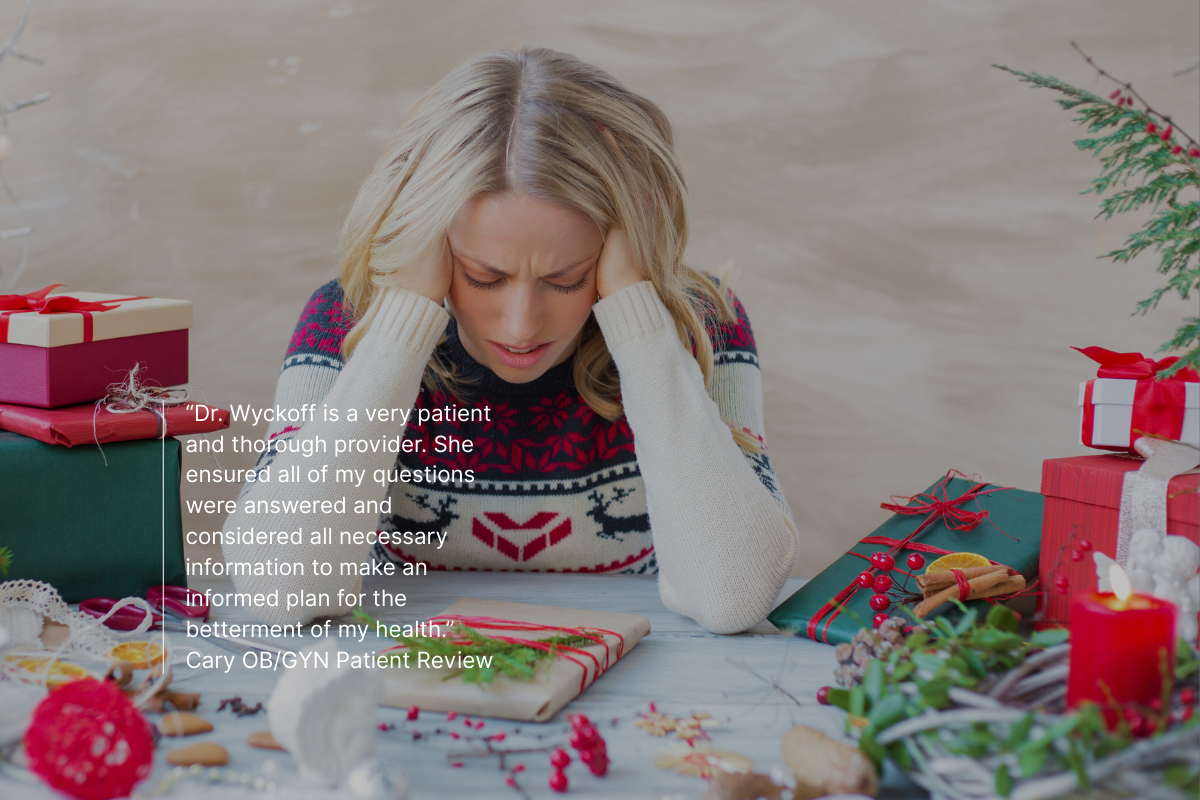
“Dr. Wyckoff is a very patient and thorough provider. She ensured all of my questions were answered and considered all necessary information to make an informed plan for the betterment of my health.”
Cary OB/GYN Patient Review
Why Women Are Often Especially Vulnerable And Why Care Matters
Many structural and social factors make women more likely to feel the bulk of holiday stress:
- Caretaker roles: Women often juggle family, children, home responsibilities, cooking, hosting, gift-giving on top of their jobs and personal health goals.
- Hormonal sensitivity: Fluctuating hormones due to menstrual cycles, pregnancy, postpartum, perimenopause/menopause can make stress impact mood, energy, sleep, and physical health more strongly. At Cary OB/GYN, we treat emotional wellness and hormone care as deeply interconnected.
- Tendency to deprioritize self-care: Many women put others’ needs first especially during holidays often overlooking their own health, rest, and preventive care. As the AHA survey found, 79% of holiday participants say they deprioritize their health during the season.
- Accumulated stress: For women already dealing with chronic health issues, fertility concerns, postpartum changes, or hormonal fluctuations holiday stress adds to an existing burden, not a standalone challenge.
Because women often see their OB/GYN more frequently than other medical providers, practices like Cary OB/GYN consider emotional health, stress, and lifestyle as part of routine gynecologic care. Our holistic approach can help catch warning signs early from mood disorders to menstrual irregularities and support wellness before problems escalate.
Strategies for Managing Holiday Stress
Holiday survival isn’t about perfection. It’s about balance. Below are practical strategies many drawn from the approach at Cary OB/GYN for protecting your health, maintaining boundaries, and still (hopefully) enjoying the season.
1. Prioritize Mental Wellness: Speak Up & Plan Ahead
- Acknowledge that stress is real and legitimate. Recognizing that holiday stress can and does affect health is the first step. At Cary OB/GYN, mental wellness is always on the agenda.
- Set boundaries. It’s okay to say “no” to every social invite, extra task, or expectation. Less is more. Prioritize what’s meaningful.
- Build a “stress toolkit.” Include restful rituals: warm baths, gentle movement, quiet time, journaling, meditation, reading, or anything that grounds you.
- Sleep hygiene matters. Try to guard consistent sleep, even during busy holiday weeks it helps stabilize mood and hormonal balance.
2. Maintain Balanced Nutrition & Self-Care Habits
- Eat mindfully. Holiday foods are tempting, but balance indulgence with nourishing meals (vegetables, lean protein, water, fiber). Avoid relying only on sugary, greasy, or heavy foods.
- Hydrate, rest, and move gently. Drinking water, stretching or light movement, and resting when you can help support energy levels, digestion, and immune function.
- Don’t skip your regular health routines. Preventive screenings, well-woman exams, hormone check-ins, and mental-health check-ups matter year-round, especially when stress levels are high. Practices like Cary OB/GYN offer accessible preventive services.
3. Be Intentional About Social & Emotional Load
- Communicate with family or friends. Let loved ones know your limits. It’s easier to manage stress and expectations when you set boundaries and share your needs.
- Schedule downtime as part of your plan. Put self-care breaks into your calendar, quiet mornings, low-key evenings, and rest days after events.
- Focus on meaningful connection, not perfection. Holiday joy doesn’t require extravagance. Shared laughs, simple meals, and small traditions can matter more than elaborate plans.
4. Use Your Women’s Health Provider as a Resource
- Talk about stress, mood changes, sleep, and hormones. At Cary OB/GYN, providers are open to discussing emotional wellness, stress impact, and hormone-related issues, not just reproductive care.
- Book preventive screenings and wellness visits if due. Use the momentum of the new year to catch up or get ahead of screenings for breast health, Pap smear, metabolic labs, and chronic disease risk.
- Ask for support or referrals when needed. If holiday stress is overwhelming or turning into anxiety, depression, or sleep problems, your OB/GYN can help coordinate mental-health care, therapy, or lifestyle adjustments.
Your Holiday Wellness Plan
Here’s a simple, realistic plan to help you navigate the holiday season while protecting your well-being:
|
Habit / Intention |
Why It Matters |
|
Set 1–2 real boundaries (e.g., only 2 holiday parties; skip cooking marathon) |
Reduces overload, overcommitment, and emotional exhaustion |
|
Prioritize 7–8 hours of sleep per night |
Stabilizes mood, hormones, and stress resilience |
|
Eat balanced meals most days, allowing occasional indulgence |
Supports energy, digestion, and mood; reduces “holiday hangover.” |
|
Schedule 15–30 min “me-time” daily or every other day (walk, read, rest) |
Helps reset stress, calms the nervous system, supports mental health |
|
Keep up hydration, movement, and self-care rituals |
Maintains physical health, immune system, and hormone balance |
|
Track any significant mood or physical changes (sleep, stress, cycles) |
Helps you notice when stress becomes harmful; prepares for professional care if needed |
|
Plan or schedule a wellness visit / preventive screening for early next year |
Catch issues early; reinforce long-term health planning |
The Cary OB/GYN Advantage
“I love Courtney and Trece, and everyone at Cary OBGYN. I have been a patient since 2002 and hope to be for many years to come.”
Cary OB/GYN Patient Review
Not all OB/GYN practices view women’s health holistically. But Cary OB/GYN stands out for our:
- Integrating emotional and physical care: Their philosophy explicitly recognizes that mental wellness belongs in OB/GYN care.
- Broad preventive services: From in-office 3D mammography to general women’s health screenings, fertility/family planning, and menopausal care, they support women at every life stage.
- A supportive, listening-based approach: Providers aim to create a safe space where concerns about stress, mood, cycles, or lifestyle are validated, not dismissed.
- Flexibility and resources: Access to nutritionists, lactation consultants, mental-health referrals, and a patient portal, making it easier to manage care even during busy seasons.
If you approach the holidays with awareness, balance, and support, you don’t have to weather the stress alone.
Holiday stress doesn’t have to derail your health. When you acknowledge the pressure, plan intentionally, and treat yourself with compassion, you can protect both physical and mental well-being.
Women often juggle more emotionally, physically, and socially, especially during the holiday season. That’s why our approach at Cary OB/GYN is integrating emotional care with gynecologic and preventive health matters more than ever.
If you find yourself overwhelmed this season with stress, fatigue, mood swings, or just feeling off, remember you’re not alone. Reach out for care, schedule a wellness visit, and treat yourself with the kindness and attention you deserve.
Here’s to a holiday season filled with balance, care, and calm.