by Marketing Manager | Apr 27, 2023 | Babies
[vc_row][vc_column][vc_column_text]It’s important to take care of your breasts if you choose to breastfeed so that you’re able to optimally feed your baby. There are steps you can take to help promote your breast health and comfort during breastfeeding, including:
Wear a supportive bra
During breastfeeding, your breasts will be larger than their pre-pregnancy size. Due to this size increase, it’s beneficial to wear a supportive bra to help hold up your muscles and ligaments. This will help prevent any pain or discomfort from the weight of your heavier breasts. It’s recommended that you wear a supportive bra both during the day and at night.
Avoid tight fighting clothing
Clothing that is tight can compress your breasts and may contribute to clogged milk ducts. Clogged milk ducts can cause discomfort and can increase your risk of infection. In addition to tight fighting clothing, you should consider avoiding bras with underwire as the underwire may also compress your breasts to cause clogged ducts.
If Your Nipples Hurt, Try Different Latching Techniques
It’s normal for your nipples to be sore as they adjust to breastfeeding, but your nipple shouldn’t be sore after a few days. If your nipples hurt, this could be an indication that your baby is not latching onto your breasts properly. You can try different latching techniques such as position changes to help improve your baby’s latch.
Don’t Use Soap When Washing Your Nipples
Your nipples make their own natural lubricant. Using soaps on them can remove this lubricant, which can cause cracking and nipple pain.
Treat Your Clogged Milk Duct
- Feed your baby often. This will help your breasts drain. You may have greater success if you position your baby with their nose towards the blockage, as this will help the duct drain better.
- Massage the lump towards your nipple. This will break up the clog and help the milk flow.
- Take a warm shower or use a warm compress before feeding. This can trigger your let-down reflex and help clear the blockage.
- Drain any milk left in your clogged breast after feeding. You can use a pump or hand expression to do so.
References:
- “Breastfeeding Care Instructions”. Penn Medicine, Penn Medicine.
[/vc_column_text][/vc_column][/vc_row][vc_row css=”.vc_custom_1618658856512{margin-top: 75px !important;}”][vc_column][vc_text_separator title=”Services We Offer:”][vc_column_text]
Laparoscopy | Abnormal Bleeding | Menopause | Minimally Invasive Surgery | Contraception | Pap Smear | Pelvic Pain | Family Planning | STD Testing | Hormone Therapy | Hysterectomy | Infertility | 3D Mammography | Pregnancy & Prenatal Care | Preventive Screening
[/vc_column_text][vc_text_separator title=”Website Navigation:”][vc_column_text]
Home | About | OB Videos | Insurances Accepted | Blog | Providers | Michael Anthony, MD, FACOG | Noemi Maydew, MD, FACOG | Anne Bond Bonpain, MD, FACOG | Elita Wyckoff, MD, FACOG | Gilberto Rodrigo, MD, FACOG | Jennifer Fraley, MD, FACOG | Heather Flowers | Courtney Braswell | Services | Patient Care | Advanced Care Team | Testimonials | Contact Us | Patient Portal
[/vc_column_text][/vc_column][/vc_row]
by Marketing Manager | Apr 20, 2023 | Pregnancy
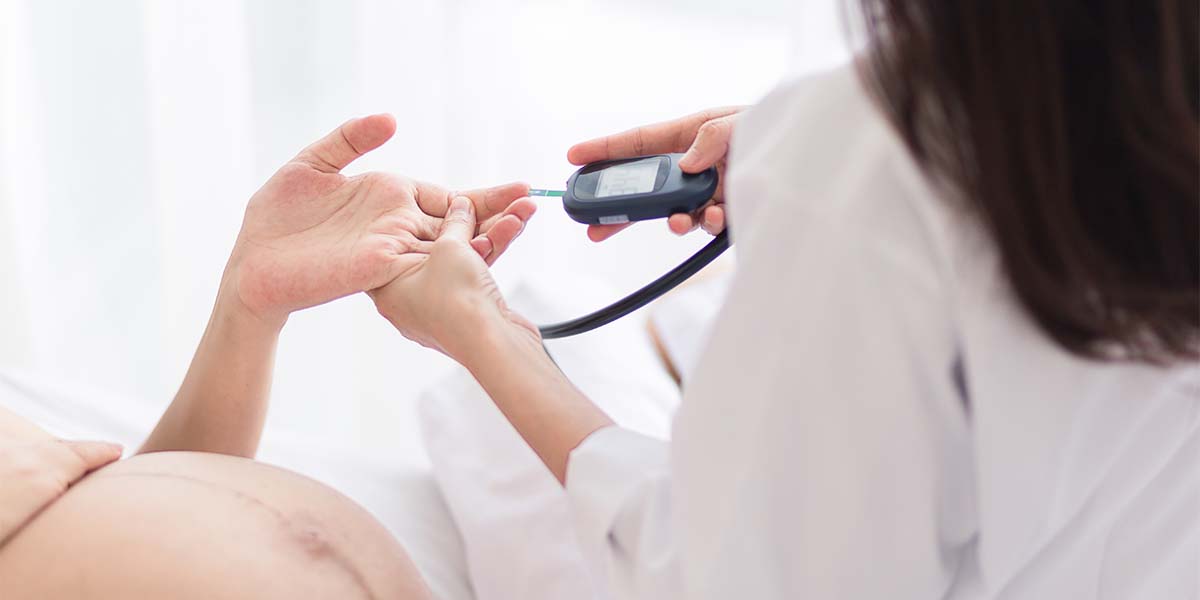
[vc_row][vc_column][vc_column_text]Gestational diabetes is a type of diabetes that occurs in women who are pregnant who don’t have a history of diabetes while not pregnant.
During pregnancy, your body goes through changes like weight gain and increased hormone levels. These changes can cause your body to be less responsive to a hormone called insulin; insulin is a chemical that your cells need in order to take in blood sugar. With gestational diabetes, your body does not produce enough insulin to meet your body’s needs.
Researchers still don’t fully understand why some people end up with gestational diabetes while other women don’t, but they have identified some risk factors that may predispose some to having it.
Some of these risk factors include:
- Poor physical activity
- A history of prediabetes
- A history of delivering a baby weighing over 9 pounds
- Having a BMI >25
Whether you have these risk factors or not, there are some steps that you can take to lower your risk of developing diabetes during pregnancy. Some of these steps are listed below.
Eat a Well-Balanced Diet
Even before your pregnancy, you want to be choosing a diet that includes plenty of whole grains, fruits, vegetables, and lean proteins. Diets high in processed sugars can change how your body uses insulin and responds to sugars, and this can put you at a higher risk of diabetes.
Maintain a Consistent Exercise Routine
Exercise is an important way to lower your risk of gestational diabetes. Exercise has been shown to improve your body’s ability to use insulin effectively, meaning that you body won’t need to produce as much. Exercise also lowers your blood sugar levels.
It’s often recommended that you get at least 30 minutes of physical activity per day. But you should check with your healthcare provider about how much, and what types of exercises are safe to do with your pregnancy.
Start at and maintain a healthy weight
If you are planning a pregnancy, it’s important to start it at a healthy weight. Research has shown that people who are overweight are more likely to develop gestational diabetes.
It’s also important to have a healthy amount of weight gain during your pregnancy. Weight gain during pregnancy is healthy, but you want to be careful that it’s not too much. Recommendations for healthy weight gain will depend on your body type and how many babies you’re carrying.
Get Tested for Gestational Diabetes
You can get checked for gestational diabetes during your prenatal appointments through a “glucose test.” With a glucose test, your healthcare provider will measure your blood sugar levels after drinking a sugary syrup. If your blood sugar reading is considered high, you will likely have to have the test repeated with additional blood sugar readings to confirm a diagnosis of gestational diabetes.
References:
- “Gestational Diabetes” Mayo Clinic, Mayo Clinic. 09 April 2022.
- “Gestational Diabetes”. CDC, Centers for Disease Control and Prevention. 30 December 2022.
- Morisset, A. S., St-Yves, A., Veillette, J., Weisnagel, S. J., Tchernof, A., & Robitaille, J. (2010). Prevention of gestational diabetes mellitus: a review of studies on weight management. Diabetes/metabolism research and reviews, 26(1), 17–25. https://doi.org/10.1002/dmrr.1053
[/vc_column_text][/vc_column][/vc_row][vc_row css=”.vc_custom_1618658856512{margin-top: 75px !important;}”][vc_column][vc_text_separator title=”Services We Offer:”][vc_column_text]
Laparoscopy | Abnormal Bleeding | Menopause | Minimally Invasive Surgery | Contraception | Pap Smear | Pelvic Pain | Family Planning | STD Testing | Hormone Therapy | Hysterectomy | Infertility | 3D Mammography | Pregnancy & Prenatal Care | Preventive Screening
[/vc_column_text][vc_text_separator title=”Website Navigation:”][vc_column_text]
Home | About | OB Videos | Insurances Accepted | Blog | Providers | Michael Anthony, MD, FACOG | Noemi Maydew, MD, FACOG | Anne Bond Bonpain, MD, FACOG | Elita Wyckoff, MD, FACOG | Gilberto Rodrigo, MD, FACOG | Jennifer Fraley, MD, FACOG | Heather Flowers | Courtney Braswell | Services | Patient Care | Advanced Care Team | Testimonials | Contact Us | Patient Portal
[/vc_column_text][/vc_column][/vc_row]

by Marketing Manager | Apr 13, 2023 | Pregnancy
[vc_row][vc_column][vc_column_text]Sometimes going to the doctor’s office can be intimidating, especially if you’re a first-time mom. To alleviate some of these fears let’s go over what to expect during healthcare visits in your first, second, and third trimesters of pregnancy.
How often will I have to see my healthcare provider?
The answer to this question will likely depend on your pregnancy. For a “low-risk” pregnancy it’s common to see your doctor every four weeks during your first and second trimesters. During your third trimester you’ll likely be scheduled with your doctor every 2-4 weeks, and then every week once you reach week 37 of pregnancy.
In addition to your prenatal appointments, you will also be offered prenatal ultrasounds. Most low-risk pregnancies get two ultrasounds during the course of the pregnancy. One ultrasound is performed at roughly week 7-12 to help determine your due date, and another ultrasound is performed at roughly week 20 to check on the baby’s growth and anatomy.
If you are considered a high-risk pregnancy, you will likely have to see your healthcare provider more regularly. How often will depend on your and your baby’s health.
What happens during my first trimester appointments?
On your very first appointment you can expect your doctor to ask you about your medical and pregnancy history. Be honest about your health history so that your doctor can provide the best advice. In addition to discussions about your health history, your doctor will provide guidance and instruction on how to have a healthy pregnancy.
Your doctor will likely also offer blood work. The blood work can provide helpful information such as your blood type and your exposure and immunity to certain infections.
What happens during my second trimester appointments?
Your second trimester appointments may be similar to your first. You will likely be offered blood-screening tests that can help determine if your baby has any testable medical conditions. Not all medical conditions can be tested for in a prenatal blood test, so discuss with your healthcare provider what information these tests will provide.
You will likely also be offered a special test called a glucose challenge test. This test helps determine if you have gestational diabetes. The test is typically offered between your 24th and 28th week of pregnancy, but if you are at a higher risk of gestational diabetes your healthcare provider may suggest this test earlier in your pregnancy.
What happens during my third trimester appointments?
During your third trimester appointments your healthcare team will continue to monitor your and your baby’s health. During the third trimester your doctor will also determine the baby’s position for delivery. If your baby is facing butt first (also called breech) your healthcare provider may offer an ultrasound-guided procedure to adjust the baby’s position so that it can be delivered vaginally.
Throughout all three trimesters, remember that your healthcare team is there to support you. Don’t hesitate to ask any questions or raise any concerns that you may have.
References
- “Prenatal Care: 1st Trimester Visits”. Mayo Clinic, Mayo Clinic. 06 August 2022.
- “Prenatal Care: 2nd Trimester Visits” Mayo Clinic, Mayo Clinic. 04 August 2022.
- “Prenatal Care: 3rd Trimester Visits” Mayo Clinic, Mayo Clinic. 28 July 2022.
- “Ultrasound in Pregnancy” Cleveland Clinic, Cleveland Clinic. 28 September, 2022.
[/vc_column_text][/vc_column][/vc_row][vc_row css=”.vc_custom_1618658856512{margin-top: 75px !important;}”][vc_column][vc_text_separator title=”Services We Offer:”][vc_column_text]
Laparoscopy | Abnormal Bleeding | Menopause | Minimally Invasive Surgery | Contraception | Pap Smear | Pelvic Pain | Family Planning | STD Testing | Hormone Therapy | Hysterectomy | Infertility | 3D Mammography | Pregnancy & Prenatal Care | Preventive Screening
[/vc_column_text][vc_text_separator title=”Website Navigation:”][vc_column_text]
Home | About | OB Videos | Insurances Accepted | Blog | Providers | Michael Anthony, MD, FACOG | Noemi Maydew, MD, FACOG | Anne Bond Bonpain, MD, FACOG | Elita Wyckoff, MD, FACOG | Gilberto Rodrigo, MD, FACOG | Jennifer Fraley, MD, FACOG | Heather Flowers | Courtney Braswell | Services | Patient Care | Advanced Care Team | Testimonials | Contact Us | Patient Portal
[/vc_column_text][/vc_column][/vc_row]

by Marketing Manager | Apr 6, 2023 | Pregnancy
[vc_row][vc_column][vc_column_text]Welcome to the second trimester! You’ve probably already felt some changes to your body and lifestyle throughout the first trimester, and you may be wondering what to expect for the next thirteen weeks. Let’s explore some things you may encounter as you progress into your second trimester.
You’ll likely be feeling better in your second trimester than your first
For many women, the morning sickness lightens by the second trimester, as well as the endless exhaustion and breast tenderness.
This is because your body in the second trimester has lower levels of the pregnancy hormone hCG, and because your body has begun to adapt to the levels of the hormones estrogen and progesterone.
You may feel the baby moving
At around 20 weeks, you may start to feel the baby moving. Doctors call this movement “quickening.” It can feel like a fluttering in your abdomen, or even a swishing or bubbling feeling.
Your pregnancy may become more visible
During your second trimester, it’s considered healthy to gain as much as a half-pound to a pound per week. With this faster weight gain, you might start to feel more backaches or lower abdominal aches as your body begins to stretch and support your growing uterus and baby.
By twenty weeks, your uterus has grown all the way up to your belly button. Oftentimes your pregnancy is more visible at this point, and you’re more likely to develop “the bump” during this second trimester.
Your gums and nose might start bleeding easily
This is because the hormones progesterone and estrogen from pregnancy increase the blood flow to your nose and mouth. Because your gums will be bleeding more easily, you’ll want to be gentle with your brushing and flossing, but don’t skip these activities as it’s important to maintain good dental care.
You may experience skin changes
The skin on your abdomen and breasts may start to itch. This is because the skin is being stretched with your growing body, and the skin becomes thinner in these areas.
You may start to develop stretch marks, which look like pink or red stripes, towards the end of your second trimester. Many women try to use cream and lotions to prevent these stretch marks, but research has shown that these products are not effective at preventing stretch marks, and that stretch mark development has more to do with your genetics.
In addition to your skin stretching, you might also experience some skin color changes. Some women experience dark spots, particularly on their face, during pregnancy. This is because your body’s melanin levels, the substance that gives people their pigmentation, increases during pregnancy. The dark spots tend to fade gradually after delivery, but you can help prevent them from worsening during pregnancy by wearing sunscreen and hats to protect from UV exposure.
References
- Brennan, M., Young, G., & Devane, D. (2012). Topical preparations for preventing stretch marks in pregnancy. The Cochrane database of systematic reviews, 11(11), CD000066.
- “Skin Conditions During Pregnancy.” ACOG, American College of Obstetricians and Gynecologists. July 2022.
- “The Second Trimester.” Johns Hopkins Medicine, Johns Hopkins Medicine.
- “Quickening in Pregnancy” Cleveland Clinic, Cleveland Clinic. 22 April 2022.
[/vc_column_text][/vc_column][/vc_row][vc_row css=”.vc_custom_1618658856512{margin-top: 75px !important;}”][vc_column][vc_text_separator title=”Services We Offer:”][vc_column_text]
Laparoscopy | Abnormal Bleeding | Menopause | Minimally Invasive Surgery | Contraception | Pap Smear | Pelvic Pain | Family Planning | STD Testing | Hormone Therapy | Hysterectomy | Infertility | 3D Mammography | Pregnancy & Prenatal Care | Preventive Screening
[/vc_column_text][vc_text_separator title=”Website Navigation:”][vc_column_text]
Home | About | OB Videos | Insurances Accepted | Blog | Providers | Michael Anthony, MD, FACOG | Noemi Maydew, MD, FACOG | Anne Bond Bonpain, MD, FACOG | Elita Wyckoff, MD, FACOG | Gilberto Rodrigo, MD, FACOG | Jennifer Fraley, MD, FACOG | Heather Flowers | Courtney Braswell | Services | Patient Care | Advanced Care Team | Testimonials | Contact Us | Patient Portal
[/vc_column_text][/vc_column][/vc_row]

by Marketing Manager | Mar 30, 2023 | Pregnancy
[vc_row][vc_column][vc_column_text]So, you’ve found out you’re pregnant! Whether you’ve been pregnant before or this is your first time, it’s important that you know what’s happening with your body and what to expect during your first trimester.
Did you know that the first trimester actually starts before you’re pregnant? Your “week one” begins with the last day of your most recent period, meaning that by the time the egg is fertilized, it’s roughly your third week of pregnancy. Your first trimester then lasts until week thirteen.
Let’s take a look at some of the key things to consider during these first thirteen weeks.
How to Set Up a Healthy Pregnancy
These weeks one through thirteen are considered a critical period for your baby’s development. This is because your baby is beginning to form its major organs. And this means that exposures to toxins, infections and harmful substances could increase your child’s risk of being born with complications or congenital disorders.
In order to help protect your baby, you should avoid drinking alcohol, smoking cigarettes, and using recreational drugs. Consider changing your diet to avoid raw meats and seafood, lunchmeats, and unpasteurized cheeses or drinks, as these foods are more likely to expose you and your baby to harmful bacteria. It’s also important to limit your contact with others who are sick.
It’s also highly recommended that you take a prenatal vitamin: particularly one that includes folic acid. Folic acid is an important mineral for your baby’s development. Research has shown that when mothers do not consume enough folic acid their babies have a much higher risk of developing neurological problems.
Body Changes You May Experience
1. Morning Sickness
The infamous morning sickness: it can be experienced differently depending on the woman, but often includes nausea at different times throughout the day. Morning sickness is frequently worst during weeks 8-12 and improves with the second trimester.
If you experience vomiting to the point of weakness, dizziness, or you are so dehydrated that you stop peeing, you should make an appointment to be seen by your healthcare provider.
2. Frequent Urination
During the first trimester you’ll likely become friends with the bathroom both from morning sickness as well as needing to pee frequently. This frequent urination is because of the pregnancy hormone HCG, the same hormone detected in pregnancy tests. HCG causes your body to send extra blood to your pelvic region and tells your kidneys to work harder because you retain more fluid during pregnancy.
3. Swollen or Tender Breasts
Tender breasts are another symptom that you can blame the hormones for. Your pregnancy hormones, particularly the increased estrogen and progesterone, cause the mammary glands in your breasts to grow bigger.
4. Constipation and Heartburn
Your digestive system slows down (also thanks to the hormone changes). As pregnancy increases the hormone progesterone in your body, progesterone reduces the contractions of your intestines. This means that food doesn’t move through your digestive tract as fast as it used to.
References
- “The First Trimester” Johns Hopkins Medicine, Johns Hopkins Medicine
- “First Trimester” Cleveland Clinic, Cleveland Clinic. 22 August 2022.
[/vc_column_text][/vc_column][/vc_row][vc_row css=”.vc_custom_1618658856512{margin-top: 75px !important;}”][vc_column][vc_text_separator title=”Services We Offer:”][vc_column_text]
Laparoscopy | Abnormal Bleeding | Menopause | Minimally Invasive Surgery | Contraception | Pap Smear | Pelvic Pain | Family Planning | STD Testing | Hormone Therapy | Hysterectomy | Infertility | 3D Mammography | Pregnancy & Prenatal Care | Preventive Screening
[/vc_column_text][vc_text_separator title=”Website Navigation:”][vc_column_text]
Home | About | OB Videos | Insurances Accepted | Blog | Providers | Michael Anthony, MD, FACOG | Noemi Maydew, MD, FACOG | Anne Bond Bonpain, MD, FACOG | Elita Wyckoff, MD, FACOG | Gilberto Rodrigo, MD, FACOG | Jennifer Fraley, MD, FACOG | Heather Flowers | Courtney Braswell | Services | Patient Care | Advanced Care Team | Testimonials | Contact Us | Patient Portal
[/vc_column_text][/vc_column][/vc_row]