by Marketing Manager | Feb 2, 2023 | Pregnancy, Women's Health
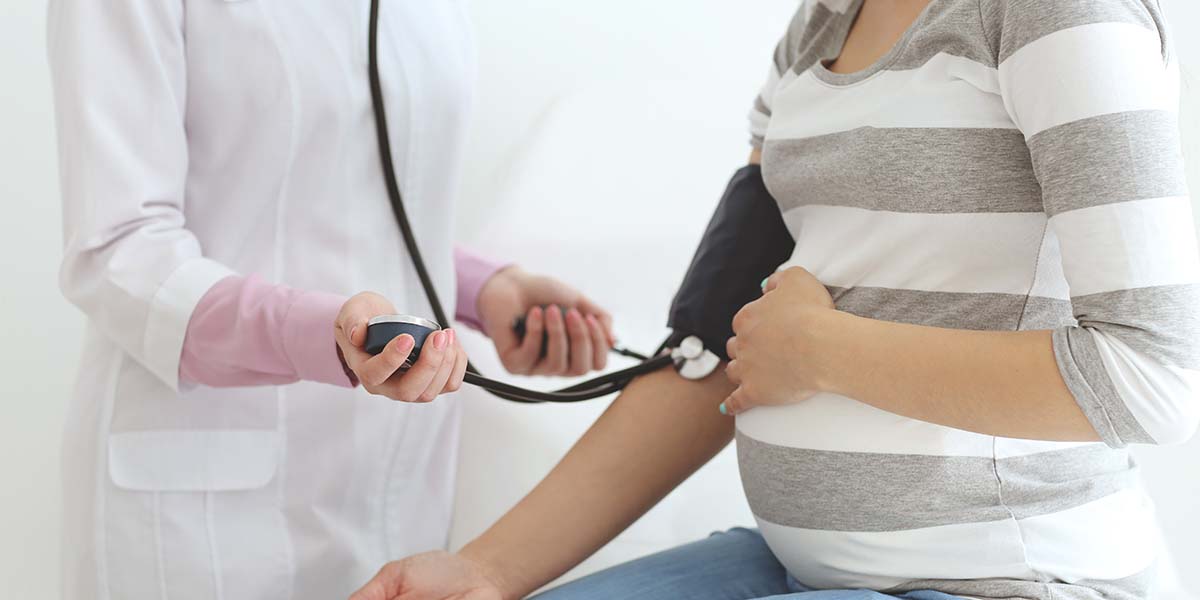
[vc_row][vc_column][vc_column_text]Most people are familiar with the medical condition referred to as hypertension or high blood pressure. Having high blood pressure during pregnancy may lead to the pregnancy condition known as pre-eclampsia. This condition is characterized by two main symptoms, high blood pressure and protein present in the urine. Pre-eclampsia is dangerous and can lead to serious complications for mother and baby, and possibly even death. This is one of the reasons that your OB/GYN healthcare provider checks your blood pressure every time you come in for an appointment. It is important for them to monitor any changes and possible signs they see of pre-eclampsia so that it can be diagnosed and treated as early as possible. According to the National Library of Medicine, pre-eclampsia is related to 2% to 8% of pregnancy complications and is responsible for 50,000 maternal deaths and over 500,000 fetal deaths worldwide.1
Recently there has been new information emerging about pre-eclampsia. A research team published an article about the long-term effects of pre-eclampsia on women in the European Journal of Preventive Cardiology. The researchers found that women who had pre-eclampsia during pregnancy are at a greater risk of having a heart attack or stroke in the future.2
In this study, the researchers analyzed national registers in Denmark from 1978 to 2017, which included more than 1.1 million women who experienced pre-eclampsia with no prior history of having high blood pressure. Then the researchers followed up with these women and found some interesting trends. They found that up to 2% of the women with pre-eclampsia in their first pregnancy had a heart attack or stroke within twenty years of giving birth compared to only 1.2% of women not affected by pre-eclampsia. It was also found that women with pre-eclampsia were four times more likely to have a heart attack and three times more likely to have a stroke within 10 years of delivery compared to women not affected by pre-eclampsia.2
Lead researcher Dr. Sara Hallum, told U.S. News and World Report, “The high risk of cardiovascular disease after pre-eclampsia manifests at young ages and early after delivery. This indicates that interventions to prevent heart attacks and strokes in affected women cannot wait until middle age when they become eligible for conventional cardiovascular screening programs.”2
The bottom line is that prevention and early detection is key. Regularly monitor blood pressure before and after becoming pregnant. While pregnant, attend all of your doctor’s appointments so that they can monitor and detect any changes early. If you are diagnosed with preeclampsia, follow your healthcare provider’s instructions.
Resources
- Preeclampsia – statpearls – NCBI bookshelf. (n.d.). Retrieved January 26, 2023
- Murez, C. (2023, January 26). Preeclampsia in pregnancy is a bad sign for women’s Future Heart Health. Retrieved January 26, 2023
[/vc_column_text][/vc_column][/vc_row][vc_row css=”.vc_custom_1618658856512{margin-top: 75px !important;}”][vc_column][vc_text_separator title=”Services We Offer:”][vc_column_text]
Laparoscopy | Abnormal Bleeding | Menopause | Minimally Invasive Surgery | Contraception | Pap Smear | Pelvic Pain | Family Planning | STD Testing | Hormone Therapy | Hysterectomy | Infertility | 3D Mammography | Pregnancy & Prenatal Care | Preventive Screening
[/vc_column_text][vc_text_separator title=”Website Navigation:”][vc_column_text]
Home | About | OB Videos | Insurances Accepted | Blog | Providers | Michael Anthony, MD, FACOG | Noemi Maydew, MD, FACOG | Anne Bond Bonpain, MD, FACOG | Elita Wyckoff, MD, FACOG | Gilberto Rodrigo, MD, FACOG | Jennifer Fraley, MD, FACOG | Heather Flowers | Courtney Braswell | Services | Patient Care | Advanced Care Team | Testimonials | Contact Us | Patient Portal
[/vc_column_text][/vc_column][/vc_row]

by Marketing Manager | Jan 26, 2023 | Babies, Pregnancy
[vc_row][vc_column][vc_column_text]U.S. News & World Report recently published an article on ‘How to Choose a Maternity Hospital.’ The article’s purpose is to help pregnant women find the maternity hospital that is best for them by asking questions that give insight into the hospital’s healthcare team, facility outcomes, and labor and delivery details. Read on to learn what factors to consider and what questions to ask.
Factors to Consider
There are several factors to consider when choosing what hospital you are going to give birth at. Some factors may be more important to you than others depending on your preferences. Factors to consider include:
- The Maternity Care Team
- Quality Metrics
- Birthing Experience
- NICU and Emergency Capabilities
- Breastfeeding Support
- Resources
The Maternity Care Team
Oftentimes people choose their maternity hospital depending on where their healthcare provider delivers. When choosing an obstetrician, make sure that they consider your concerns, fears, preferences, and that you feel comfortable with them. When deciding on a maternity hospital consider the following questions:
- Does the facility have maternal-fetal medicine specialists or perinatologists (doctors who specialize in high-risk pregnancies)?
- Does the hospital offer some other forms of labor and delivery experiences besides traditional physician-led care?
- Is there the option for laboring with a midwife or doula?
- Do they have group prenatal care?
Quality Metrics
Knowing the data and statistics of the hospital you plan to deliver at is important. Some of the quality metrics you may want to consider are:
- C-section rate
- NTSV C-section rate (C-section rate for a woman who has never given birth before with low-risk pregnancies)
- Early elective delivery rate
- Episiotomy rate
Birthing Experience
Do you know what your preferences are when it comes to your birthing experience? Consider and ask the hospital or your doctor the following questions about the birthing experience offered at the hospital:
- Am I able to get a tour of the maternity unit?
- What pain-control options do you offer, including and beyond epidurals?
- What labor positions can I deliver in? Can I walk around?
- Do you have birthing balls or birthing tubs?
- Do you have private birthing rooms?
- How many support people are allowed to be with me?
- What factors are considered with induced labor?
- Are VBACs an option?
- Is delayed cord clamping available?
NICU and Emergency Capabilities
If you have a high-risk pregnancy or you would like to be on the side of caution in case your childbirth has complications it is good to consider what NICU and emergency care is offered at the hospital. You may like to look into the following:
- Is there an anesthesiologist in the hospital at all times?
- Is there a pediatrician in the hospital at all times?
- Does the hospital have a neonatal intensive care unit (NICU)? If so, what is the level of that NICU?
- If the hospital does not have a NICU and a child needs NICU care, where are they transferred, and how long does that normally take?
Breastfeeding Support and Additional Resources
If you are interested in breastfeeding, inquire if the hospital provides lactation consultants or if they encourage breastfeeding. Many high-quality hospitals also offer additional resources to new or soon-to-be parents such as maternal health navigators or social workers to aid in finding resources for families in need.
The Bottom Line
Although this list contains many questions and considerations, it is important to take the time to learn what your maternity hospital offers and what its standards are. To read the full original article from the U.S. News and World Report, click here.
Resources
- Esposito, L., & Rowe, A. (2022, December 1). Checklist for choosing a Maternity Hospital | U.S. news. U.S. News and World Report. Retrieved January 19, 2023
[/vc_column_text][/vc_column][/vc_row][vc_row css=”.vc_custom_1618658856512{margin-top: 75px !important;}”][vc_column][vc_text_separator title=”Services We Offer:”][vc_column_text]
Laparoscopy | Abnormal Bleeding | Menopause | Minimally Invasive Surgery | Contraception | Pap Smear | Pelvic Pain | Family Planning | STD Testing | Hormone Therapy | Hysterectomy | Infertility | 3D Mammography | Pregnancy & Prenatal Care | Preventive Screening
[/vc_column_text][vc_text_separator title=”Website Navigation:”][vc_column_text]
Home | About | OB Videos | Insurances Accepted | Blog | Providers | Michael Anthony, MD, FACOG | Noemi Maydew, MD, FACOG | Anne Bond Bonpain, MD, FACOG | Elita Wyckoff, MD, FACOG | Gilberto Rodrigo, MD, FACOG | Jennifer Fraley, MD, FACOG | Heather Flowers | Courtney Braswell | Services | Patient Care | Advanced Care Team | Testimonials | Contact Us | Patient Portal
[/vc_column_text][/vc_column][/vc_row]

by Marketing Manager | Jan 19, 2023 | Child Healthcare
[vc_row][vc_column][vc_column_text]It can be challenging for parents to know when and where to get medical care for their children. Pediatrician offices are generally only open during business hours, but medical care is sometimes needed outside those hours, especially when it comes to children. Fortunately, there are emergency rooms and urgent care facilities that can provide care when you can’t get in with your child’s pediatrician. But sometimes it is difficult to know what type of care your child needs. Is it something that can wait until the pediatrician’s office opens? Is it an emergency or should you take them to urgent care? These are decisions that parents often face. Read on to review some general guidelines to help you decide what type of medical care your child needs.
When to Call 911
There are times when it is unsafe to move a person or the situation is so severe that a person needs medical care ASAP, this is when medical transport is required. In these types of situations, you will want to call 911.
Always Call 911 If Your Child…
- Isn’t breathing or is turning blue
- Is choking
- Is unconscious after a fall
- Is having a seizure
- Is having a severe allergic reaction
- Has a broken bone sticking out of the skin
- Took something that may be harmful and is hard to rouse
- Has a wound that won’t stop bleeding
When To Take Your Child to The Emergency Room
In some cases, your child may need immediate medical care but does not need medical transport. If your child is stable enough and it is safe, driving them to the ER may be the best option.
Take Your Child to The ER If They Have One of The Following Conditions and Is Able to Be Safely Moved Without the Need for Medical Transport:
- Trouble breathing
- Unusual sleepiness or confusion
- Stiff neck and fever
- Continuous fast heartbeat
- Ingested a poison, drug, or unknown substance and is still alert
- Possible Concussion
- Eye Injury
- Serious Burn
When To Call or Make an Appointment with The Pediatrician
With general health concerns, ailments, and non-emergencies call your pediatrician’s office. Depending on what the concern is they may advise you over the phone or have you make an appointment to be seen.
Call Your Pediatrician for Medical Issues Such As:
- Fever
- Vomiting
- Diarrhea
- Ear pain
- Headache
- Cold symptoms
- Skin conditions
When To Use Urgent Care
Urgent care is great for when your pediatrician’s office is closed but your child needs medical care soon. They can treat the same conditions as your pediatrician’s office. Some urgent cares may also have the ability to do X-rays for simple injuries.
When In Doubt
When you just aren’t sure where to take your child for medical care, call ahead to the facility and let them know what is going on. They will be able to let you know if they handle the issue your child is experiencing or they may advise you to use a different level of care.
Resources
- Cronan, K. (Ed.). (2019, October). When and where to get medical care (for parents) – nemours kidshealth. KidsHealth. Retrieved January 12, 2023
[/vc_column_text][/vc_column][/vc_row][vc_row css=”.vc_custom_1618658856512{margin-top: 75px !important;}”][vc_column][vc_text_separator title=”Services We Offer:”][vc_column_text]
Laparoscopy | Abnormal Bleeding | Menopause | Minimally Invasive Surgery | Contraception | Pap Smear | Pelvic Pain | Family Planning | STD Testing | Hormone Therapy | Hysterectomy | Infertility | 3D Mammography | Pregnancy & Prenatal Care | Preventive Screening
[/vc_column_text][vc_text_separator title=”Website Navigation:”][vc_column_text]
Home | About | OB Videos | Insurances Accepted | Blog | Providers | Michael Anthony, MD, FACOG | Noemi Maydew, MD, FACOG | Anne Bond Bonpain, MD, FACOG | Elita Wyckoff, MD, FACOG | Gilberto Rodrigo, MD, FACOG | Jennifer Fraley, MD, FACOG | Heather Flowers | Courtney Braswell | Services | Patient Care | Advanced Care Team | Testimonials | Contact Us | Patient Portal
[/vc_column_text][/vc_column][/vc_row]

by Marketing Manager | Jan 12, 2023 | Babies
[vc_row][vc_column][vc_column_text]If you are a new mother or soon to be new mother, you may be feeling overwhelmed with how much there is to learn. You have probably thought for hours about what diapers are best, what toys you need, which car seat is safest, and what is my baby going to eat. Fortunately, there are many options out there for families to choose from when it comes to deciding how you are going to feed your baby. Your options and decision will depend on several factors including availability and medical concerns. Breastmilk has been the number one option for many families for many years. If you are a new mom or soon to be mom, you probably have many questions about breastfeeding. Let’s dive into some breastfeeding basics to get you started.
How is Breast Milk Made?
When a female is pregnant there are several changes that happen within the body. The breasts have cells that respond to the pregnancy hormone changes and they will start to get ready to make breastmilk. When the baby suckles, these cells will make breastmilk.
How Do I Know If I Am Making Enough Breastmilk?
In most cases, the more your baby suckles, the more milk your breasts will make. The best way to know if your baby is getting enough breastmilk is by counting the number of wet diapers they have in a day and if they are gaining weight. From birth to three months old, infants normally gain about one ounce a day. Remember that it is also normal for a baby to lose a small amount of weight in the first days after birth.
How Often Should I Breastfeed?
You should breastfeed as soon as possible after birth. After that, you should breastfeed your baby every two to four hours throughout the day and night. Each baby is different and some could require more frequent feedings. There is no time limit or set time for how long a feeding is. Some babies feed for five minutes while others feed for twenty minutes. As time goes on you will learn your baby’s specific habits.
How Long Should I Breastfeed For?
The amount of time you breastfeed will depend on many factors such as work schedules and medical needs. The American Academy of Pediatrics recommends that breastmilk should be the only source of food for the first six months of a baby’s life, and to continue breastfeeding until the infant’s 1st birthday or even beyond if preferred by the baby and mother.
Where Can I Learn More About Breastfeeding?
An OB/GYN healthcare provider, pediatrician, and / or certified lactation consultant are the best resources for learning more about breastfeeding. If you are struggling with breastfeeding, don’t hesitate to reach out for help.
Resources
- Making breastmilk. Making breastmilk | Office on Women’s Health. (n.d.). Retrieved January 6, 2023
[/vc_column_text][/vc_column][/vc_row][vc_row css=”.vc_custom_1618658856512{margin-top: 75px !important;}”][vc_column][vc_text_separator title=”Services We Offer:”][vc_column_text]
Laparoscopy | Abnormal Bleeding | Menopause | Minimally Invasive Surgery | Contraception | Pap Smear | Pelvic Pain | Family Planning | STD Testing | Hormone Therapy | Hysterectomy | Infertility | 3D Mammography | Pregnancy & Prenatal Care | Preventive Screening
[/vc_column_text][vc_text_separator title=”Website Navigation:”][vc_column_text]
Home | About | OB Videos | Insurances Accepted | Blog | Providers | Michael Anthony, MD, FACOG | Noemi Maydew, MD, FACOG | Anne Bond Bonpain, MD, FACOG | Elita Wyckoff, MD, FACOG | Gilberto Rodrigo, MD, FACOG | Jennifer Fraley, MD, FACOG | Heather Flowers | Courtney Braswell | Services | Patient Care | Advanced Care Team | Testimonials | Contact Us | Patient Portal
[/vc_column_text][/vc_column][/vc_row]

by Marketing Manager | Jan 5, 2023 | Women's Health
[vc_row][vc_column][vc_column_text]Women are more likely than men to have uncommon symptoms of a heart attack and a silent heart attack.
The typical image that plays in a person’s mind when they think of a heart attack may look something like someone clutching their chest, grasping, and crumbling over, but this is not always the case, especially when it comes to women. Heart disease is the number one killer of women in the United States yet their symptoms are often ignored. Frequently, the signs and symptoms of an oncoming or currently occurring woman’s heart attack are written off as something else or disregarded. Often, women can have more subtle signs of a heart attack. Read on to learn more about the signs a woman may experience during a heart attack.
Chest Pain or Discomfort
The most common heart attack symptom for both men and women is chest pain or discomfort. The pain could range from mild to strong. The pain could be consistent or intermittent. Any chest pain or discomfort should be taken seriously and not ignored.
Other Symptoms That May Be Experienced
Women are more likely than men to have symptoms other than chest pain. They are also more likely to have heart attacks that do not have obvious signs, these are referred to as silent heart attacks. These symptoms may include:
- Pain in the back, neck, jaw, or throat
- Shortness of breath
- Nausea
- Vomiting
- Indigestion
- Heartburn
- Fatigue
What You Should Do If You Think You Are Having a Heart Attack
If you think you or someone else is having a heart attack, you should not hesitate to get emergency medical care. Time is of the essence and if symptoms are ignored it could lead to permanent damage or even death. You should call 911 instead of driving yourself or having someone else drive you to the hospital. The ambulance personnel are trained to treat you on your way to the hospital. This is especially important if you live a long distance from a hospital. Learn the signs and symptoms of a heart attack so you are prepared if one ever occurs.
Resources
- Heart attack symptoms. Heart attack symptoms | Office on Women’s Health. (n.d.). Retrieved December 29, 2022
[/vc_column_text][/vc_column][/vc_row][vc_row css=”.vc_custom_1618658856512{margin-top: 75px !important;}”][vc_column][vc_text_separator title=”Services We Offer:”][vc_column_text]
Laparoscopy | Abnormal Bleeding | Menopause | Minimally Invasive Surgery | Contraception | Pap Smear | Pelvic Pain | Family Planning | STD Testing | Hormone Therapy | Hysterectomy | Infertility | 3D Mammography | Pregnancy & Prenatal Care | Preventive Screening
[/vc_column_text][vc_text_separator title=”Website Navigation:”][vc_column_text]
Home | About | OB Videos | Insurances Accepted | Blog | Providers | Michael Anthony, MD, FACOG | Noemi Maydew, MD, FACOG | Anne Bond Bonpain, MD, FACOG | Elita Wyckoff, MD, FACOG | Gilberto Rodrigo, MD, FACOG | Jennifer Fraley, MD, FACOG | Heather Flowers | Courtney Braswell | Services | Patient Care | Advanced Care Team | Testimonials | Contact Us | Patient Portal
[/vc_column_text][/vc_column][/vc_row]