
by OB/GYN | May 31, 2021 | OB/GYN News
[vc_row][vc_column][vc_column_text]Topic: Acetaminophen use in pregnancy linked to autism, attention deficit in children
Pregnant women’s use of acetaminophen may increase the odds of autism and attention deficit hyperactivity disorder (ADHD) in their children, according to an analysis of cord blood from nearly 1,000 children.
The study design has a major limitation: Cord blood provides only a short window of exposure to acetaminophen because the drug is metabolized in hours. Still, the findings “warrant additional investigations,” says lead investigator Xiaobin Wang, director of the Center on the Early Life Origins of Disease at Johns Hopkins University in Baltimore, Maryland.
Acetaminophen, also known as paracetamol, is a pain reliever and fever reducer. It is often marketed as Tylenol in the United States.
The new study’s finding is consistent with other studies that have reported a link between the drug and autism or ADHD. Like those other studies, the new work finds that the odds of having either condition increase with the drug’s dose; however, the overall odds are low.
Instead of relying on self-reports from women as the other studies did, Wang’s team measured acetaminophen levels in umbilical cord blood.
This provides strong evidence that the children were in fact exposed to acetaminophen in utero, says Jordi Julvez, assistant research professor at the Barcelona Institute for Global Health in Spain, who was not involved in the study. “This is a very, very important study on that and gives us a step forward to the validity of this potential association.”
Still, the data do not show that acetaminophen use directly contributes to autism: Health conditions that lead women to take acetaminophen could be the driving factor. For instance, fever during pregnancy is independently associated with increased odds of autism and of ADHD.
Topic Discussed: Acetaminophen use in pregnancy linked to autism, attention deficit in children
Read More[/vc_column_text][/vc_column][/vc_row][vc_row css=”.vc_custom_1618658856512{margin-top: 75px !important;}”][vc_column][vc_column_text]
About | OB Videos | Insurances Accepted | Blog | Providers | Michael Anthony, MD, FACOG | Noemi Maydew, MD, FACOG | Anne Bond Bonpain, MD, FACOG | Elita Wyckoff, MD, FACOG | Gilberto Rodrigo, MD, FACOG | Jennifer Fraley, MD, FACOG | Heather Flowers | Courtney Braswell | Services | Patient Care | Advanced Care Team | Testimonials | Contact Us | Patient Portal
[/vc_column_text][/vc_column][/vc_row]
by OB/GYN | May 29, 2021 | OB/GYN News
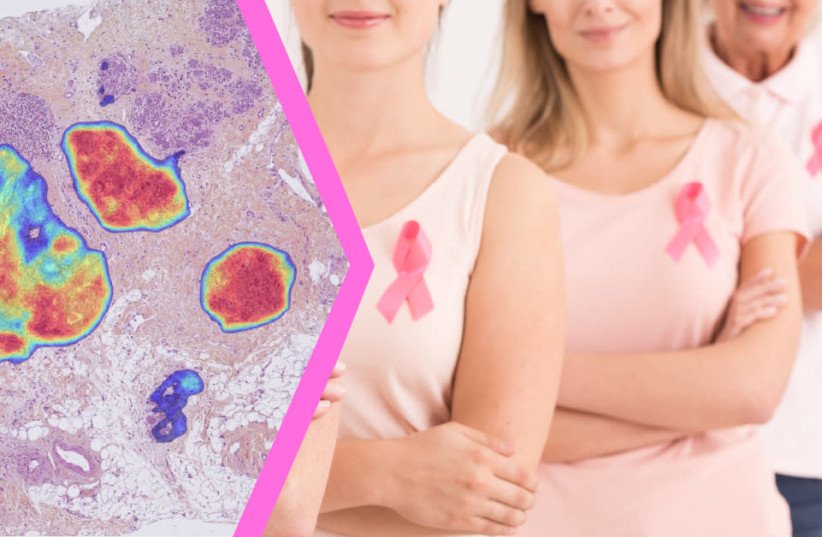
[vc_row][vc_column][vc_column_text]Topic: Israeli company uses AI to detect breast cancer
Israeli technology employing artificial intelligence to detect breast cancer has obtained European Union approval, Ibex Medical Analytics announced Wednesday.
Tel Aviv-based Ibex was established in 2016 and is focused on developing AI solutions to cancer diagnosis.
“Breast cancer is the most common cancer malignant disease in women, with several million cases per year,” Ibex chief scientific officer Dr. Daphna Laifenfeld said. “For this reason, both timely and accurate diagnosis is really critical.”
Over the past few years, an increase of breast cancer cases, as well as the development of personalized medicine, has led to an increased complexity in diagnosis, reducing the number of pathologists who are able to read biopsies, she said.
“This results in an increased workload on labs and healthcare systems, and this essentially means that there are more mistakes in the data,” Laifenfeld said. “Considering how serious and prevalent the disease is, it’s really important to have an application that can actually be used as an automated solution and a decision support tool for pathologists.”
Ibex’s Galen Breast solution aims to assist physicians in the task.
The application, which is Web-based and is accessible from anywhere, analyzes biopsy slides.
“When a biopsy is taken, to process it, small tissue sections are put on each last slide, which are then analyzed and reviewed by a pathologist, either under a microscope or digitally on a computer,” Laifenfeld said. “Our application works on these digital images of these biopsy slides.”
The technology was developed using hundreds of such images. It is able to detect various types of breast cancer, including invasive and in situ carcinomas and to distinguish between different types of invasive cancer.
The CE mark was obtained after a clinical study carried out by the Maccabi Healthcare Services and at the Institut Curie in France.
“We are impressed with the successful study outcomes and performance of Galen Breast,” Anne Vincent-Salomon, Institut Curie’s director of pathology and the principal investigator in the study, said in a press release. “Our team demonstrated that Ibex’s AI technology goes beyond detecting cancer and provides accurate insights on the type of tumor, the nuclear grading of in situ carcinomas and more.
Topic Discussed: Israeli company uses AI to detect breast cancer
Read More[/vc_column_text][/vc_column][/vc_row][vc_row css=”.vc_custom_1618658856512{margin-top: 75px !important;}”][vc_column][vc_column_text]
About | OB Videos | Insurances Accepted | Blog | Providers | Michael Anthony, MD, FACOG | Noemi Maydew, MD, FACOG | Anne Bond Bonpain, MD, FACOG | Elita Wyckoff, MD, FACOG | Gilberto Rodrigo, MD, FACOG | Jennifer Fraley, MD, FACOG | Heather Flowers | Courtney Braswell | Services | Patient Care | Advanced Care Team | Testimonials | Contact Us | Patient Portal
[/vc_column_text][/vc_column][/vc_row]

by OB/GYN | May 26, 2021 | OB/GYN News
[vc_row][vc_column][vc_column_text]Topic: When to seek mental health help after giving birth
Growing up, I don’t think I have ever seen my mother take a break, fall ill, or share her feelings when I would see her crying over something… I noticed this continue into adulthood. I have then realized I am doing as she did, as well as so many mothers do in my birth work.
Societal expectations also create a gap in addressing mental health issues from pregnancy and beyond. We see photos depicting mothers with their newborn child feeling all this love and happiness. This allows the audience to perceive that that is how postpartum should be, and if we are experiencing something different, there’s something very wrong.
If you are feeling that way, know that your feelings are valid. Pregnancy, birth, and all the emotions that come with it are different for everyone. Recent studies have shown an increase in the rate of mental health issues for women who are pregnant and in the postpartum period.
Postpartum mental health issues come in many forms including blues, psychosis, depression, anxiety, PTSD, and more. These are actually common and can affect one’s daily life, even during pregnancy. It is important to know that emotions during pregnancy and postpartum are different for everyone, but that doesn’t mean that what you’re experiencing is “normal.”
How do you know when it’s time to seek help?
If you are pregnant and are in the postpartum period, you know yourself better than anyone else. If you feel that you may have changes in emotions that you are not able to understand or handle and if these emotions last for more than two weeks, please contact your health-care provider as soon as possible.
It is also important to note that physical problems such as feeling overly fatigue or experiencing pains may lead to these emotions. Aside from seeking help from your provider, there are also virtual support groups available and mommy play dates that happen on island.
Topic Discussed: When to seek mental health help after giving birth
Read More[/vc_column_text][/vc_column][/vc_row][vc_row css=”.vc_custom_1618658856512{margin-top: 75px !important;}”][vc_column][vc_column_text]
About | OB Videos | Insurances Accepted | Blog | Providers | Michael Anthony, MD, FACOG | Noemi Maydew, MD, FACOG | Anne Bond Bonpain, MD, FACOG | Elita Wyckoff, MD, FACOG | Gilberto Rodrigo, MD, FACOG | Jennifer Fraley, MD, FACOG | Heather Flowers | Courtney Braswell | Services | Patient Care | Advanced Care Team | Testimonials | Contact Us | Patient Portal
[/vc_column_text][/vc_column][/vc_row]

by OB/GYN | May 25, 2021 | OB/GYN News
[vc_row][vc_column][vc_column_text]Topic: 5 Top Tips for Handling Pregnancy Aches and Pains
You might be surprised to learn that headaches are very common in pregnancy. Nearly 1 in 5 pregnant women has a migraine at some point during pregnancy. Hormonal changes in pregnancy cause increased blood volume, including around the brain. This can trigger frequent, mild headaches. Headaches can also be caused by cutting back on caffeine, dehydration, fatigue, lack of sleep, low blood sugar and stress. The challenging part about headaches in pregnancy is that you can’t take strong medications to alleviate them.
Here’s what our Mommy M.D.s — doctors who are also mothers — do to handle pregnancy headaches, as well as other aches and pains.
“When I was 13 weeks pregnant, right around the time my morning sickness went away, my migraines started,” says Kristie McNealy, M.D., a mom of four and a health care consultant in Salt Lake City. “I woke with a headache each day, which got worse as the day went on. It was hard to cope. I found that combining Tylenol and a nap was the best.”
“Thank goodness, the migraines lasted only about three weeks!” McNealy adds. (Talk with your doctor or midwife before taking this or any medication.)
“I had a headache every day during my second trimester,” says Ann LaBarge, M.D., a mom of four children, ages 6 to 16, and an OB-GYN in private practice at the Midwest Center for Women’s HealthCare in Park Ridge, Illinois. “Taking Tylenol and Sudafed each morning helped. I don’t have a history of migraines, so I didn’t think they were migraines, just pregnancy-related headaches.”
“I also found that when I was busy, I felt better,” LaBarge adds. “Sitting home feeling sorry for myself wasn’t the way to go! Working kept my mind off of my headaches.”
Topic Discussed: 5 Top Tips for Handling Pregnancy Aches and Pains
Read More[/vc_column_text][/vc_column][/vc_row][vc_row css=”.vc_custom_1618658856512{margin-top: 75px !important;}”][vc_column][vc_column_text]
About | OB Videos | Insurances Accepted | Blog | Providers | Michael Anthony, MD, FACOG | Noemi Maydew, MD, FACOG | Anne Bond Bonpain, MD, FACOG | Elita Wyckoff, MD, FACOG | Gilberto Rodrigo, MD, FACOG | Jennifer Fraley, MD, FACOG | Heather Flowers | Courtney Braswell | Services | Patient Care | Advanced Care Team | Testimonials | Contact Us | Patient Portal
[/vc_column_text][/vc_column][/vc_row]

by OB/GYN | May 24, 2021 | OB/GYN News
[vc_row][vc_column][vc_column_text]Topic: Exposure to pollution during pregnancy is linked to asthma in preschoolers
Exposure to particulate matter (PM2.5) pollution during pregnancy is linked to asthma in preschoolers, according to a new study published in the journal American Journal of Respiratory and Critical Care Medicine.
Researchers from the Mount Sinai School of Medicine looked at 376 mothers and their children who live in the Boston metropolitan area.
They estimated the PM2.5 exposure in the mothers’ and children’s homes andthen followed up with the mothers to find out whether the children were diagnosed with asthma. Most of the diagnoses occurred just after three years of age.
The researchers found that 18% of children born to these mothers developed asthma in their preschool years, compared to 7% of children overall in the U.S.
While both boys and girls were affected by the exposure, the study found that girl babies were more sensitive to ultra-fine particles when exposed in late pregnancy.
Rosalind Wright, the lead author of the study and professor of Environmental Medicine and Public Health, said: ‘One reason ultra-fine particulates are not routinely monitored is that there have been a number of unique challenges to measuring them accurately.
‘Fortunately, recent methods have been developed to provide such exposure data which allowed us to conduct this study.
‘This research is an important early step in building the evidence base that can lead to better monitoring of exposure to ultrafine particles in the United States and ultimately to regulation.
‘As we advance methods for measuring these tiny particles, we hope for replication of these findings, both within different geographic areas across the United States as well as globally. Childhood asthma remains a global epidemic that is likely to grow with the anticipated rise in particulate air pollution exposures due to effects of climate change.’
Topic Discussed: Exposure to pollution during pregnancy is linked to asthma in preschoolers
Read More[/vc_column_text][/vc_column][/vc_row][vc_row css=”.vc_custom_1618658856512{margin-top: 75px !important;}”][vc_column][vc_column_text]
About | OB Videos | Insurances Accepted | Blog | Providers | Michael Anthony, MD, FACOG | Noemi Maydew, MD, FACOG | Anne Bond Bonpain, MD, FACOG | Elita Wyckoff, MD, FACOG | Gilberto Rodrigo, MD, FACOG | Jennifer Fraley, MD, FACOG | Heather Flowers | Courtney Braswell | Services | Patient Care | Advanced Care Team | Testimonials | Contact Us | Patient Portal
[/vc_column_text][/vc_column][/vc_row]

by OB/GYN | May 21, 2021 | OB/GYN News
[vc_row][vc_column][vc_column_text]Topic: Can Changing Your Diet Reduce Your Risk of Breast Cancer?
Many “anti-cancer” diets have been proposed but none have been clinically demonstrated to actually reduce the risk of developing cancer. An unhealthy weight has long been known to increase the risk of chronic conditions such as diabetes and heart disease, and there is increasing evidence that being overweight increases the risk of developing certain types of cancer and can decrease the survival of individuals with cancer.
Some but not all studies have suggested that women who consume a low-fat diet have both a reduced risk of developing breast cancer and are more likely to survive after they overcome breast cancer. (1,4,5) The Women’s Health Initiative trial was designed to evaluate dietary modification for breast cancer prevention and was initiated in 1993. The study was designed to evaluate whether a low-fat dietary intervention in postmenopausal women with no prior history of breast cancer could reduce the risk of developing breast cancer. The study evaluated an intervention of reduced fat intake in women who had no breast cancer history and had no suspicious findings of breast cancer on screening mammography prior to entry.
The Women’s Health Initiative trial enrolled 48,835 postmenopausal women, ages 50 to 79 between 1993 and 1998. who were randomly assigned to a low-fat diet. About 19,600 women were part of the low-fat diet group, which recommended reducing fat intake to 20% of daily caloric intake and increased vegetable and fruit intake to five servings a day and grains to six servings a day and compared that group to a group of women consuming their usual diet. The diet was comparable to the DASH (Dietary Approaches to Stop Hypertension) diet, with slightly more emphasis on dietary fat reduction and gave participants a framework to follow. In the other group, approximately 29,300 women learned about good nutrition and a healthy diet but they did not have to change their eating habits.
When initially evaluated in 2006 the low-fat diet was not found to reduce breast cancer risk. Now after almost 20 years of follow-up, the study shows a significant reduction in breast cancer-related deaths and deaths after breast cancer among women consuming the low-fat diet. The incidence of developing breast cancer was estimated to be about 8% lower in the dietary intervention compared with the comparison group during the trial. The dietary modifications however significantly reduced the actual risk of dying from breast cancer. This is because women in the dietary group were diagnosed with significantly fewer estrogen receptor-positive, progesterone receptor-negative, HER2-negative cancers, which carry a poor prognosis.
Topic Discussed: Can Changing Your Diet Reduce Your Risk of Breast Cancer?
Read More[/vc_column_text][/vc_column][/vc_row][vc_row css=”.vc_custom_1618658856512{margin-top: 75px !important;}”][vc_column][vc_column_text]
About | OB Videos | Insurances Accepted | Blog | Providers | Michael Anthony, MD, FACOG | Noemi Maydew, MD, FACOG | Anne Bond Bonpain, MD, FACOG | Elita Wyckoff, MD, FACOG | Gilberto Rodrigo, MD, FACOG | Jennifer Fraley, MD, FACOG | Heather Flowers | Courtney Braswell | Services | Patient Care | Advanced Care Team | Testimonials | Contact Us | Patient Portal
[/vc_column_text][/vc_column][/vc_row]