by Marketing Manager | Mar 24, 2023 | Pregnancy
[vc_row][vc_column][vc_column_text]The many changes that occur with pregnancy often keep expectant mothers up at night. However, the importance of prenatal care is a factor that should be considered. This care is essential for a safe pregnancy and to reduce the possibility of complications during childbirth. Prenatal care includes ongoing examinations and medical assistance for pregnant moms and their developing babies.
Detecting Potential Health Issues Early On
Various tests and screenings are generally performed during prenatal visits to detect any underlying medical issues that could endanger the mother or the unborn child. They consist of examinations for toxoplasmosis, excessive blood pressure, and tests for gestational diabetes.
Early detection and treatment of potential health problems can help avoid complications later in pregnancy or during labour. For instance, managing gestational diabetes can lower the likelihood that the baby will become too large, which could make delivery more challenging. Early detection and treatment can also prevent significant issues like high blood pressure, similar to how preeclampsia can be prevented.
Monitoring the Baby’s Growth and Development
The infant’s development is tracked frequently with ultrasounds and other tests to ensure it progresses healthily. Medical practitioners can take steps to address any issues if they are discovered, such as recommending a specific diet or ordering additional tests.
Prenatal care can detect potential congenital disabilities or hereditary disorders and keep track of the baby’s development. This helps parents mentally prepare and make informed choices about their child’s upbringing.
Promoting Healthy Lifestyle Choices
Most mothers know the harm that dangerous substances like alcohol and tobacco could have on their baby and are asked to abstain. They are also encouraged to follow a balanced diet and exercise regularly. Prenatal care specialists can give pregnant women advice and support in these areas, guiding them in making choices that will benefit them and their growing children.
Although mental health is vital to general health and well-being, prenatal care also provides knowledge and aid for controlling stress and anxiety through coping techniques to deal with specific issues during pregnancy.
The better outcomes prenatal care may deliver for both mother and child ultimately make it so important. The risk of difficulties during pregnancy and labour can be decreased by routine check-ups and monitoring, which can assist in identifying and addressing potential health issues. This could lead to better outcomes for the mother and the unborn child, such as a lower probability of preterm birth, low birth weight, and other problems.
Prenatal treatment can also assist in preparing pregnant mothers for the physical and mental difficulties associated with childbirth and early parenthood. As moms negotiate the numerous changes that come with expecting a new baby, they can feel more powerful and confident with the support and advice of their prenatal care providers.[/vc_column_text][/vc_column][/vc_row][vc_row css=”.vc_custom_1618658856512{margin-top: 75px !important;}”][vc_column][vc_text_separator title=”Services We Offer:”][vc_column_text]
Laparoscopy | Abnormal Bleeding | Menopause | Minimally Invasive Surgery | Contraception | Pap Smear | Pelvic Pain | Family Planning | STD Testing | Hormone Therapy | Hysterectomy | Infertility | 3D Mammography | Pregnancy & Prenatal Care | Preventive Screening
[/vc_column_text][vc_text_separator title=”Website Navigation:”][vc_column_text]
Home | About | OB Videos | Insurances Accepted | Blog | Providers | Michael Anthony, MD, FACOG | Noemi Maydew, MD, FACOG | Anne Bond Bonpain, MD, FACOG | Elita Wyckoff, MD, FACOG | Gilberto Rodrigo, MD, FACOG | Jennifer Fraley, MD, FACOG | Heather Flowers | Courtney Braswell | Services | Patient Care | Advanced Care Team | Testimonials | Contact Us | Patient Portal
[/vc_column_text][/vc_column][/vc_row]

by Marketing Manager | Mar 9, 2023 | Pregnancy, Women's Health
[vc_row][vc_column][vc_column_text]Being pregnant is a normal and healthy state of living but there are a lot of physical changes that take place. This leads to many questions about what is okay and what isn’t okay. A common question that comes up during pregnancy is if it is safe to travel or not. Read on to learn more about traveling while pregnant.
Is It Safe to Travel During Pregnancy?
In most cases, it is safe to travel during pregnancy but there are some things to keep in mind. Talk with your OB/GYN provider before you start planning a trip. If you have pregnancy complications, are close to your due date, or are at high risk, they will likely recommend not traveling.
What Are the Dangers of Traveling While Pregnant?
In most circumstances, it is safe to travel during pregnancy but you should be aware of signs of complications and know when to go to the hospital or get emergency medical care. Signs to look for include:
- Vaginal Bleeding
- Pelvic or Abdominal Pain
- Contractions
- Water Breaks
- Headache That Won’t Go Away
- Elevated Blood Pressure
- Signs of Preeclampsia
- Changes in Eyesight
- Swelling of the Face or Hands
- Severe Vomiting or Diarrhea
- Signs of a Blood Clot
Is It Safe to Fly During Pregnancy?
In a healthy pregnancy, it is safe to fly domestically until about 36 weeks of pregnancy. If traveling internationally, speak with your OB/GYN to see what they recommend. You shouldn’t fly if you have a medical condition that could be made worse by flying or that would require you to need emergency medical care.
Are There Places I Shouldn’t Go to If I’m Pregnant?
It is safe to travel to most places but you should consider if your destination has an adequate healthcare system in place in case you need care. Avoid places that have a high risk of zika or malaria.
What Should I Do Before Traveling While Pregnant?
The first thing you should do before making any travel arrangements is speak with your OB/GYN healthcare provider and discuss your plans. Make sure to plan ahead and check out what healthcare facilities are available at your destination. If you will be traveling overseas, check your healthcare policy for pregnancy and neonatal complications while in a foreign country. Make sure to check the pregnancy policies of any of the travel companies you will be using.[/vc_column_text][/vc_column][/vc_row][vc_row css=”.vc_custom_1618658856512{margin-top: 75px !important;}”][vc_column][vc_text_separator title=”Services We Offer:”][vc_column_text]
Laparoscopy | Abnormal Bleeding | Menopause | Minimally Invasive Surgery | Contraception | Pap Smear | Pelvic Pain | Family Planning | STD Testing | Hormone Therapy | Hysterectomy | Infertility | 3D Mammography | Pregnancy & Prenatal Care | Preventive Screening
[/vc_column_text][vc_text_separator title=”Website Navigation:”][vc_column_text]
Home | About | OB Videos | Insurances Accepted | Blog | Providers | Michael Anthony, MD, FACOG | Noemi Maydew, MD, FACOG | Anne Bond Bonpain, MD, FACOG | Elita Wyckoff, MD, FACOG | Gilberto Rodrigo, MD, FACOG | Jennifer Fraley, MD, FACOG | Heather Flowers | Courtney Braswell | Services | Patient Care | Advanced Care Team | Testimonials | Contact Us | Patient Portal
[/vc_column_text][/vc_column][/vc_row]

by Marketing Manager | Feb 9, 2023 | Pregnancy, Women's Health
[vc_row][vc_column][vc_column_text]One of the big questions you may face if you are pregnant or thinking of becoming pregnant is the use of medication. Many people take medication daily to stay healthy but not all medications are considered safe to take during pregnancy. Some medications are known to possibly cause pregnancy complications, miscarriage, birth defects, premature birth, or developmental disabilities. Read on to learn more about medication and pregnancy.
Medication Use During Pregnancy
The truth is that the medical field does not have that much information on the effects of many medications during pregnancy because pregnant women are not usually included in medication safety trials. According to the Centers for Disease Control and Prevention (CDC), what we do know about medicine use in pregnancy is:
- 9 in 10 women use medicine during pregnancy, and 7 in 10 of those women report taking at least one prescription medication
- Many women need to take medication during their pregnancy to manage their health conditions
- Sometimes, avoiding or stopping the use of a medication during pregnancy could be more harmful than taking the medication during pregnancy
- Some medications increase the risk of pregnancy complications, miscarriage, birth defects, premature birth, or developmental disabilities
- There are several factors to consider such as medical history, current health status, the dosage of the medication, and possible side effects of the medication
What Should I Do About My Medications If I Am Pregnant or Thinking Of Becoming Pregnant?
The first thing you should do if you are pregnant, trying to become pregnant, or thinking of becoming pregnant is talk to your healthcare provider. You should always talk to your healthcare provider before starting or stopping any medications. Make sure to discuss every medication you take including prescriptions, over-the-counter medication, supplements, and vitamins. If you do have health conditions that you take medication for, talk with your healthcare provider about the best ways to manage your condition during pregnancy. The key to managing medication concerns during pregnancy is to talk with your healthcare provider about them.
Resources
- Centers for Disease Control and Prevention. (2022, September 20). Pregnant or thinking of getting pregnant? Centers for Disease Control and Prevention. Retrieved February 2, 2023
[/vc_column_text][/vc_column][/vc_row][vc_row css=”.vc_custom_1618658856512{margin-top: 75px !important;}”][vc_column][vc_text_separator title=”Services We Offer:”][vc_column_text]
Laparoscopy | Abnormal Bleeding | Menopause | Minimally Invasive Surgery | Contraception | Pap Smear | Pelvic Pain | Family Planning | STD Testing | Hormone Therapy | Hysterectomy | Infertility | 3D Mammography | Pregnancy & Prenatal Care | Preventive Screening
[/vc_column_text][vc_text_separator title=”Website Navigation:”][vc_column_text]
Home | About | OB Videos | Insurances Accepted | Blog | Providers | Michael Anthony, MD, FACOG | Noemi Maydew, MD, FACOG | Anne Bond Bonpain, MD, FACOG | Elita Wyckoff, MD, FACOG | Gilberto Rodrigo, MD, FACOG | Jennifer Fraley, MD, FACOG | Heather Flowers | Courtney Braswell | Services | Patient Care | Advanced Care Team | Testimonials | Contact Us | Patient Portal
[/vc_column_text][/vc_column][/vc_row]
by Marketing Manager | Feb 2, 2023 | Pregnancy, Women's Health
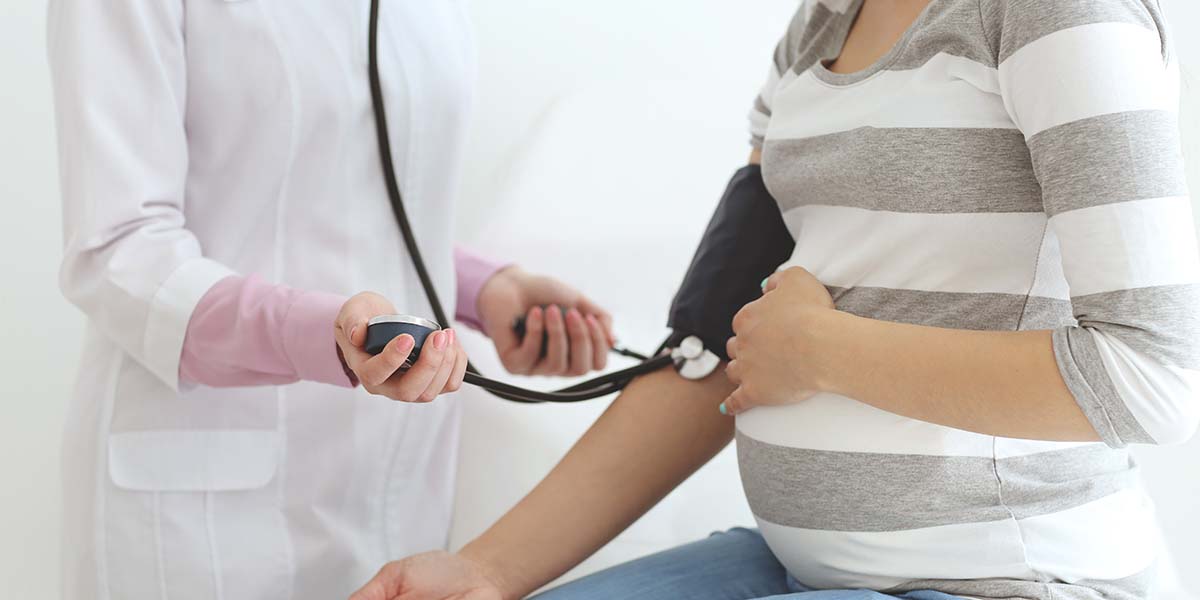
[vc_row][vc_column][vc_column_text]Most people are familiar with the medical condition referred to as hypertension or high blood pressure. Having high blood pressure during pregnancy may lead to the pregnancy condition known as pre-eclampsia. This condition is characterized by two main symptoms, high blood pressure and protein present in the urine. Pre-eclampsia is dangerous and can lead to serious complications for mother and baby, and possibly even death. This is one of the reasons that your OB/GYN healthcare provider checks your blood pressure every time you come in for an appointment. It is important for them to monitor any changes and possible signs they see of pre-eclampsia so that it can be diagnosed and treated as early as possible. According to the National Library of Medicine, pre-eclampsia is related to 2% to 8% of pregnancy complications and is responsible for 50,000 maternal deaths and over 500,000 fetal deaths worldwide.1
Recently there has been new information emerging about pre-eclampsia. A research team published an article about the long-term effects of pre-eclampsia on women in the European Journal of Preventive Cardiology. The researchers found that women who had pre-eclampsia during pregnancy are at a greater risk of having a heart attack or stroke in the future.2
In this study, the researchers analyzed national registers in Denmark from 1978 to 2017, which included more than 1.1 million women who experienced pre-eclampsia with no prior history of having high blood pressure. Then the researchers followed up with these women and found some interesting trends. They found that up to 2% of the women with pre-eclampsia in their first pregnancy had a heart attack or stroke within twenty years of giving birth compared to only 1.2% of women not affected by pre-eclampsia. It was also found that women with pre-eclampsia were four times more likely to have a heart attack and three times more likely to have a stroke within 10 years of delivery compared to women not affected by pre-eclampsia.2
Lead researcher Dr. Sara Hallum, told U.S. News and World Report, “The high risk of cardiovascular disease after pre-eclampsia manifests at young ages and early after delivery. This indicates that interventions to prevent heart attacks and strokes in affected women cannot wait until middle age when they become eligible for conventional cardiovascular screening programs.”2
The bottom line is that prevention and early detection is key. Regularly monitor blood pressure before and after becoming pregnant. While pregnant, attend all of your doctor’s appointments so that they can monitor and detect any changes early. If you are diagnosed with preeclampsia, follow your healthcare provider’s instructions.
Resources
- Preeclampsia – statpearls – NCBI bookshelf. (n.d.). Retrieved January 26, 2023
- Murez, C. (2023, January 26). Preeclampsia in pregnancy is a bad sign for women’s Future Heart Health. Retrieved January 26, 2023
[/vc_column_text][/vc_column][/vc_row][vc_row css=”.vc_custom_1618658856512{margin-top: 75px !important;}”][vc_column][vc_text_separator title=”Services We Offer:”][vc_column_text]
Laparoscopy | Abnormal Bleeding | Menopause | Minimally Invasive Surgery | Contraception | Pap Smear | Pelvic Pain | Family Planning | STD Testing | Hormone Therapy | Hysterectomy | Infertility | 3D Mammography | Pregnancy & Prenatal Care | Preventive Screening
[/vc_column_text][vc_text_separator title=”Website Navigation:”][vc_column_text]
Home | About | OB Videos | Insurances Accepted | Blog | Providers | Michael Anthony, MD, FACOG | Noemi Maydew, MD, FACOG | Anne Bond Bonpain, MD, FACOG | Elita Wyckoff, MD, FACOG | Gilberto Rodrigo, MD, FACOG | Jennifer Fraley, MD, FACOG | Heather Flowers | Courtney Braswell | Services | Patient Care | Advanced Care Team | Testimonials | Contact Us | Patient Portal
[/vc_column_text][/vc_column][/vc_row]

by Marketing Manager | Jan 26, 2023 | Babies, Pregnancy
[vc_row][vc_column][vc_column_text]U.S. News & World Report recently published an article on ‘How to Choose a Maternity Hospital.’ The article’s purpose is to help pregnant women find the maternity hospital that is best for them by asking questions that give insight into the hospital’s healthcare team, facility outcomes, and labor and delivery details. Read on to learn what factors to consider and what questions to ask.
Factors to Consider
There are several factors to consider when choosing what hospital you are going to give birth at. Some factors may be more important to you than others depending on your preferences. Factors to consider include:
- The Maternity Care Team
- Quality Metrics
- Birthing Experience
- NICU and Emergency Capabilities
- Breastfeeding Support
- Resources
The Maternity Care Team
Oftentimes people choose their maternity hospital depending on where their healthcare provider delivers. When choosing an obstetrician, make sure that they consider your concerns, fears, preferences, and that you feel comfortable with them. When deciding on a maternity hospital consider the following questions:
- Does the facility have maternal-fetal medicine specialists or perinatologists (doctors who specialize in high-risk pregnancies)?
- Does the hospital offer some other forms of labor and delivery experiences besides traditional physician-led care?
- Is there the option for laboring with a midwife or doula?
- Do they have group prenatal care?
Quality Metrics
Knowing the data and statistics of the hospital you plan to deliver at is important. Some of the quality metrics you may want to consider are:
- C-section rate
- NTSV C-section rate (C-section rate for a woman who has never given birth before with low-risk pregnancies)
- Early elective delivery rate
- Episiotomy rate
Birthing Experience
Do you know what your preferences are when it comes to your birthing experience? Consider and ask the hospital or your doctor the following questions about the birthing experience offered at the hospital:
- Am I able to get a tour of the maternity unit?
- What pain-control options do you offer, including and beyond epidurals?
- What labor positions can I deliver in? Can I walk around?
- Do you have birthing balls or birthing tubs?
- Do you have private birthing rooms?
- How many support people are allowed to be with me?
- What factors are considered with induced labor?
- Are VBACs an option?
- Is delayed cord clamping available?
NICU and Emergency Capabilities
If you have a high-risk pregnancy or you would like to be on the side of caution in case your childbirth has complications it is good to consider what NICU and emergency care is offered at the hospital. You may like to look into the following:
- Is there an anesthesiologist in the hospital at all times?
- Is there a pediatrician in the hospital at all times?
- Does the hospital have a neonatal intensive care unit (NICU)? If so, what is the level of that NICU?
- If the hospital does not have a NICU and a child needs NICU care, where are they transferred, and how long does that normally take?
Breastfeeding Support and Additional Resources
If you are interested in breastfeeding, inquire if the hospital provides lactation consultants or if they encourage breastfeeding. Many high-quality hospitals also offer additional resources to new or soon-to-be parents such as maternal health navigators or social workers to aid in finding resources for families in need.
The Bottom Line
Although this list contains many questions and considerations, it is important to take the time to learn what your maternity hospital offers and what its standards are. To read the full original article from the U.S. News and World Report, click here.
Resources
- Esposito, L., & Rowe, A. (2022, December 1). Checklist for choosing a Maternity Hospital | U.S. news. U.S. News and World Report. Retrieved January 19, 2023
[/vc_column_text][/vc_column][/vc_row][vc_row css=”.vc_custom_1618658856512{margin-top: 75px !important;}”][vc_column][vc_text_separator title=”Services We Offer:”][vc_column_text]
Laparoscopy | Abnormal Bleeding | Menopause | Minimally Invasive Surgery | Contraception | Pap Smear | Pelvic Pain | Family Planning | STD Testing | Hormone Therapy | Hysterectomy | Infertility | 3D Mammography | Pregnancy & Prenatal Care | Preventive Screening
[/vc_column_text][vc_text_separator title=”Website Navigation:”][vc_column_text]
Home | About | OB Videos | Insurances Accepted | Blog | Providers | Michael Anthony, MD, FACOG | Noemi Maydew, MD, FACOG | Anne Bond Bonpain, MD, FACOG | Elita Wyckoff, MD, FACOG | Gilberto Rodrigo, MD, FACOG | Jennifer Fraley, MD, FACOG | Heather Flowers | Courtney Braswell | Services | Patient Care | Advanced Care Team | Testimonials | Contact Us | Patient Portal
[/vc_column_text][/vc_column][/vc_row]

by Marketing Manager | Oct 27, 2022 | Pregnancy, Women's Health
[vc_row][vc_column][vc_column_text]New research shows that up to 4 out of 5 pregnancy-related deaths are preventable.
Pregnancy is oftentimes known as a time in a woman’s life that is blissful and happy but that is not always the case. Although healthcare has advanced by leaps and bounds since the Middle Ages, pregnancy can still be dangerous. Some of the dangers of pregnancy are unavoidable while others can be avoided with early identification and treatment. The Centers for Disease Control and Prevention (CDC) released some alarming data in September 2022 related to pregnancy-related deaths.
According to the data, more than 80% of pregnancy-related deaths are preventable.1 This number is alarming. In a letter introducing the Blueprint for Addressing the Maternal Health Crises, Vice President Kamala Harris wrote, “Far too many women experience pain, neglect, and loss during what should be one of the most joyous times of their lives.”2
The study found that 53% of pregnancy-related deaths happen between seven days and one year after delivery, 22% of pregnancy-related deaths happened during pregnancy, and 25% happen on the day of delivery or up to a week afterward.1 The most common causes of pregnancy-related deaths were broken down into percentages.
- Mental Health Conditions (suicide, substance abuse, etc.) – 23%
- Hemorrhage – 14%
- Infection – 9%
- Thrombotic Embolism – 9%
- Cardiomyopathy – 9%
- High Blood Pressure Disorders – 7%1
This data is disturbing because a large number of these deaths are preventable. Previous data has shown that the United States (US) has much higher rates of pregnancy-related deaths compared to other countries. In the US, black women are three times more likely to die from pregnancy-related causes.2
These worrisome numbers need to improve. The CDC stated that everyone can help prevent pregnancy-related deaths by being aware of pregnancy-related complications, listening to the concerns of pregnant and postpartum women, and getting them professional help if needed.
Resources
- Centers for Disease Control and Prevention. (2022, September 19). Four in 5 pregnancy-related deaths in the U.S. are preventable. Centers for Disease Control and Prevention. Retrieved October 20, 2022
- McPhillips, D. (2022, September 20). 4 out of 5 pregnancy-related deaths in the US are preventable, CDC finds. CNN. Retrieved October 20, 2022
[/vc_column_text][/vc_column][/vc_row][vc_row css=”.vc_custom_1618658856512{margin-top: 75px !important;}”][vc_column][vc_text_separator title=”Services We Offer:”][vc_column_text]
Laparoscopy | Abnormal Bleeding | Menopause | Minimally Invasive Surgery | Contraception | Pap Smear | Pelvic Pain | Family Planning | STD Testing | Hormone Therapy | Hysterectomy | Infertility | 3D Mammography | Pregnancy & Prenatal Care | Preventive Screening
[/vc_column_text][vc_text_separator title=”Website Navigation:”][vc_column_text]
Home | About | OB Videos | Insurances Accepted | Blog | Providers | Michael Anthony, MD, FACOG | Noemi Maydew, MD, FACOG | Anne Bond Bonpain, MD, FACOG | Elita Wyckoff, MD, FACOG | Gilberto Rodrigo, MD, FACOG | Jennifer Fraley, MD, FACOG | Heather Flowers | Courtney Braswell | Services | Patient Care | Advanced Care Team | Testimonials | Contact Us | Patient Portal
[/vc_column_text][/vc_column][/vc_row]