
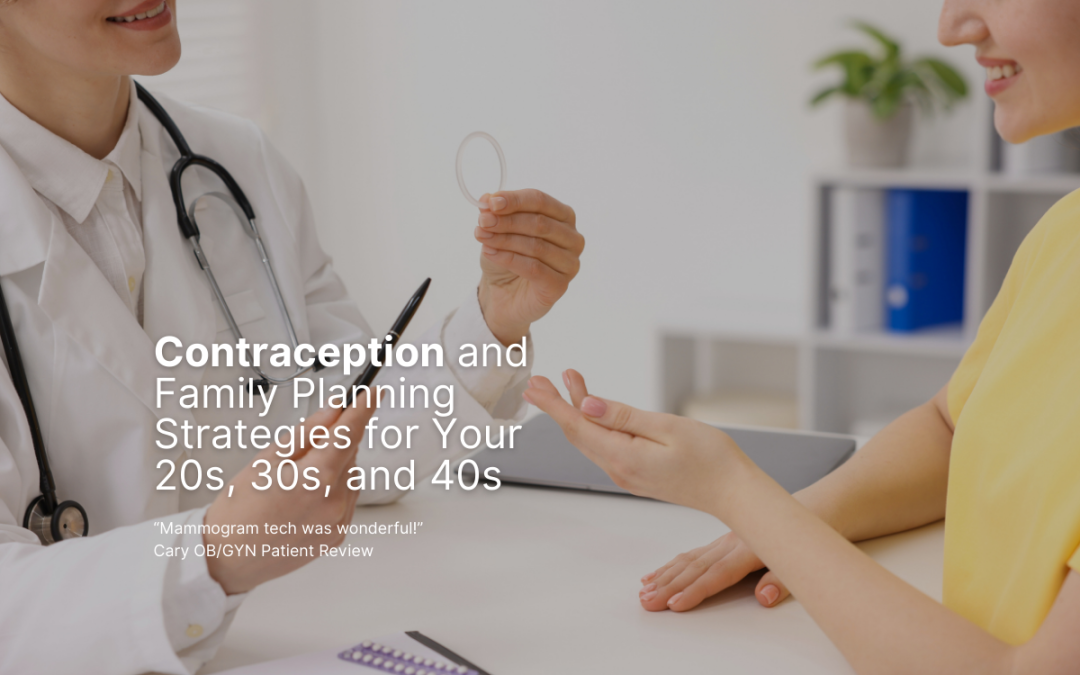
Contraception and Family Planning Strategies for Your 20s, 30s, and 40s
Family planning is a journey — not a one-time decision. Your goals, priorities, and lifestyle evolve over time, and so should the conversation you have about contraception. Whether you’re in your early twenties and not ready to have children, in your thirties thinking about spacing or growing your family, or navigating your forties with changing fertility and health priorities, understanding your options empowers you to make choices that fit your life.
At Cary OB/GYN, we partner with patients across all reproductive stages to provide personalized, evidence-based contraceptive counseling and family planning support. This post walks through key considerations for patients in their 20s, 30s, and 40s — helping you choose the strategy that’s right for you.
“Mammogram tech was wonderful!”
Cary OB/GYN Patient Review
Why Personalized Family Planning Matters
There’s no single “best” method for everyone. The right choice depends on:
- Your health history
- Reproductive goals (whether you want to prevent pregnancy now, later, or pursue fertility)
- Lifestyle and daily routines
- Hormonal preferences
- Tolerance for side effects
An open, informed discussion with your OB/GYN ensures your family planning strategy reflects not just medical guidelines but your personal goals and comfort.
In Your 20s: Flexibility and Exploration
Your 20s are a time of life filled with change — career beginnings, education, travel, relationships, and self-discovery. For many in this age group, contraception is focused on preventing unintended pregnancy and building comfort with reproductive health care.
Key considerations in your 20s:
- Reversible options:
- Oral contraceptives (the pill): Daily hormonal birth control that can regulate cycles and reduce period symptoms.
- Condoms: Offer protection against sexually transmitted infections (STIs) and pregnancy when used correctly.
- Long-acting reversible contraceptives (LARCs): Intrauterine devices (IUDs) and implants offer highly effective, low-maintenance pregnancy prevention.
- Cycle health:
Some methods — especially combination hormonal contraceptives — can make periods lighter, more regular, and less painful, which can be especially helpful early in reproductive life. - STI prevention:
Condoms remain the only method that helps protect against STIs. Even when using another contraceptive method, condoms can be a smart choice for STI prevention. - Reproductive health awareness:
Your 20s are a great time to build a baseline understanding of your cycle, ovulation patterns, and overall reproductive health — knowledge that pays off in later years for both contraception and fertility planning.
At this stage, contraception is often about control and flexibility. It’s about aligning your current lifestyle with your reproductive goals.
In Your 30s: Planning for Pregnancy or Spacing
In your 30s, many women begin to think more deliberately about timing pregnancy — whether that means spacing pregnancies, planning a first child, or adjusting contraception as priorities shift.
Key family planning considerations in your 30s:
- Balancing contraception with future fertility goals:
If you’re planning to have children in the next few years, options that are easily discontinued — like oral contraceptives or hormone-free methods — may be attractive. LARCs remain a great choice when pregnancy is not yet desired, but can be removed when you’re ready. - Fertility awareness:
Fertility begins to gradually decline in your early 30s. If pregnancy is a goal, conversations about timing, preconception health, and fertility monitoring can help you plan proactively. - Health conditions:
Conditions such as hypertension, migraines, or clotting disorders can influence contraceptive safety and choice. A thorough review of your medical history with your OB/GYN ensures the safest options are selected. - Reliable, low-maintenance options:
For women who want to prevent pregnancy while maintaining a busy schedule, LARCs (like IUDs and implants) remain among the most effective choices, with failure rates under 1%.
Your 30s are a time to refine your strategy — balancing reliable contraception with your evolving reproductive and life goals.
In Your 40s: Transition, Health Focus, and Continued Planning
Your 40s are marked by significant reproductive transitions. Fertility continues to decline, menstrual cycles become more irregular, and perimenopausal symptoms may begin. But contraception remains important — even if pregnancy seems less likely.
What to consider in your 40s:
- Continued pregnancy prevention:
You can still become pregnant in your early and mid-40s. If avoiding pregnancy remains a priority, effective contraception is essential. - Health and risk factors:
Certain contraceptives may be less suitable if you have medical conditions like high blood pressure or a history of blood clots. Non-hormonal options (such as a copper IUD) or progestin-only methods are often safe alternatives. - Perimenopause and symptoms:
Hormonal contraceptives can sometimes help manage irregular bleeding, heavy periods, or other perimenopausal symptoms — while also preventing pregnancy. - Fertility desires:
For women considering pregnancy later in life, conversations about fertility testing, risks, and expectations are important. Even though fertility declines with age, many women successfully conceive in their 40s with appropriate planning and support.
Your 40s are often about balancing multiple goals: managing symptoms, maintaining contraceptive effectiveness, and planning for the future — all while taking overall health into account.
Tips for Making the Best Family Planning Decisions
- Start with a conversation:
A personalized consultation with your OB/GYN is the best way to choose a method that fits your health profile and goals. - Reevaluate regularly:
As life changes — new relationships, health shifts, or changing plans — revisit your contraception choices to ensure they still meet your needs. - Ask about side effects and expectations:
Understanding what to expect from your chosen method reduces surprises and improves satisfaction. - Consider both physical and lifestyle factors:
Think about how often you want to think about contraception, your tolerance for daily pills versus long-acting options, and whether STI prevention is also a priority.
“Dr. Wyckoff is always so kind and helpful. She took her time, I did not feel rushed at all. She explained each part of her exam, she asked me questions, actually read and reviewed the paperwork I completed prior to my appointment, and gave me helpful advice.”
Cary OB/GYN Patient Review
A Partner in Your Planning
Contraception and family planning aren’t just medical decisions — they’re life decisions. At Cary OB/GYN, we’re here to help you navigate these choices at every stage of life, with care that’s personalized, evidence-based, and aligned with your goals.
Wherever you are on your family planning journey — your 20s, 30s, or 40s — you deserve thoughtful guidance and clear information. Schedule a consultation today to explore your options and make the plan that works best for you.