by OB/GYN | Nov 4, 2021 | Women's Health
[vc_row][vc_column][vc_column_text]Topic: HPV vaccine cutting cervical cancer by nearly 90%
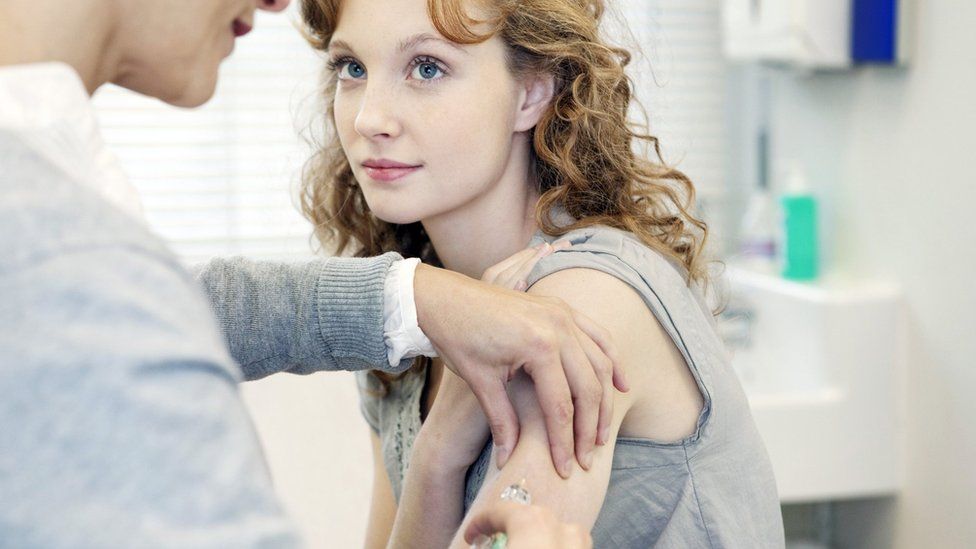
The human papillomavirus, or HPV, vaccine is cutting cases of cervical cancer by nearly 90%, the first real-world data shows.
Cancer Research UK described the findings as “historic”, and said it showed the vaccine was saving lives.
Nearly all cervical cancers are caused by viruses, and the hope is vaccination could almost eliminate the disease.
The researchers said the success meant those who were vaccinated may need far fewer cervical smear tests too.
Cervical cancer is the fourth most common cancer in women around the world, killing more than 300,000 each year.
Almost nine-in-10 deaths are in low and middle income countries where there is little access to cervical cancer screening. The hope is vaccination will have an even bigger impact in those countries than wealthier nations such as the UK.
More than 100 countries have starting using the vaccine as part of World Health Organization plans to get close to eliminating cervical cancer..
In the UK, girls are offered the vaccine between the ages of 11 and 13, depending on where they live. The vaccine has also been offered to boys since 2019.
The HPV vaccine can only prevent an infection, it cannot rid the body of the virus once it has been caught. The viruses are so widespread that immunisation has to be aimed at children before they become sexually active.
The study, published in the Lancet, looked at what happened after the vaccine was introduced for girls in England in 2008.
Those pupils are now adults in their 20s. The study showed a reduction in both pre-cancerous growths and an 87% reduction in cervical cancer.
“The impact has been huge,” said Prof Peter Sasieni, one of the researchers at King’s College London.
The reductions were less dramatic when older teenagers were immunised as part of a catch-up campaign. This is because fewer older teenagers decided to have the jab and they may already have been sexually active.
Overall, the study estimated the HPV programme has prevented about 450 cancers and 17,200 pre-cancers.
Prof Sasieni said that was “just the tip of the iceberg” because those vaccinated were still young to be getting cancer, so the numbers would only grow with time.
Topic Discussed: HPV vaccine cutting cervical cancer by nearly 90%
Read More[/vc_column_text][/vc_column][/vc_row][vc_row css=”.vc_custom_1618658856512{margin-top: 75px !important;}”][vc_column][vc_text_separator title=”Services We Offer:”][vc_column_text]
Laparoscopy | Abnormal Bleeding | Menopause | Minimally Invasive Surgery | Contraception | Pap Smear | Pelvic Pain | Family Planning | STD Testing | Hormone Therapy | Hysterectomy | Infertility | 3D Mammography | Pregnancy & Prenatal Care | Preventive Screening
[/vc_column_text][vc_text_separator title=”Website Navigation:”][vc_column_text]
Home | About | OB Videos | Insurances Accepted | Blog | Providers | Michael Anthony, MD, FACOG | Noemi Maydew, MD, FACOG | Anne Bond Bonpain, MD, FACOG | Elita Wyckoff, MD, FACOG | Gilberto Rodrigo, MD, FACOG | Jennifer Fraley, MD, FACOG | Heather Flowers | Courtney Braswell | Services | Patient Care | Advanced Care Team | Testimonials | Contact Us | Patient Portal
[/vc_column_text][/vc_column][/vc_row]

by OB/GYN | Nov 3, 2021 | OB/GYN News, Postpartum Depression, Women's Health
[vc_row][vc_column][vc_column_text]Topic: Financial stress burdens more than half of new U.S. moms
The joys of motherhood may be overshadowed in the United States since as many as 50% of new or expectant moms can’t pay their bills, including health care bills, new research suggests.
“Financial hardship is highly prevalent among pregnant and postpartum women,” said study co-author Dr. Michelle Moniz. She is an assistant professor of obstetrics and gynecology at the University of Michigan, in Ann Arbor, and its Institute for Healthcare Policy and Innovation.
For the study, the researchers reviewed data from the U.S. National Health Interview Survey from 2013 to 2018, looking at pregnant or recently pregnant women. This was a time when the Affordable Care Act had been signed into law and the economy was robust. The Affordable Care Act aimed to improve access to health care in the United States.
Despite such good tidings, one in four women skipped doctors’ visits due to the cost of care, 60% said health care was unaffordable and 54% cited general financial stress, according to the report.
The lower the household income, the more likely women were to have trouble making ends meet, the study showed.
New moms without insurance were more likely to have unmet health care needs, while women with private health insurance were more likely to say that the cost of health care was way too high, the study found.
Research shows that privately insured women have strikingly high out-of-pocket costs, including deductibles and co-insurance payments for pregnancy and childbirth-related care, Moniz noted. “Findings from the current study call for targeted policy interventions to alleviate financial strain and remove financial barriers to health care access for privately insured families,” she said.
Similarly, families with lower incomes were more likely to say health care was unaffordable. Small out-of-pocket costs or health care-associated costs—such as costs for transportation, parking or childcare during a visit—account for a larger share of the family’s income, she said.
“Sliding-scale deductibles are one solution that might mitigate economic hardship and remove cost-related barriers to health care for pregnant and postpartum women,” Moniz said.
The study was published online Oct. 29 in the journal JAMA Network Open.
The findings are very much in line with what Dr. Kavita Vani sees in her practice. She is an obstetrician-gynecologist at the Montefiore Medical Center in New York City.
“The results of this study give an objective lens to what we are seeing in real life, and give us leverage to use the information to create policies that can relieve hardships of new and expectant moms,” said Vani. She has no ties to the new study.
These women are often forced to make really hard choices: go to work to put food on the table or see the doctor for a follow-up exam, Vani said.
Topic Discussed: Financial stress burdens more than half of new U.S. moms
Read More[/vc_column_text][/vc_column][/vc_row][vc_row css=”.vc_custom_1618658856512{margin-top: 75px !important;}”][vc_column][vc_text_separator title=”Services We Offer:”][vc_column_text]
Laparoscopy | Abnormal Bleeding | Menopause | Minimally Invasive Surgery | Contraception | Pap Smear | Pelvic Pain | Family Planning | STD Testing | Hormone Therapy | Hysterectomy | Infertility | 3D Mammography | Pregnancy & Prenatal Care | Preventive Screening
[/vc_column_text][vc_text_separator title=”Website Navigation:”][vc_column_text]
Home | About | OB Videos | Insurances Accepted | Blog | Providers | Michael Anthony, MD, FACOG | Noemi Maydew, MD, FACOG | Anne Bond Bonpain, MD, FACOG | Elita Wyckoff, MD, FACOG | Gilberto Rodrigo, MD, FACOG | Jennifer Fraley, MD, FACOG | Heather Flowers | Courtney Braswell | Services | Patient Care | Advanced Care Team | Testimonials | Contact Us | Patient Portal
[/vc_column_text][/vc_column][/vc_row]
by OB/GYN | Nov 1, 2021 | OB/GYN News, Women's Health
[vc_row][vc_column][vc_column_text]Topic: A Faster, Cheaper Test to Gauge the Risk of Premature Delivery?
A two-minute test can accurately detect vaginal bacteria associated with preterm birth, researchers have found, pointing to a possible way to identify pregnant women at increased risk of early delivery.
In the United States, about one in 10 babies are born preterm, according to the nonprofit March of Dimes. Babies born preterm (before the 37th week of pregnancy) are at increased risk of health problems affecting the lungs, heart, brain and eyes — particularly if they are born very early.
Often, the reason for preterm labor is unknown. But certain factors put pregnant women at greater risk.
The new test focuses on one factor: the vaginal microbiome. The microbiome refers to the collection of trillions of bacteria and other microbes that normally populate the body. In areas like the gut, diversity in those microbes is considered healthy; but in the vagina, uniformity — with dominance of Lactobacillus bacteria — is a marker of good health.
Studies have linked a less-than-healthy vaginal microbiome to an increased risk of preterm birth.
“We think that the vaginal microbiome can affect the risk of preterm birth in several ways,” said David MacIntyre, a researcher at Imperial College London who led the new study.
In some cases, he explained, pathogenic (“bad”) bacteria may ascend the reproductive tract and infect the uterus, placenta or fetal membranes, triggering preterm birth.
And whenever there is wide diversity in vaginal microbes, that can include the bad kind. There is evidence that such changes can trigger inflammation that leads to “ripening” of the cervix (the womb opening), MacIntyre explained.
In contrast, early research suggests that certain “good” Lactobacillus bacteria might help prevent build-up of pathogenic bacteria and suppress inflammation.
Until now, though, researchers have had no rapid way to accurately assess the composition of the vaginal microbiome. To be useful in the real world, such a test would have to be quick and relatively cheap.
MacIntyre’s team developed a test that, based on a simple vaginal swab, can determine the composition of the vaginal microbiome and detect signs of inflammation in minutes.
Topic Discussed: A Faster, Cheaper Test to Gauge the Risk of Premature Delivery?
Read More[/vc_column_text][/vc_column][/vc_row][vc_row css=”.vc_custom_1618658856512{margin-top: 75px !important;}”][vc_column][vc_text_separator title=”Services We Offer:”][vc_column_text]
Laparoscopy | Abnormal Bleeding | Menopause | Minimally Invasive Surgery | Contraception | Pap Smear | Pelvic Pain | Family Planning | STD Testing | Hormone Therapy | Hysterectomy | Infertility | 3D Mammography | Pregnancy & Prenatal Care | Preventive Screening
[/vc_column_text][vc_text_separator title=”Website Navigation:”][vc_column_text]
Home | About | OB Videos | Insurances Accepted | Blog | Providers | Michael Anthony, MD, FACOG | Noemi Maydew, MD, FACOG | Anne Bond Bonpain, MD, FACOG | Elita Wyckoff, MD, FACOG | Gilberto Rodrigo, MD, FACOG | Jennifer Fraley, MD, FACOG | Heather Flowers | Courtney Braswell | Services | Patient Care | Advanced Care Team | Testimonials | Contact Us | Patient Portal
[/vc_column_text][/vc_column][/vc_row]

by OB/GYN | Oct 30, 2021 | OB/GYN News, Women's Health
[vc_row][vc_column][vc_column_text]Topic: Should You Try Acupuncture for Morning Sickness?
Whether this is your first or fourth pregnancy, chances are you may be feeling icky with morning sickness. In fact, between 50 and 80 percent of pregnant people experience some form of nausea and vomiting. And despite what it sounds like, these symptoms can hit at any time of the day or night.
More and more people are turning to acupuncture to help ease their nausea and other pregnancy symptoms, and there’s research to back up this alternative therapy. Here’s what you need to know before you go.
Nausea and vomiting during pregnancy
Even before you see the positive sign on your pregnancy test, your body is hard at work increasing your levels of human chorionic gonadotropin (hCG) to support your baby’s growth. As your hCG rises, you may feel queasy or even throw up.
Some people only have brief periods of nausea each day and otherwise feel quite normal. Others may find themselves feeling sick for hours on end with frequent vomiting.
If you’re going to experience morning sickness, you’ll likely start having symptoms by week 9 (and it’s not always just in the morning, by the way). Fortunately, most will also start feeling better a few weeks later in the second trimester or by 14 weeks gestation. Some pregnant people don’t get sick at all. And others may be sick their entire pregnancies.
If you had horrible nausea and vomiting with your first child, it doesn’t guarantee that you’ll experience that level of sickness again. Each pregnancy is unique. That said, feeling sick at all isn’t fun and can make it difficult to keep yourself and your baby hydrated, among other issues. This is where acupuncture comes in.
Research about acupuncture and morning sickness
Acupuncture is a part of traditional Chinese medicine. It involves placing tiny needles along different points (meridians) on the body to align the flow of energy (chi/qi) and promote wellness. The practice has been around for thousands of years and is gaining clout as a possible treatment for morning sickness. But what does the science say?
In one older (but very relevant) 2002 studyTrusted Source, researchers split nearly 600 women who were less than 14 weeks pregnant into groups that received either traditional acupuncture, pericardium 6 acupuncture, sham acupuncture, or no acupuncture.
The group receiving traditional acupuncture had less nausea and dry heaving just 2 weeks into treatment. The other acupuncture groups saw similar results compared to the no-acupuncture group after 3 weeks. The researchers did point out, though, that the incidence of vomiting didn’t change in any of the groups despite treatment.
Topic Discussed: Should You Try Acupuncture for Morning Sickness?
Read More[/vc_column_text][/vc_column][/vc_row][vc_row css=”.vc_custom_1618658856512{margin-top: 75px !important;}”][vc_column][vc_text_separator title=”Services We Offer:”][vc_column_text]
Laparoscopy | Abnormal Bleeding | Menopause | Minimally Invasive Surgery | Contraception | Pap Smear | Pelvic Pain | Family Planning | STD Testing | Hormone Therapy | Hysterectomy | Infertility | 3D Mammography | Pregnancy & Prenatal Care | Preventive Screening
[/vc_column_text][vc_text_separator title=”Website Navigation:”][vc_column_text]
Home | About | OB Videos | Insurances Accepted | Blog | Providers | Michael Anthony, MD, FACOG | Noemi Maydew, MD, FACOG | Anne Bond Bonpain, MD, FACOG | Elita Wyckoff, MD, FACOG | Gilberto Rodrigo, MD, FACOG | Jennifer Fraley, MD, FACOG | Heather Flowers | Courtney Braswell | Services | Patient Care | Advanced Care Team | Testimonials | Contact Us | Patient Portal
[/vc_column_text][/vc_column][/vc_row]

by OB/GYN | Oct 29, 2021 | Women's Health
[vc_row][vc_column][vc_column_text]Topic: The Most Common Sexually Transmitted Diseases
A sexually transmitted disease (STD) is any disease that is spread primarily by sexual contact. One person passes the infection to another during oral, vaginal, or anal sex.
STDs are some of the most difficult diseases to catch. You have to be up close and personal to spread them. So why are STDs so common? The answer may be that people don’t know how to recognize, treat, and prevent them. Or when they do, they often don’t do so effectively.
This article explores some of the most common sexually transmitted diseases in the U.S. It also discusses their causes and symptoms.
Not all diseases that affect the sex organs are considered STDs. In fact, some are not related to sex at all. Others aren’t transmitted during sex, but occur as a result of it.
Here are some common STDs and diseases associated with sex, along with their symptoms.
Chlamydia
Chlamydia is the most common curable bacterial STD. It infects the cervix, which is the opening to the uterus or womb. It can also infect the urethra in a penis.
Many women remain asymptomatic. When there are symptoms, they include pain during sex and discharge from the penis or vagina.
The Centers for Disease Control and Prevention (CDC) recommends that you be screened for chlamydia and other sexually transmitted infections if you are under 25 years old and sexually active. They also recommend screening if you have any of these risk factors:
- You have a new sex partner
- You have a sex partner with an STI
- You have more than one sex partner
- You have a sex partner who is having sex with other people
Chlamydia can do a lot of damage to your body in the long run. It can cause infertility by blocking the reproductive tract in men and women. Latex condoms can prevent the spread of this disease.
Gonorrhea
Gonorrhea, otherwise known as “the clap,” is another common bacterial STD.
It often infects the same organs as chlamydia and has similar long-term effects.
If you have gonorrhea, it may burn when you urinate. The disease can also cause white, yellow, or green discharge from the penis or vagina. It’s important to know that many people, especially women, with gonorrhea don’t have symptoms.
Topic Discussed: The Most Common Sexually Transmitted Diseases
Read More[/vc_column_text][/vc_column][/vc_row][vc_row css=”.vc_custom_1618658856512{margin-top: 75px !important;}”][vc_column][vc_text_separator title=”Services We Offer:”][vc_column_text]
Laparoscopy | Abnormal Bleeding | Menopause | Minimally Invasive Surgery | Contraception | Pap Smear | Pelvic Pain | Family Planning | STD Testing | Hormone Therapy | Hysterectomy | Infertility | 3D Mammography | Pregnancy & Prenatal Care | Preventive Screening
[/vc_column_text][vc_text_separator title=”Website Navigation:”][vc_column_text]
Home | About | OB Videos | Insurances Accepted | Blog | Providers | Michael Anthony, MD, FACOG | Noemi Maydew, MD, FACOG | Anne Bond Bonpain, MD, FACOG | Elita Wyckoff, MD, FACOG | Gilberto Rodrigo, MD, FACOG | Jennifer Fraley, MD, FACOG | Heather Flowers | Courtney Braswell | Services | Patient Care | Advanced Care Team | Testimonials | Contact Us | Patient Portal
[/vc_column_text][/vc_column][/vc_row]

by OB/GYN | Oct 28, 2021 | Women's Health
[vc_row][vc_column][vc_column_text]Topic: Stress, Depression During Pregnancy Can Harm Child
New evidence points to the importance of helping mothers with their mental health during pregnancy.
Researchers from the National Institutes of Health in Bethesda, MD, have found that feelings of stress or depression while pregnant are linked to changes in the placenta where the child is growing. The findings, published in Epigenomics, show these changes could alter gene activity.
Stress and depression are not uncommon among expectant women, with depression affecting an estimated 1 in 10 pregnancies, according to the American College of Obstetricians and Gynecologists.
And current evidence already suggests that depression during pregnancy can negatively affect a child later in life. For instance, one study found that depression during pregnancy was linked to behavioral and emotional disorders during childhood, and another found that it raised the risk of depression at age 18.
To investigate stress and depression during pregnancy, the NIH investigators evaluated 301 pregnant women from 12 clinics in the United States who had taken part in an earlier clinical study. The group was ethnically diverse, with 34% identifying as Hispanic, 26% as non-Hispanic white, 24% as non-Hispanic Black, and 17% as Asian or Pacific Islander.
At the start of the study, the women were asked to complete questionnaires routinely used to screen for stress and depression. They completed the questionnaire five more times during their pregnancies. Shortly after each woman gave birth, researchers took tissue samples from the placenta and analyzed the genetics.
The purpose of studying the placenta, according to lead researcher Markos Tesfaye, MD, a post-doctoral fellow at the NIH, is that chemical changes can regulate whether a nearby gene can be activated.
There is evidence that chemical modifications in the placenta can lead to changes in fetal tissues, such as the brain, he says. And the placenta is known for making neurotransmitters, which are needed for fetal brain development.
The team found 16 areas where changes to the exterior of placental DNA were linked to depression in the second or third trimester. They also found two areas where these changes were associated with stress in the third trimester.
Topic Discussed: Stress, Depression During Pregnancy Can Harm Child
Read More[/vc_column_text][/vc_column][/vc_row][vc_row css=”.vc_custom_1618658856512{margin-top: 75px !important;}”][vc_column][vc_text_separator title=”Services We Offer:”][vc_column_text]
Laparoscopy | Abnormal Bleeding | Menopause | Minimally Invasive Surgery | Contraception | Pap Smear | Pelvic Pain | Family Planning | STD Testing | Hormone Therapy | Hysterectomy | Infertility | 3D Mammography | Pregnancy & Prenatal Care | Preventive Screening
[/vc_column_text][vc_text_separator title=”Website Navigation:”][vc_column_text]
Home | About | OB Videos | Insurances Accepted | Blog | Providers | Michael Anthony, MD, FACOG | Noemi Maydew, MD, FACOG | Anne Bond Bonpain, MD, FACOG | Elita Wyckoff, MD, FACOG | Gilberto Rodrigo, MD, FACOG | Jennifer Fraley, MD, FACOG | Heather Flowers | Courtney Braswell | Services | Patient Care | Advanced Care Team | Testimonials | Contact Us | Patient Portal
[/vc_column_text][/vc_column][/vc_row]