by OB/GYN | Nov 24, 2025 | Healthy Lifestyle, Postpartum Depression, Women's Health
At a Glance
- Women’s mental and emotional health are deeply connected to hormonal and physical changes.
- Anxiety, depression, and stress can impact reproductive health and overall well-being
- OB/GYN visits are an important opportunity to discuss mental health concerns.
- Cary OB/GYN prioritizes whole-person care that includes emotional support.
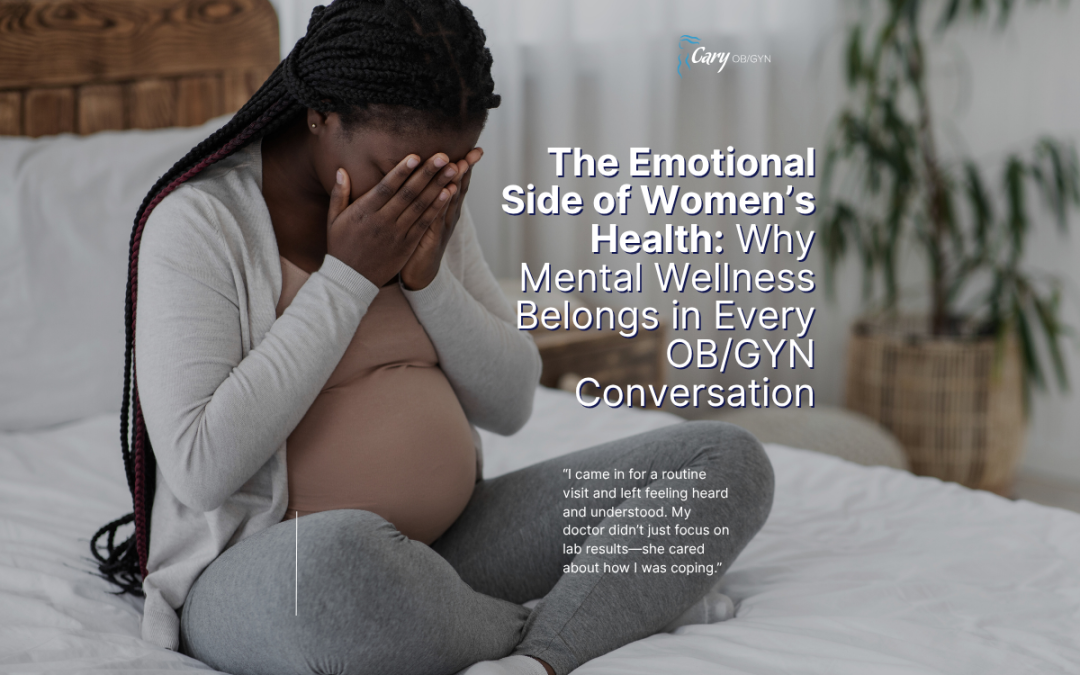
- “I came in for a routine visit and left feeling heard and understood. My doctor didn’t just focus on lab results—she cared about how I was coping.”
Quick Summary
Topic: The connection between emotional wellness and women’s health.
Purpose: To encourage women to view mental health as a vital part of reproductive and overall health.
Goal: Inspire patients to discuss emotional changes openly with their OB/GYN.
Why Mental Health Belongs in Women’s Healthcare
For too long, emotional health and physical health have been treated as separate issues. Yet for women, hormones, life transitions, and reproductive cycles deeply influence mental well-being.
At Cary OB/GYN, mental wellness is recognized as a critical part of whole-person care. From adolescence through menopause, women experience significant hormonal changes that can affect mood, sleep, energy, and relationships.
“Our approach to women’s health includes the emotional side because how you feel is just as important as what your lab work shows.”
The Mind-Body Connection
Hormones like estrogen, progesterone, and cortisol all play major roles in regulating mood and stress response. When these hormones fluctuate, they can influence how women feel emotionally and physically.
Examples of Common Mind-Body Interactions:
- PMS and Mood Swings: Hormonal shifts before menstruation can cause irritability, sadness, or fatigue.
- Postpartum Depression: Rapid hormone changes after childbirth can trigger depression or anxiety.
- Perimenopause and Anxiety: Fluctuating estrogen levels may cause restlessness, insomnia, or panic episodes.
- Infertility-Related Stress: The emotional toll of fertility challenges can heighten feelings of frustration or grief.
These conditions aren’t “all in your head.” They are physiological and emotional processes intertwined—and your OB/GYN is often the first medical professional able to recognize the signs.
Common Mental Health Concerns Women Experience
Women are statistically more likely than men to experience depression and anxiety, particularly during times of hormonal change. Cary OB/GYN routinely screens for emotional well-being at all stages of life.
1. Premenstrual Syndrome (PMS) and PMDD
Mild PMS is common, but for some women, symptoms become severe and disruptive. Premenstrual Dysphoric Disorder (PMDD) can cause intense mood swings, depression, and physical discomfort.
Treatment may include lifestyle changes, medication, or hormonal management to stabilize mood and reduce symptoms.
2. Perinatal and Postpartum Depression
After childbirth, up to 1 in 7 women experience postpartum depression. Symptoms may include sadness, loss of interest, anxiety, or difficulty bonding with the baby. Cary OB/GYN takes a proactive approach with postpartum screenings, support referrals, and compassionate follow-up care.
“I thought I was just tired, but my provider at Cary OB/GYN recognized that I was struggling and helped me get the support I needed.”
3. Anxiety Disorders
Anxiety can emerge at any stage of life, often linked to hormonal changes, sleep disruption, or life stress. Your OB/GYN can help identify whether symptoms are situational, hormonal, or part of a broader anxiety disorder—and connect you to the right resources.
4. Menopause-Related Emotional Changes
During menopause, declining estrogen can contribute to irritability, sadness, or memory difficulties. Addressing these concerns through hormonal or lifestyle management can improve mood and quality of life.
Why OB/GYNs Are Often the First Line of Support
Many women see their OB/GYN more frequently than any other healthcare provider. This makes OB/GYN visits an ideal time to discuss emotional changes and stress-related symptoms.
Providers at Cary OB/GYN view each appointment as a safe space for open conversation. Whether you’re struggling with anxiety about fertility, mood swings, or postpartum challenges, your provider can help you feel validated and supported.
How Emotional Health Is Integrated Into Every Visit:
- Screening for mood and anxiety symptoms during routine checkups.
- Asking open-ended questions about stress, sleep, and daily function.
- Reviewing how hormones or medications may be influencing emotions.
- Offering compassionate referrals for counseling or therapy when appropriate.
“We believe mental wellness is part of preventive care. Addressing stress and mood early can improve long-term physical health.”
The Impact of Stress on Physical Health
Chronic stress can affect more than mood—it can influence menstrual cycles, fertility, and cardiovascular health.
Physical Effects of Long-Term Stress:
- Irregular or missed periods
- Worsened PMS symptoms
- Elevated blood pressure and heart rate
- Difficulty conceiving
- Weakened immune system
- Poor sleep and increased fatigue
Managing stress through both medical and behavioral support can improve outcomes across all aspects of women’s health.
Tools and Support for Emotional Wellness at Cary OB/GYN
Cary OB/GYN offers an integrated approach that blends clinical care with emotional support and lifestyle guidance.
1. Mindful Communication and Active Listening
Every patient interaction is built on compassion and respect. Providers take time to listen, validate your concerns, and ensure you feel seen and understood.
2. Hormonal and Nutritional Balance
Hormones play a major role in emotional health. When appropriate, your provider may explore:
- Hormone therapy for perimenopause or menopause
- Thyroid and adrenal function testing
- Nutritional counseling to support mood and energy levels
3. Collaborative Mental Health Care
When specialized mental health support is needed, Cary OB/GYN connects patients with trusted local therapists, psychiatrists, and support groups. Collaboration ensures seamless, coordinated care.
4. Lifestyle Strategies for Wellness
Simple, consistent changes can make a big difference in emotional balance.
- Exercise: Regular movement improves mood and reduces anxiety.
- Sleep: Restorative sleep helps regulate hormones and stress response.
- Diet: Nutrient-rich foods support brain health and energy levels.
- Connection: Talking openly with friends, partners, or therapists promotes resilience.
“You can’t always control hormonal changes, but you can control how you care for yourself through them.”
How to Talk to Your OB/GYN About Mental Health
It can feel intimidating to bring up emotional symptoms during a medical visit, but your OB/GYN is here to help.
Tips for Starting the Conversation:
- Be honest about how you’ve been feeling, even if symptoms seem minor.
- Mention any changes in sleep, energy, appetite, or focus.
- Note how symptoms align with your cycle or life events.
- Ask if your hormones, medications, or birth control might be contributing.
- Don’t wait until symptoms become severe—early support makes recovery easier.
Remember, mental health is healthcare. Speaking up is the first step toward relief and healing.
Cary OB/GYN’s Commitment to Whole-Person Care
Cary OB/GYN’s providers believe that every woman deserves care that treats both her body and her emotions. Whether you’re managing PMS, postpartum transitions, or menopause, your provider will work with you to create a plan that addresses all aspects of your well-being.
“I’ve been a patient for years, and what stands out most is how much they truly care. They don’t just treat symptoms—they treat people.”
By recognizing the importance of emotional wellness, Cary OB/GYN helps women move through life’s challenges with strength, balance, and confidence.
Final Thoughts
Mental health and women’s health are inseparable. When emotional well-being is part of the conversation, women experience better outcomes, stronger relationships, and greater peace of mind.
At Cary OB/GYN, every visit is an opportunity to nurture both your physical and emotional health. The result is care that empowers women to thrive—not just survive—through every stage of life. Contact Cary OB/GYN in Cary and Morrisville, NC, to schedule an appointment: https://www.caryobgyn.com/contactus.

by Marketing Manager | Feb 23, 2023 | Postpartum Depression
[vc_row][vc_column][vc_column_text]
Learn the symptoms of postpartum depression
Having a new baby is a wonderful time in life but not everyone always feels happy after having a baby. Women experience many physical and emotional changes during pregnancy and the months after pregnancy. Some women may experience feelings of sadness, emptiness, or hopelessness after giving birth. Read on to learn more about postpartum depression.
What is Postpartum Depression?
Postpartum depression is described as having feelings of sadness, hopelessness, or emptiness after birth for more than two weeks. It is more common than people realize and affects one in every nine mothers. It is normal to feel overwhelmed after having a new baby but if you have symptoms of depression for more than two weeks, you need to consult with a healthcare provider.
How Do I Know If I Have Postpartum Depression?
The symptoms of postpartum depression include:
- Feelings of restlessness
- Being moody
- Feeling sad, hopeless, worthlessness, guilty, or overwhelmed
- Lack of energy or motivation
- Crying a lot
- Having thoughts of hurting yourself or the baby
- Not having any interest in the baby
- Not feeling connected to the baby
- Eating too much or too little
- Sleeping too much or too little
- Difficulty making decisions or focusing
- Losing interest in activities you used to enjoy
- Withdrawing from loved ones
- Headaches, pain, and stomach problems that do not go away
What are the Baby Blues?
The baby blues have similar symptoms to postpartum depression but they usually go away within 3 to 5 days. The symptoms of postpartum depression are more severe and last longer.
How is Postpartum Depression Treated?
The treatment of postpartum depression will depend on the severity and the individual. Most cases of postpartum depression are successfully treated with medication and / or therapy.
What Do I Do If I Have Postpartum Depression?
If you think you may have postpartum depression, reach out to one of your healthcare providers for an assessment. They will be able to help you and recommend a treatment. Many women feel ashamed or embarrassed to talk about postpartum depression. Don’t feel guilty about what you are experiencing and talk to your partner or a loved one so they can understand what you are going through.
Resources
- Postpartum depression. Postpartum depression | Office on Women’s Health. (n.d.). Retrieved February 17, 2023
[/vc_column_text][/vc_column][/vc_row][vc_row css=”.vc_custom_1618658856512{margin-top: 75px !important;}”][vc_column][vc_text_separator title=”Services We Offer:”][vc_column_text]
Laparoscopy | Abnormal Bleeding | Menopause | Minimally Invasive Surgery | Contraception | Pap Smear | Pelvic Pain | Family Planning | STD Testing | Hormone Therapy | Hysterectomy | Infertility | 3D Mammography | Pregnancy & Prenatal Care | Preventive Screening
[/vc_column_text][vc_text_separator title=”Website Navigation:”][vc_column_text]
Home | About | OB Videos | Insurances Accepted | Blog | Providers | Michael Anthony, MD, FACOG | Noemi Maydew, MD, FACOG | Anne Bond Bonpain, MD, FACOG | Elita Wyckoff, MD, FACOG | Gilberto Rodrigo, MD, FACOG | Jennifer Fraley, MD, FACOG | Heather Flowers | Courtney Braswell | Services | Patient Care | Advanced Care Team | Testimonials | Contact Us | Patient Portal
[/vc_column_text][/vc_column][/vc_row]

by OB/GYN | Nov 24, 2021 | Postpartum Depression, Women's Health
[vc_row][vc_column][vc_column_text]Topic: ‘Mum brain’ is real: Why mothers become forgetful after giving birth and what can help
Call it whatever you want – mum brain, mummy brain, baby brain or even mum-nesia – but postpartum cognitive difficulties are real. If you’ve just given birth and can’t seem to remember the name of an actor from your favourite Korean drama or are struggling to manage your schedule, chances are you’re experiencing “mum brain”.
However, giving birth doesn’t simply make you more forgetful – it’s a lot more than that, and much of it is actually meant to help you be a better parent, experts say.
WHAT IS “MUM BRAIN”?
The “mum brain” phenomenon occurs in women who have recently delivered a baby and essentially describes their trouble with verbal recall, said Dr Charles Siow, a neurologist at Mount Elizabeth Novena Hospital.
Verbal recall memory is, as its name suggests, memory associated with spoken information. This memory diminishes with pregnancy, said Dr Siow, and so women who have recently been pregnant may find it harder to recall names, words or stories.
According to Dr Cornelia Chee, who is the head of the National University Hospital’s Department of Psychological Medicine, there is “clear evidence” that a woman’s brain changes during pregnancy and after, with cognitive changes for the worse taking place during the same period.
These particular changes “probably have a lot to do with the poor sleep that pregnant and postnatal women have”.
Particularly in the third trimester, pregnant women “qualify as having a sleep disorder” due to multiple interruptions to their rest, such as discomfort, needing to go to the toilet at night and the foetus’ movements.
Postnatally, there is interruption from multiple night feeds and baby awakenings, said Dr Chee.
As a result, you may experience worsening working memory, or memory related to more recent events, and may notice symptoms like poor concentration, feeling “fuzz” and slips of the tongue – all “extremely common” among pregnant and postnatal women, she added.
THERE ARE UPSIDES
When you’re struggling to even make basic calculations in your head, it can be impossible to imagine that there may be upsides to this condition, but there are many.
First, while the symptoms are real, your worries about them impacting performance – particularly at work – may not be.
Topic Discussed: ‘Mum brain’ is real: Why mothers become forgetful after giving birth and what can help
Read More[/vc_column_text][/vc_column][/vc_row][vc_row css=”.vc_custom_1618658856512{margin-top: 75px !important;}”][vc_column][vc_text_separator title=”Services We Offer:”][vc_column_text]
Laparoscopy | Abnormal Bleeding | Menopause | Minimally Invasive Surgery | Contraception | Pap Smear | Pelvic Pain | Family Planning | STD Testing | Hormone Therapy | Hysterectomy | Infertility | 3D Mammography | Pregnancy & Prenatal Care | Preventive Screening
[/vc_column_text][vc_text_separator title=”Website Navigation:”][vc_column_text]
Home | About | OB Videos | Insurances Accepted | Blog | Providers | Michael Anthony, MD, FACOG | Noemi Maydew, MD, FACOG | Anne Bond Bonpain, MD, FACOG | Elita Wyckoff, MD, FACOG | Gilberto Rodrigo, MD, FACOG | Jennifer Fraley, MD, FACOG | Heather Flowers | Courtney Braswell | Services | Patient Care | Advanced Care Team | Testimonials | Contact Us | Patient Portal
[/vc_column_text][/vc_column][/vc_row]

by OB/GYN | Nov 21, 2021 | Postpartum Depression, Women's Health
[vc_row][vc_column][vc_column_text]Topic: Why mental health is important during pregnancy
Pregnancy comes with a mixture of feelings, and not all of them are good. There is always the case of worry, anxiety and adapting to the big transition especially if it’s the first pregnancy.
If not dealt with, such feelings can take a toll on the expectant mother’s mental health and their general wellbeing.
For some however, mental health issues could have been existent even before the pregnancy, but either way, medical experts recommend handling the issue as early as possible.
Working on mental wellbeing during pregnancy is very important. A lack of it has potential to cause harm both to the mother and baby.
Dr John Muganda, an obstetrician and gynaecologist explains that poor mental health can cause several dangers including complications during delivery or cause a high-risk pregnancy, depression and anxiety among others.
“Changes in a woman’s body during pregnancy and everyday worries can take a toll on them and lead to stress, but it’s totally normal. The problem occurs when the woman feels down all the time or shows other different signs that might harm her or the baby. In many cases, medics might choose a C-Section over normal delivery so as to save a child’s life and later deal with the mother’s issues,’’ he says.
Mental health issues such as depression, anxiety and others, during pregnancy can also lead to miscarriage, delivering before the due date (preterm), and giving birth to underweight babies, he adds.
Muganda further explains that it’s important to treat mental health concerns during pregnancy as mothers who are depressed, anxious, or have other mental wellbeing issues might fail to take care of themselves or might harm themselves by using drugs and alcohol yet all this harms the baby too.
“If a woman has a mental health problem, it is important to consult a doctor. Thought it might be hard, treatment should be sought before any complications. Sometimes poor mental wellbeing can affect a child’s character and behaviour but these cases are rare,” he notes.
Topic Discussed: Why mental health is important during pregnancy
Read More[/vc_column_text][/vc_column][/vc_row][vc_row css=”.vc_custom_1618658856512{margin-top: 75px !important;}”][vc_column][vc_text_separator title=”Services We Offer:”][vc_column_text]
Laparoscopy | Abnormal Bleeding | Menopause | Minimally Invasive Surgery | Contraception | Pap Smear | Pelvic Pain | Family Planning | STD Testing | Hormone Therapy | Hysterectomy | Infertility | 3D Mammography | Pregnancy & Prenatal Care | Preventive Screening
[/vc_column_text][vc_text_separator title=”Website Navigation:”][vc_column_text]
Home | About | OB Videos | Insurances Accepted | Blog | Providers | Michael Anthony, MD, FACOG | Noemi Maydew, MD, FACOG | Anne Bond Bonpain, MD, FACOG | Elita Wyckoff, MD, FACOG | Gilberto Rodrigo, MD, FACOG | Jennifer Fraley, MD, FACOG | Heather Flowers | Courtney Braswell | Services | Patient Care | Advanced Care Team | Testimonials | Contact Us | Patient Portal
[/vc_column_text][/vc_column][/vc_row]

by OB/GYN | Nov 3, 2021 | OB/GYN News, Postpartum Depression, Women's Health
[vc_row][vc_column][vc_column_text]Topic: Financial stress burdens more than half of new U.S. moms
The joys of motherhood may be overshadowed in the United States since as many as 50% of new or expectant moms can’t pay their bills, including health care bills, new research suggests.
“Financial hardship is highly prevalent among pregnant and postpartum women,” said study co-author Dr. Michelle Moniz. She is an assistant professor of obstetrics and gynecology at the University of Michigan, in Ann Arbor, and its Institute for Healthcare Policy and Innovation.
For the study, the researchers reviewed data from the U.S. National Health Interview Survey from 2013 to 2018, looking at pregnant or recently pregnant women. This was a time when the Affordable Care Act had been signed into law and the economy was robust. The Affordable Care Act aimed to improve access to health care in the United States.
Despite such good tidings, one in four women skipped doctors’ visits due to the cost of care, 60% said health care was unaffordable and 54% cited general financial stress, according to the report.
The lower the household income, the more likely women were to have trouble making ends meet, the study showed.
New moms without insurance were more likely to have unmet health care needs, while women with private health insurance were more likely to say that the cost of health care was way too high, the study found.
Research shows that privately insured women have strikingly high out-of-pocket costs, including deductibles and co-insurance payments for pregnancy and childbirth-related care, Moniz noted. “Findings from the current study call for targeted policy interventions to alleviate financial strain and remove financial barriers to health care access for privately insured families,” she said.
Similarly, families with lower incomes were more likely to say health care was unaffordable. Small out-of-pocket costs or health care-associated costs—such as costs for transportation, parking or childcare during a visit—account for a larger share of the family’s income, she said.
“Sliding-scale deductibles are one solution that might mitigate economic hardship and remove cost-related barriers to health care for pregnant and postpartum women,” Moniz said.
The study was published online Oct. 29 in the journal JAMA Network Open.
The findings are very much in line with what Dr. Kavita Vani sees in her practice. She is an obstetrician-gynecologist at the Montefiore Medical Center in New York City.
“The results of this study give an objective lens to what we are seeing in real life, and give us leverage to use the information to create policies that can relieve hardships of new and expectant moms,” said Vani. She has no ties to the new study.
These women are often forced to make really hard choices: go to work to put food on the table or see the doctor for a follow-up exam, Vani said.
Topic Discussed: Financial stress burdens more than half of new U.S. moms
Read More[/vc_column_text][/vc_column][/vc_row][vc_row css=”.vc_custom_1618658856512{margin-top: 75px !important;}”][vc_column][vc_text_separator title=”Services We Offer:”][vc_column_text]
Laparoscopy | Abnormal Bleeding | Menopause | Minimally Invasive Surgery | Contraception | Pap Smear | Pelvic Pain | Family Planning | STD Testing | Hormone Therapy | Hysterectomy | Infertility | 3D Mammography | Pregnancy & Prenatal Care | Preventive Screening
[/vc_column_text][vc_text_separator title=”Website Navigation:”][vc_column_text]
Home | About | OB Videos | Insurances Accepted | Blog | Providers | Michael Anthony, MD, FACOG | Noemi Maydew, MD, FACOG | Anne Bond Bonpain, MD, FACOG | Elita Wyckoff, MD, FACOG | Gilberto Rodrigo, MD, FACOG | Jennifer Fraley, MD, FACOG | Heather Flowers | Courtney Braswell | Services | Patient Care | Advanced Care Team | Testimonials | Contact Us | Patient Portal
[/vc_column_text][/vc_column][/vc_row]

by OB/GYN | Oct 22, 2021 | OB/GYN News, Postpartum Depression, Women's Health
[vc_row][vc_column][vc_column_text]Topic: Postpartum Depression Causes, Risk Factors, and Prevention Strategies
While postpartum depression could strike anyone, there are some factors that increase your risk. Learn more about what causes postpartum depression and how to prevent it.
After giving birth, about 80 percent of new mothers experience sadness and mood swings known as the “baby blues.” These symptoms usually last days or weeks after birth—but occasionally they develop into more severe postpartum depression (PPD).
Postpartum depression affects one in nine new mothers, according to the Centers for Disease Control and Prevention (CDC), and symptoms can appear up to one year after giving birth. Signs of PPD include persistent sadness or emptiness, hopelessness, guilt, insomnia, weight loss, decreased energy, difficulty concentrating, loss of interest in previously enjoyed activities, and more. Doctors normally treat PPD with antidepressant medication, counseling, or both.
Anyone can develop postpartum depression, but certain factors may increase your risk. Here’s everything you need to know about the causes and risk factors of postpartum depression.
What Causes Postpartum Depression?
Doctors have traditionally blamed postpartum depression on the dramatic drop in hormones (estrogen and progesterone) that occurs after giving birth. These hormonal changes alter the chemical balance in your brain. However, hormones can’t explain everything; otherwise, all new mothers would plummet into depression.
According to the latest research, women who suffer from PPD show clear warning signs during pregnancy; many have risk factors, such as a history of depression. PPD may also be associated with sleep deprivation, feelings of loneliness associated with new motherhood, the physical changes of pregnancy, breastfeeding difficulties, and more.
Always tell your doctor if you experience symptoms of PPD, or if you think you’re at risk for developing it. “Doctors can detect the most vulnerable women early and prevent illness before it strikes,” says lead researcher Zachary Stowe, M.D., director of the Pregnancy and Postpartum Mood Disorders Program at Emory University in Atlanta.
Risk Factors for Postpartum Depression
Postpartum depression can happen to anyone, whether it’s your first child or fifth. But factors that may raise your risk include:
History of depression or bipolar disorder: Women who have previously had clinical depression are much more likely to develop PPD. Keep in mind that you may not have necessarily been aware of, or treated for, past episodes of depression. It’s important to look at your life carefully—your adolescence, your young adulthood, previous postpartum experiences—and assess whether you have had any significant episodes of anxiety or depression that have hindered your ability to function.
Severe PMS: Because postpartum depression seems partly triggered by hormonal changes after childbirth (and possibly after weaning), many experts believe that previous hormonal sensitivity raises a red flag. PPD risk may increase in women with a history of severe PMS, or in women who experienced negative mood changes while taking birth control pills.
Topic Discussed: Postpartum Depression Causes, Risk Factors, and Prevention Strategies
Read More[/vc_column_text][/vc_column][/vc_row][vc_row css=”.vc_custom_1618658856512{margin-top: 75px !important;}”][vc_column][vc_text_separator title=”Services We Offer:”][vc_column_text]
Laparoscopy | Abnormal Bleeding | Menopause | Minimally Invasive Surgery | Contraception | Pap Smear | Pelvic Pain | Family Planning | STD Testing | Hormone Therapy | Hysterectomy | Infertility | 3D Mammography | Pregnancy & Prenatal Care | Preventive Screening
[/vc_column_text][vc_text_separator title=”Website Navigation:”][vc_column_text]
Home | About | OB Videos | Insurances Accepted | Blog | Providers | Michael Anthony, MD, FACOG | Noemi Maydew, MD, FACOG | Anne Bond Bonpain, MD, FACOG | Elita Wyckoff, MD, FACOG | Gilberto Rodrigo, MD, FACOG | Jennifer Fraley, MD, FACOG | Heather Flowers | Courtney Braswell | Services | Patient Care | Advanced Care Team | Testimonials | Contact Us | Patient Portal
[/vc_column_text][/vc_column][/vc_row]