by OB/GYN | Nov 21, 2021 | Postpartum Depression, Women's Health
[vc_row][vc_column][vc_column_text]Topic: Why mental health is important during pregnancy
Pregnancy comes with a mixture of feelings, and not all of them are good. There is always the case of worry, anxiety and adapting to the big transition especially if it’s the first pregnancy.
If not dealt with, such feelings can take a toll on the expectant mother’s mental health and their general wellbeing.
For some however, mental health issues could have been existent even before the pregnancy, but either way, medical experts recommend handling the issue as early as possible.
Working on mental wellbeing during pregnancy is very important. A lack of it has potential to cause harm both to the mother and baby.
Dr John Muganda, an obstetrician and gynaecologist explains that poor mental health can cause several dangers including complications during delivery or cause a high-risk pregnancy, depression and anxiety among others.
“Changes in a woman’s body during pregnancy and everyday worries can take a toll on them and lead to stress, but it’s totally normal. The problem occurs when the woman feels down all the time or shows other different signs that might harm her or the baby. In many cases, medics might choose a C-Section over normal delivery so as to save a child’s life and later deal with the mother’s issues,’’ he says.
Mental health issues such as depression, anxiety and others, during pregnancy can also lead to miscarriage, delivering before the due date (preterm), and giving birth to underweight babies, he adds.
Muganda further explains that it’s important to treat mental health concerns during pregnancy as mothers who are depressed, anxious, or have other mental wellbeing issues might fail to take care of themselves or might harm themselves by using drugs and alcohol yet all this harms the baby too.
“If a woman has a mental health problem, it is important to consult a doctor. Thought it might be hard, treatment should be sought before any complications. Sometimes poor mental wellbeing can affect a child’s character and behaviour but these cases are rare,” he notes.
Topic Discussed: Why mental health is important during pregnancy
Read More[/vc_column_text][/vc_column][/vc_row][vc_row css=”.vc_custom_1618658856512{margin-top: 75px !important;}”][vc_column][vc_text_separator title=”Services We Offer:”][vc_column_text]
Laparoscopy | Abnormal Bleeding | Menopause | Minimally Invasive Surgery | Contraception | Pap Smear | Pelvic Pain | Family Planning | STD Testing | Hormone Therapy | Hysterectomy | Infertility | 3D Mammography | Pregnancy & Prenatal Care | Preventive Screening
[/vc_column_text][vc_text_separator title=”Website Navigation:”][vc_column_text]
Home | About | OB Videos | Insurances Accepted | Blog | Providers | Michael Anthony, MD, FACOG | Noemi Maydew, MD, FACOG | Anne Bond Bonpain, MD, FACOG | Elita Wyckoff, MD, FACOG | Gilberto Rodrigo, MD, FACOG | Jennifer Fraley, MD, FACOG | Heather Flowers | Courtney Braswell | Services | Patient Care | Advanced Care Team | Testimonials | Contact Us | Patient Portal
[/vc_column_text][/vc_column][/vc_row]

by OB/GYN | Nov 21, 2021 | Mammogram, Women's Health
[vc_row][vc_column][vc_column_text]Topic: What Innovations Are Coming Down the Pike for Breast Cancer?
Innovations occur in medicine all the time. Some happen quickly, like the unprecedented speed with which the COVID-19 vaccines were developed. Others take more time to develop, as researchers leverage current knowledge and new ideas to develop novel pathways toward diagnosis, treatment, and survival for people with a wide variety of diseases.
Each column, we dive deeply into lab reports, journals, and conferences to bring you the most anticipated innovations coming down the pike for one of the most dreaded diseases: cancer. This round, our focus is on breast cancer. Among new developments to keep an eye on include:
Artificial Intelligence (AI) That May Allow for More Accurate Breast Cancer Screenings
A new AI tool may take breast cancer screenings to the next level by increasing radiologists’ accuracy when interpreting ultrasound images. Using a data set of more than five million images collected from 288,000 exams of roughly 143,000 patients, researchers have trained and validated an AI system to automatically identify malignant lesions in breast ultrasound images.
Findings from the study, which were published online in September 2021 in Nature Communications, show that the AI tool decreased the rate of false positives (samples erroneously categorized as positive) by 37.3 percent, significantly reducing the number of women referred for unnecessary biopsies.
Next Steps The tool isn’t quite ready for prime time, according to the researchers. More work is needed to further test its accuracy. They also plan to refine and personalize the tool to use patient-specific information (e.g., genetic history, family risk) to better inform evaluations and follow-ups.
Precision-Activated Cancer Therapeutics That Could Usher in a New Era in Therapy
Researchers have discovered a way to activate cancer therapies, such as the drug Adriamycin (doxorubicin), directly in tumors, thereby reducing side effects felt throughout the rest of the body. (Adriamycin has been notoriously nicknamed “the red devil” for its color and difficult side effects.) The technology involves giving an inactivated form of chemotherapy intravenously and injecting an activating agent directly into the tumor. This approach to therapy, known as CAPAC (Click Activated Protodrugs Against Cancer), keeps the toxic effects of the chemotherapy mostly contained inside the tumor, while sparing the rest of the body the worst of the side effects. CAPAC can also be used for other tumor types that are amenable to direct injection.
In the first study in which the technology was used in humans, the results, presented at the European Society for Medical Oncology Congress in mid-September, showed that levels of SQ3370 (equivalent to conventional doxorubicin) were 50 times higher in the tumor than in the bloodstream, with no serious adverse events that would require dosage adjustments. The small experimental trial included nine patients, eight of whom had metastatic cancer, including triple-negative breast cancer. Cancer progression stabilized in more than half of the patients treated with CAPAC, including those in whom the disease had progressed when treated with prior Adriamycin or other chemotherapy agents.
Topic Discussed: What Innovations Are Coming Down the Pike for Breast Cancer?
Read More[/vc_column_text][/vc_column][/vc_row][vc_row css=”.vc_custom_1618658856512{margin-top: 75px !important;}”][vc_column][vc_text_separator title=”Services We Offer:”][vc_column_text]
Laparoscopy | Abnormal Bleeding | Menopause | Minimally Invasive Surgery | Contraception | Pap Smear | Pelvic Pain | Family Planning | STD Testing | Hormone Therapy | Hysterectomy | Infertility | 3D Mammography | Pregnancy & Prenatal Care | Preventive Screening
[/vc_column_text][vc_text_separator title=”Website Navigation:”][vc_column_text]
Home | About | OB Videos | Insurances Accepted | Blog | Providers | Michael Anthony, MD, FACOG | Noemi Maydew, MD, FACOG | Anne Bond Bonpain, MD, FACOG | Elita Wyckoff, MD, FACOG | Gilberto Rodrigo, MD, FACOG | Jennifer Fraley, MD, FACOG | Heather Flowers | Courtney Braswell | Services | Patient Care | Advanced Care Team | Testimonials | Contact Us | Patient Portal
[/vc_column_text][/vc_column][/vc_row]

by OB/GYN | Nov 15, 2021 | Women's Health
[vc_row][vc_column][vc_column_text]Topic: Syphilis cases on the rise in the US: What to know
Health care professionals are reportedly sounding the alarm as syphilis cases are on the rise in the US.
Earlier this year, Alaska health officials reported a 49 percent increase in cases of the sexually transmitted disease (STD) from 2019 to 2020.
This fall, health officials in Vanderburgh County, Indiana have been seeing a surge in cases, according to the Evansville Courier & Press – in addition to an increase in chlamydia and gonorrhea cases.
Fox 29 reported earlier in November that the number of cases of congenital syphilis in San Antonio, Texas, was “startling.”
Congenital syphilis occurs when an infected mother passes the infection on to the newborn.
Untreated syphilis can cause fetal death and about 40 percent of untreated babies with the infection die. Black, Hispanic and Native American babies are disproportionately affected by the illness.
Infectious Disease Special Edition reported this month that cases of congenital syphilis in the country are higher than any time since 1994.
A recent report in ProPublica on the issue shows that more than 129,800 syphilis cases were recorded in 2019 – a tally that is double the amount of cases from five years prior. In the same period, the publication said, congenital syphilis cases quadrupled.
Although there is no one reason for why cases have increased, Prevention.com says totals could indicate increases in cases of untreated syphilis and poor treatment and testing among pregnant women.
Syphilis is divided into primary, secondary, latent and tertiary stages, according to the US Centers for Disease Control and Prevention (CDC), with different signs and symptoms associated with each stage.
The infection — also called “The Great Pretender,” as its symptoms can look like many other diseases – is spread by direct contact with a syphilis sore during vaginal, anal or oral sex. Sores can also be found on the lips or in the mouth.
Topic Discussed: Syphilis cases on the rise in the US: What to know
Read More[/vc_column_text][/vc_column][/vc_row][vc_row css=”.vc_custom_1618658856512{margin-top: 75px !important;}”][vc_column][vc_text_separator title=”Services We Offer:”][vc_column_text]
Laparoscopy | Abnormal Bleeding | Menopause | Minimally Invasive Surgery | Contraception | Pap Smear | Pelvic Pain | Family Planning | STD Testing | Hormone Therapy | Hysterectomy | Infertility | 3D Mammography | Pregnancy & Prenatal Care | Preventive Screening
[/vc_column_text][vc_text_separator title=”Website Navigation:”][vc_column_text]
Home | About | OB Videos | Insurances Accepted | Blog | Providers | Michael Anthony, MD, FACOG | Noemi Maydew, MD, FACOG | Anne Bond Bonpain, MD, FACOG | Elita Wyckoff, MD, FACOG | Gilberto Rodrigo, MD, FACOG | Jennifer Fraley, MD, FACOG | Heather Flowers | Courtney Braswell | Services | Patient Care | Advanced Care Team | Testimonials | Contact Us | Patient Portal
[/vc_column_text][/vc_column][/vc_row]

by OB/GYN | Nov 14, 2021 | Women's Health
[vc_row][vc_column][vc_column_text]Topic: Cannabis use disorder during pregnancy on the rise
As more states legalize cannabis for medical or recreational purposes, its use during pregnancy is increasing – along with the potential for abuse or dependence.
A new study, co-led by researchers from Weill Cornell Medicine and Columbia University, has captured the magnitude and issues related to cannabis use disorders during pregnancy by examining diagnostic codes for more than 20 million U.S. hospital discharges. Most of those hospitalizations were for childbirth.
The study, “Association of Comorbid Behavioral and Medical Conditions with Cannabis Use Disorder in Pregnancy,” published Nov. 3 in JAMA Psychiatry, found that the proportion of hospitalized pregnant patients identified with cannabis use disorder – defined as cannabis use with clinically significant impairment or distress – rose 150% from 2010 to 2018.
“This is the largest study to document the scale of cannabis use disorder in prenatal hospitalizations,” said Claudia Lugo-Candelas, assistant professor of clinical medical psychology in Columbia’s Department of Psychiatry and one of the study’s co-authors.
Lugo-Candelas said the study found that pregnant patients with the condition had sharply higher levels of depression, anxiety and nausea – results warranting clinical concern. “It’s a red flag that patients may not be getting the treatment they need,” she said.
Cannabis is legal for medical and recreational use in 37 states, and legalization has likely lessened fears about its risks in pregnancy. Some pregnant patients use cannabis instead of prescribed medications, thinking it’s a safer choice. Both the American Academy of Pediatrics and the American College of Obstetricians and Gynecologists have recommended against using cannabis while pregnant, chiefly because of known and unknown fetal effects. Concerns for maternal effects focus on smoking or vaping risks, not mental health.
The study identified 249,084 hospitalized pregnant patients with cannabis use disorder and classified them into three sub-groups:
- those with cannabis use disorder only;
- those with use disorders for cannabis and other substances, including at least one controlled substance; and
- those with cannabis use disorder and other substances (alcohol, tobacco) not related to controlled substances.
Data from hospitalized pregnant patients without any substance use disorders were analyzed for comparison.
Those with the cannabis condition were more likely to be younger (ages 15 to 24); Black non-Hispanic; and covered by Medicaid rather than private insurance.
Topic Discussed: Cannabis use disorder during pregnancy on the rise
Read More[/vc_column_text][/vc_column][/vc_row][vc_row css=”.vc_custom_1618658856512{margin-top: 75px !important;}”][vc_column][vc_text_separator title=”Services We Offer:”][vc_column_text]
Laparoscopy | Abnormal Bleeding | Menopause | Minimally Invasive Surgery | Contraception | Pap Smear | Pelvic Pain | Family Planning | STD Testing | Hormone Therapy | Hysterectomy | Infertility | 3D Mammography | Pregnancy & Prenatal Care | Preventive Screening
[/vc_column_text][vc_text_separator title=”Website Navigation:”][vc_column_text]
Home | About | OB Videos | Insurances Accepted | Blog | Providers | Michael Anthony, MD, FACOG | Noemi Maydew, MD, FACOG | Anne Bond Bonpain, MD, FACOG | Elita Wyckoff, MD, FACOG | Gilberto Rodrigo, MD, FACOG | Jennifer Fraley, MD, FACOG | Heather Flowers | Courtney Braswell | Services | Patient Care | Advanced Care Team | Testimonials | Contact Us | Patient Portal
[/vc_column_text][/vc_column][/vc_row]
by OB/GYN | Nov 9, 2021 | Women's Health
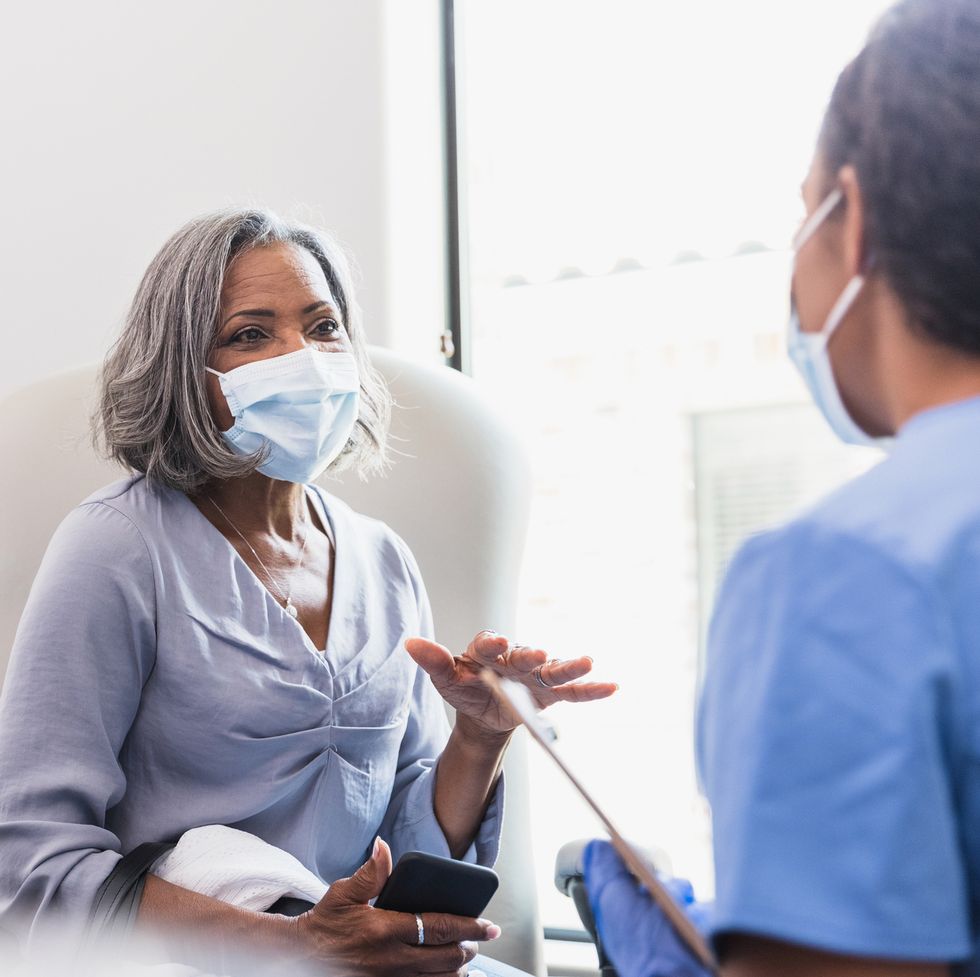
[vc_row][vc_column][vc_column_text]Topic: How to Have a Productive Conversation with Your Doctor About Menopause
Hot flashes. Vaginal dryness. Moodiness. Brain fog. Night sweats. Now that you’ve consulted Dr. Google, you’re ready to get real answers to your questions about these common menopause symptoms. But let’s face it: Having a one-way consultation with an online health site is a whole lot easier than talking about unpleasant, often embarrassing, symptoms with an actual health care provider.
Menopause, which occurs when a woman has had 12 straight months without a period, is looked upon as a taboo subject, says Mary Jane Minkin, M.D., clinical professor of obstetrics, gynecology, and reproductive sciences at the Yale University School of Medicine. “We live in a puritanical society and menopause involves things that have to do with female sexuality,” she explains. “Another issue is we tend to go through menopause as we get older, so it’s a sign you’re getting older, and we’re a society that worships youth. It’s a loaded discussion.”
Making matters worse, research suggests doctors don’t always have a full understanding of menopause and the hormonal upheaval that happens to women when they quit having their period, which usually happens at age 51, on average. According to a seminal study published in the journal Menopause, only 20 percent of medical residents in the U.S. who responded to a survey said their program in obstetrics and gynecology (ob/gyn) included a formal menopause curriculum.
But that doesn’t mean you should be left to navigate the menopause experience—or, for that matter, the perimenopausal years that precede it—on your own. Here are five ways to make sure you get the information you need from your healthcare provider.
1. Pick the right doctor.
You may have a long, healthy relationship with your ob/gyn and an even longer one with your primary care doctor. But if neither is up to speed on all things menopause—meaning not just the best treatments, but also the other conditions that can kick in when you go through menopause—then ask for a referral to a specialist.
“Start with your primary care doctor and say, ‘I understand that going through menopause puts me at greater risk for cardiovascular disease and osteoporosis. Can you tell me how to protect myself?’” suggests Dr. Minkin. “If you get a good solid answer, fabulous. If not, ask if there’s a menopause specialist they could recommend.” You can also go to the North American Menopause Society (NAMS) website, and plug in your ZIP code to find a local licensed healthcare provider who’s also a NAMS certified menopause practitioner.
2. Arrive for your doctor’s appointment prepared.
The average doctor’s visit lasts 18 minutes, according to a recent study published in Medical Care. To make the most of a one-on-one with your doctor, bring a list of medications (including both Rx and over-the-counter), notes on your symptoms, and an understanding of your medical history and your family’s. Especially important to know: How old the women in your family were when they went through menopause. “Let’s say you’re 41, but you’re having hot flashes and irregular periods”—classic signs of menopause, says Dr. Minkin. “But your mom, sisters, and aunts went through menopause at 55. Your doctor may want to look for other causes. It may not be menopause that’s giving you funky periods.”
Family history is very relevant, particularly bone health and cardiovascular history, adds Dr. Minkin. That’s because your risk for things like osteoporosis and heart attack goes up after menopause. “Did your mom fracture her hip at age 60? Did she have a heart attack at 60? That’s helpful for your doctor to know,” says Dr. Minkin.
Topic Discussed: How to Have a Productive Conversation with Your Doctor About Menopause
Read More[/vc_column_text][/vc_column][/vc_row][vc_row css=”.vc_custom_1618658856512{margin-top: 75px !important;}”][vc_column][vc_text_separator title=”Services We Offer:”][vc_column_text]
Laparoscopy | Abnormal Bleeding | Menopause | Minimally Invasive Surgery | Contraception | Pap Smear | Pelvic Pain | Family Planning | STD Testing | Hormone Therapy | Hysterectomy | Infertility | 3D Mammography | Pregnancy & Prenatal Care | Preventive Screening
[/vc_column_text][vc_text_separator title=”Website Navigation:”][vc_column_text]
Home | About | OB Videos | Insurances Accepted | Blog | Providers | Michael Anthony, MD, FACOG | Noemi Maydew, MD, FACOG | Anne Bond Bonpain, MD, FACOG | Elita Wyckoff, MD, FACOG | Gilberto Rodrigo, MD, FACOG | Jennifer Fraley, MD, FACOG | Heather Flowers | Courtney Braswell | Services | Patient Care | Advanced Care Team | Testimonials | Contact Us | Patient Portal
[/vc_column_text][/vc_column][/vc_row]

by OB/GYN | Nov 6, 2021 | OB/GYN News, Women's Health
[vc_row][vc_column][vc_column_text]Topic: Menopause: Study links THIS habit to heart disease risk, and it’s not diet
Heart disease is a leading cause of death globally – with smoking, alcoholism, high-fat and high-sugar diet, obesity and diabetes being the leading risk factors. However, for older, menopausal women, there is an additional risk factor that can contribute to heart disease risk, and it’s not diet.
New Delhi: Menopause marks the end of the reproductive years of a woman’s life. With its onset between 45-55 years age, menopause is when a menstrual cycles does not take place for a period of 12 consecutive months. Although a natural transition, menopause can be debilitating owing to symptoms like hot flashes, vaginal dryness, mood swings and dipping sex drive to name a few. However, according to a new published in the journal Menopause of the North American Menopause Society, there is one post-menopausal habit that can increase risk of heart disease in the long run.
How heart disease risk and menopause are related?
Heart disease is a leading cause of death globally – with smoking, alcoholism, high-fat and high-sugar diet, obesity and diabetes being the leading risk factors. However, for older, menopausal women, there is an additional risk factor that can contribute to heart disease risk, and it’s not diet.
According to the study published in Menopause journal, older women are more like to develop heart disease if they are prone to eating alone. For this study, experts from the The Catholic University of Korea, the University of Ulsan, and Semyung University evaluated data o 590 menopausal women about 65 years of age. It was discovered that women who ate more than two meals alone were 2.58 times more prone to angina – chest pain triggered by reduction in blood circulation to the heart. As per the American Heart Association, this condition is often linked to coronary microvascular disease and coronary heart disease.
Is loneliness the only driving factor?
The study’s experts revealed that despite the results, loneliness may not be the only factor associated with heart disease in older women. Women eating alone at a later stage in life are likely to have poor nutritional knowledge with low awareness on nutrition labels on food as opposed to their counterparts. These women were more likely to consume fewer carbohydrates, fibre, potassium, calories and sodium. Therefore, heart disease is not the only go-to conclusion for loneliness.
The best diet for menopausal women
According to the American Heart Association, menopausal women are recommended lots of fruits, vegetables, low-fat dairy, poultry, fish and while grains to dodge heart disease risk. Additionally, exercising throughout the week, quitting smoking and alcoholism and maintaining a healthy body mass index may further help lower heart disease risk.
KEY HIGHLIGHTS
According to the study published in Menopause journal, older women are more like to develop heart disease if they are prone to eating alone.
The study’s experts revealed that despite the results, loneliness may not be the only factor associated with heart disease in older women.
Women eating alone at a later stage in life are likely to have poor nutritional knowledge with low awareness on nutrition labels on food as opposed to their counterparts.
Topic Discussed: Menopause: Study links THIS habit to heart disease risk, and it’s not diet
Read More[/vc_column_text][/vc_column][/vc_row][vc_row css=”.vc_custom_1618658856512{margin-top: 75px !important;}”][vc_column][vc_text_separator title=”Services We Offer:”][vc_column_text]
Laparoscopy | Abnormal Bleeding | Menopause | Minimally Invasive Surgery | Contraception | Pap Smear | Pelvic Pain | Family Planning | STD Testing | Hormone Therapy | Hysterectomy | Infertility | 3D Mammography | Pregnancy & Prenatal Care | Preventive Screening
[/vc_column_text][vc_text_separator title=”Website Navigation:”][vc_column_text]
Home | About | OB Videos | Insurances Accepted | Blog | Providers | Michael Anthony, MD, FACOG | Noemi Maydew, MD, FACOG | Anne Bond Bonpain, MD, FACOG | Elita Wyckoff, MD, FACOG | Gilberto Rodrigo, MD, FACOG | Jennifer Fraley, MD, FACOG | Heather Flowers | Courtney Braswell | Services | Patient Care | Advanced Care Team | Testimonials | Contact Us | Patient Portal
[/vc_column_text][/vc_column][/vc_row]